Uncategorized

Introduction to The Last of Sheila

Well hello again, and welcome to our final film of our “Summer Forever” strand at Cine Club. Not only does it feel great to provide people a safe place to escape from the heat, but ironically this has been a season of absolute heaters, of which The Last of Sheila is no exception. You can still grab tickets here or at the door, plus I can finally reveal our next slate, as Cine Club enters year two! In September, as a pairing with our wonderful Cecilia Fiona exhibition, we will be screening Interstellar. Tickets aren’t on sale yet, but keep your diary open for Thursday 17th September. The rest of the programme will also go on sale at a similar time, I’ll save those surprises for you to discover yourself, but I will say that our next season is called Elastic Reality. Lots to look forward to then, hopefully we’ll see you there!
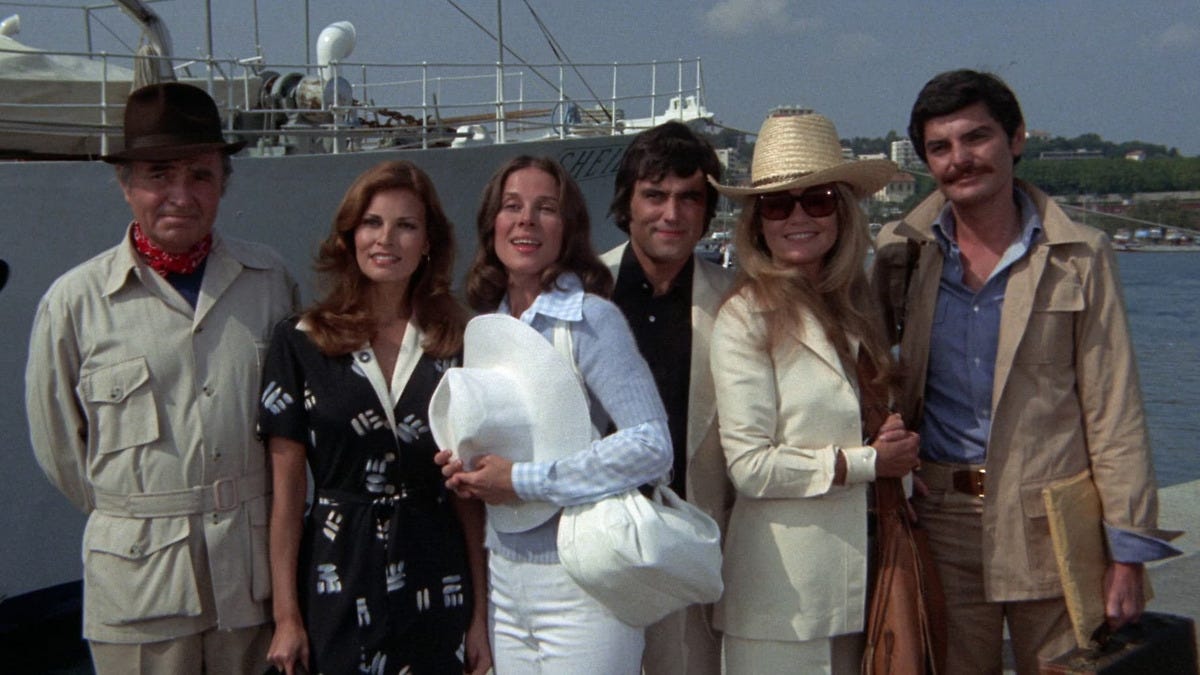

The Last of Sheila (1973) directed by Herbert Ross • Reviews, film + cast •  Letterboxd

Three years ago, a full fifty after its original release, The Last of Sheila was released on blu-ray in the UK for the first time. I appreciate that on the surface this may not sound like a particularly earth shaking moment, but it was one of those releases that saw a long forgotten classic resurface from the depths of lost media. I had actually been recommended the film in 2018 by the film critic Alan Jones, so it had been on my radar but out of reach for at least a few years, and now it is back. Reader, if you are one of those people who wasn’t around for the film before it vanished, make now your opportunity to discover the film Molly Haskell called “A camp thriller about the dirty little secrets of commies and perverts on a Mediterranean cruise”.

The Last of Sheila is a murder mystery, though not quite in the vein of the usual Poirot fare. There is no central detective unravelling the mystery, instead it’s a group of people who are both suspect and potential victim. Formally it’s sort of closer to And Then There Were None, though without the sheer bloodshed of that. It’s a notable deviation, as this film comes just before the huge wave of murder mystery films and TV shows in the seventies and eighties. Columbo had debuted a few years earlier but otherwise, The Last of Sheila premieres before Magnum PI, Murder She Wrote or the Sidney Lumet adaptation of Murder on the Orient Express, which starred Sheila co-writer Anthony Perkins. When we think of murder mysteries now, these are the lenses through which we view them, which is why I think it’s so exciting to watch something that exists before that wave.

Of course, the other major murder mystery franchise of our current era is the Knives Out franchise, which Rian Johnson has admitted is very indebted to Sheila. Without going too deeply into spoilers, I think there are ways in which each of the three films he has made are influenced by the structure and narrative of Sheila. There is the obvious connection in Glass Onion, a film set on the Mediterranean and which features lots of arrogant rich people bickering. It’s the less obvious connection I love though. All four of these films are tricksy with how they present their murder. Every single one of these films is a true and honest murder mystery. Someone will be murdered and someone will be outed as the murderer, but it isn’t as simple as A to B. In the original Knives Out the mystery is “solved” halfway through, in Glass Onion the inciting murder appears to be very late in the narrative and likewise, Sheila is sly about whose murderer will be unmasked. It’s playful, but in the true sense of play. You can solve it, you can “win”, but you are going to have fun on the way there.

That sense of play in Sheila feels like it must come from its inception. This is for my money one of the most delightful origin stories of how a film got to be made. Essentially, Stephen Sondheim (as in, the writer and lyricist behind West Side Story, Sweeney Todd and Merrily We Roll Along) and Anthony Perkins (yes, Norman Bates himself from Psycho) used to throw parties for their showbiz friends. At these parties, the two of them would host murder mystery parlour games, elaborate affairs all constructed to entertain their crowd. One of the guests at these parties would turn out to be Hollywood director Herbert Ross, who asked the two to turn these games into a screenplay. Gamely, they obliged, and Ross directed the screenplay that became The Last of Sheila.

If I could, I’d like to end by introducing you to a term you may not know. In the wrestling community, there is a word called Kayfabe. It’s the idea that, despite everyone involved knowing that the events they are going to see are scripted (as in planned out, not staged!), all involved still maintain the suspension of disbelief. The fourth wall has been knowingly lowered, but audience and participant engage in imagining the wall is there regardless, creating a heightened atmosphere in which reality and fiction play together. Bizarrely, that is the word that came to mind for me with The Last of Sheila. The conceit is a game, a group of friends are here to play. At a certain point though, it becomes unclear what is game and what is deadly reality. I’m sure the characters wouldn’t consider it “kayfabe”, but as a viewer it feels so. The lines between game and truth become not just blurry but near non-existent, and yet we as the audience embrace that. It creates a glee even in the darker moments, adds a tension even to the fun. It’s playful and it’s camp and it’s brilliant.

Despite the place murder mysteries now occupy in society as cosy tales for solo consumption, I think it is crucial that films like this still find home on the big screen. The Netflix era Knives Out films are great, but I’m so glad I got to see them in a cinema and not just on my sofa. The same is true of The Last of Sheila. If you can’t make it tonight, whether your schedule doesn’t work or you just don’t live feasibly close to Eastbourne, ask your local independent cinema about this film. Films like this should be shared and if you can’t come and share tonight, share with your local community. Have a grand old time at the movies for Gods sake.


If You Like This, You’ll Like…

Films:

Clue (1985, dir. Jonathan Lynn) – Decidedly sillier than The Last of Sheila, Clue is that rare thing: not just a film adaptation of a board game, but a fantastic adaptation at that. There’s a murder mystery, sure, but it’s a gorgeously loose framework to hang jokes off of, all leading to one of three cheeky endings.

Video Games:

The Return of the Obra Dinn (2018) – Need another hit of boat based murder mystery? Here’s something a little special. You arrive on a boat thought to be lost, and must work out what happened to the crew by examining tableaus at the moment of death. It’s technically insurance work not detective work, but it ignites that grey matter all the same.

Duck Detective: The Secret Salami (2024) – Detective work doesn’t all have to be based on grisly murders and deaths, what if there was a narrative based on who stole someone else’s lunch at work? This is anthropomorphic nonsense of the highest order, a treat you could blast through in an evening.

Standard
Uncategorized

Introduction to City of God

Happy July everyone, I hope you’re holding up as best you can in what has been a disgustingly hot summer here in the UK. Fortunately, it is a truth universally acknowledged that the cinema is a wonderful place to be during this time of year because almost all of them are air conditioned. Should you be in search of such a venue this week, how about popping along to our screening of City of God tonight? Tickets are still available here or on the door, but if that’s not your thing, you still have time this summer to catch the wicked The Last of Sheila on the 6th August.


Prime Video: City of God

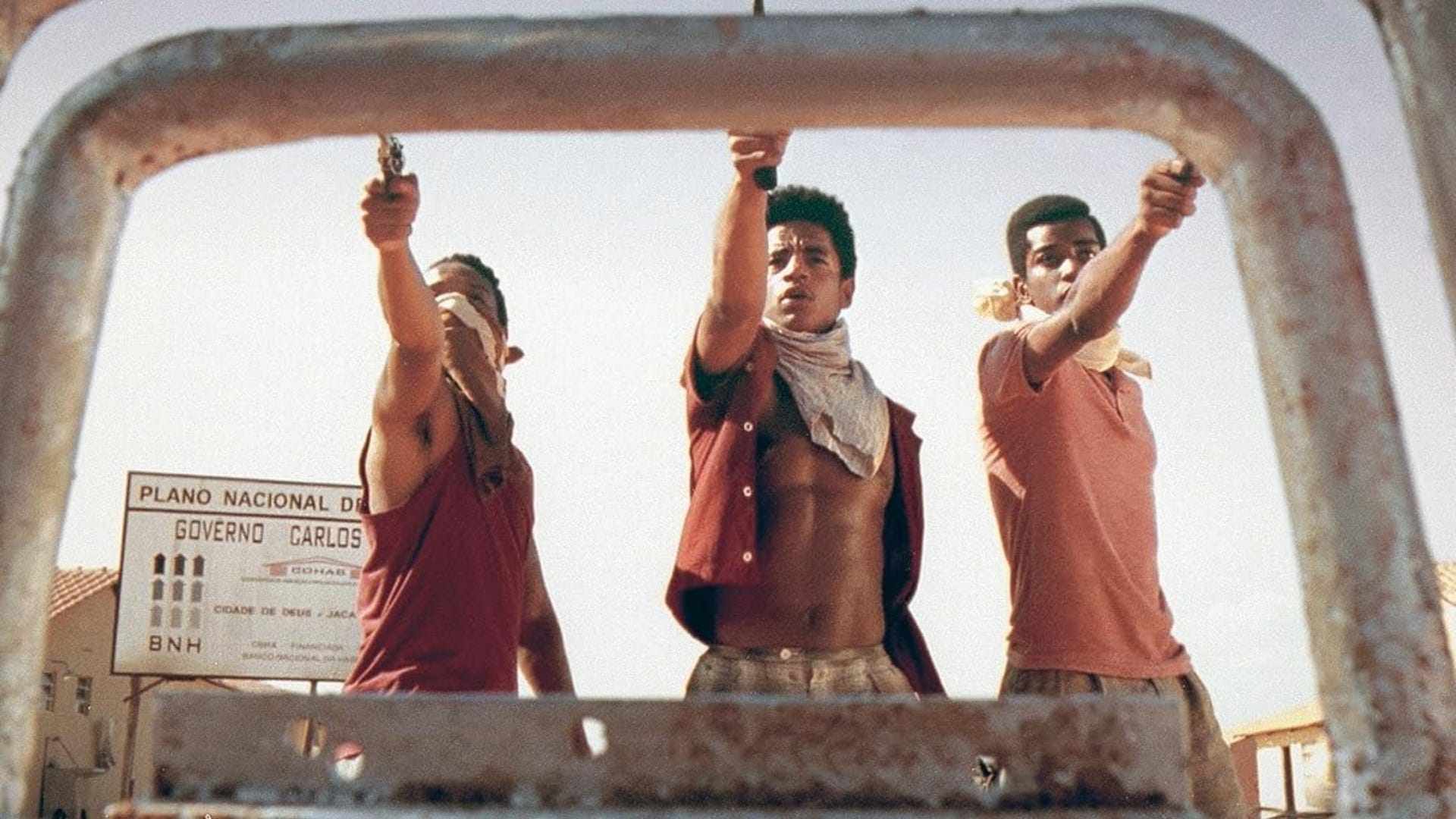
Depending on your social circles, you are one of two people. You have either never heard of City of God, or you have heard that it is one of the greatest films of all time. For my generation of cinephile, raised in the world of the DVD and stewed in the world of Imdb and Letterboxd (where it is respectively the 26th and 10th highest rated films on the platforms), this is what we could call a core text. Take me, for example. I saw this in my second year of sixth form film studies, a time where I was interested in international cinema but didn’t know where to begin. As a 17 year old, it was a perfect starting place, but regardless of age this is one of the best entry points to foreign language cinema, because while it shows a place and a community that feel foreign to those we may know in the UK, it is told in a style that is immediately recognisable to us.

The big phrase always thrown around with City of God is that it’s “the Brazilian Goodfellas”, a take on the classic Martin Scorsese film that takes place in South America instead of North. You can see the comparison points, certainly. Both are crime sagas that take place over multiple decades, both tell their story using rigorously impressive camera techniques and both are based on a true story, something that both films don’t explore fully until their final moments. It’s a convenient shorthand and an easy elevator pitch to the sceptical, but on returning to this film I found that the film it most reminded me of was Paul Thomas Anderson’s Boogie Nights. Though Anderson’s film is a fiction story, it still shares the scope and technical heft of City, and most importantly shares a really exciting handling of tone. Both films have incredibly joyous highs and really scary lows, the latter of which tend to come from a scorned and slightly crazy man with a gun. It’s not as catchy as “Brazilian Goodfellas” but the point at least remains that the few comparison points are incredibly impressive films to compare anything to.

As viewers outside of Brazil and presumably without much of a knowledge of Brazilian history, City of God is a fantastic evocation of a time and place we may not know. The European view of Brazil, specifically Rio, is of the beaches and the beautiful people, all of the non-stop parties that we assume go on there. There is an assumption that there’s a darkness underneath that, of course, but the glamour is the first thought. City brings us straight into that darkness then, making the poverty and crime of the story unignorable. Never oppressive, but always part of the story. This is a period recently characterised in The Secret Agent as “a time of great mischief” and that feels true to the story of City, in which the drug dealers are plenty corrupt but so are the police who are supposedly chasing them down. Small details do a lot of heavy lifting with it. One of my favourite things is in a dance scene in the film, you can tell the disco ball is just a football wrapped in tinfoil, I think that’s a wonderful detail. In a funny twist though, the seventies setting is clear, but so is the fact that this is a film from almost 25 years ago. The editing paired with the spinning camera makes certain scenes feel bizarrely reminiscent of a film from the Saw franchise, in a not off-putting way! It’s just something about the film that charms me, that it’s a period film that in its construction is also an evocation of a period gone by.

Part of what makes the film feel so authentic is its performances. The cast includes a few professional actors, of whom Alice Braga is best known to English language audiences and Matheus Nachtergaele is best know to Brazilian audiences, but is mainly comprised of first time actors, many of whom grew up in the “City of God” area of Rio. Some of these actors are absolutely breath-taking, which we can certainly give some credit to the cinema verité casting technique but which requires us to still acknowledge immense talent. Lead actor Alexandre Rodrigues manages to carry the entire film as a first time actor and never stumbles under that pressure, but if I am to highlight one of these actors, it would have to be Douglas Silva, the young actor who plays Li’l Dice. Many actors make careers out of playing villains, and yet here is a child actor who has nailed it out of the gate. He’s terrifying in the same way that Hannibal Lecter is, totally compelling but utterly horrible. I’d of course be remiss not to mention the appearance of Seu Jorge, most well known as a singer but who had a very memorable role in The Life Aquatic with Steve Zissou, where he sang Portuguese language covers of David Bowie songs. These are two very different performances, he’s subtly brilliant in both.

Finally, I’d like to just touch on how the film approaches storytelling as a theme. It has a stories within stories structure that I’m sure some would criticise as a Pulp Fiction homage, but I find to actually be a dedication to the act of journalism. You see, I have buried the lede here. City of God is based on a true story, and does not announce itself as so until the closing credits. Sure, the marketing material of the time was not shy about this information, but I think that if you can make it to the film without that knowledge, it plays as a pretty special reveal. In that sense, the film is constantly working to unveil bits of information it has not yet disclosed to you, often presenting them as “The Story of…” Information is not so much hidden from us as it is saved for a more interesting moment in which that knowledge is more pertinent. In Rocket, this theme emerges too. While everyone else he knows is dedicated to creating their story through violence, Rocket captures the story through his camera. It certainly can’t be accidental that we have the double entendre of shooting, something all are doing and all are using to effect others but that is only sometimes violent and not so essentially.

While I feel that in a sense, I have stretched my wings now and am flying very comfortably in the world of world cinema, I cannot deny just how fantastic an entry point City of God remains. It does the essential thing of keeping cinematic rhythms that feel familiar but while taking you into new worlds with new stories. It is a film very dear to me, but I think it is mainly an important film in serving as a bridge that viewers can take towards other magical things. It’s also just a phenomenally engaging film and a riot of a watch, so what else matters?


If You Like This, You’ll Like…

Films:

The Battle of Algiers (1966, dir. Gillo Pontecorvo) – Another film of warring factions and youthful energy, it feels like there’s never a bad time to recognise the greatness of The Battle of Algiers. Perhaps the time is coming for it to finally appear at Cine Club? Time will tell.

Boogie Nights (1997, dir. Paul Thomas Anderson) – I usually try and steer clear of recommending films that are as well known as Boogie Nights, but I think it makes such a good pairing with City of God and if you somehow haven’t seen it yet, make this the week to treat yourself to a masterpiece.

Bacurau (2019, dir. Kleber Mendonça Filho) – There’s a good chance you saw Filho’s most recent film The Secret Agent, but if you’re still in the mood for some brilliant contemporary cinema from Brazil, check out his previous film Bacurau, a gonzo western in which a village find themselves at war with foreign tourists.

Standard
Uncategorized

Review – Titane

I am going to have a really difficult time reviewing Titane, because so much of its joy comes in knowing so little. As such, I would like to open by saying that if you have a strong stomach and enjoy a heavy dose of weirdness, you will love Titane as much as I did. It is completely unlike any single film I have ever seen before and it deserves the rabid hype it is conjuring. It is gross and hilarious and heart-warming, refusing to conform to any single genre or emotional response for more than about a minute. My words can only do so well at capturing the magic of this film and therefore I completely understand (and even somewhat encourage) reading no more of the review in order to preserve the magic. But if you would like to stay, I’ll happily attempt to explain what the hell Titane is to you.

Our lead character is Alexia. We first see her as a child, when she is in a car accident (that she is partly responsible for) and has to have titanium placed in her skull, titanium in French being “titane”. After this event, we meet Alexia as an adult, dancing at a car show. While here, she has to deal with an overly eager fan and then while inside cleaning up… No, that’s it, that’s all you’re getting. I refuse to be the one to spoil this film for you. I’ll say that there’s a firefighter, a missing persons case and an overriding theme of family, but that’s your lot. Spending as much time as I do reading about films, I assumed that I’d had quite a lot of this film spoiled for me but in actual fact, everything I knew was from the first fifteen minutes. Partly that’s savvy reading on my part, partly that’s because Titane moves in unpredictable ways. Thinking back over it, I really struggle to place it onto a typical three act structure, or find myself able to explain everything that happens in a way that won’t make me sound like a crazy person. So I won’t. Just trust me when I say you should not read much about Titane and know that you’re going to have a hell of a time working out where the film is taking you next.

The genius of [Rousselle’s] performance is that she never lets the audience completely in, allowing some distance so that you’re not so hooked to Alexia that other characters feel obtuse.

When the narrative of your film is as bonkers as Titane is, you need a really good cast to anchor the film and create a sense of believability to the unbelievable spectacle. Fortunately, in its two leads Titane has just that. As Alexia is acting newcomer Agathe Rousselle. She has a lot of work to do, the majority of it without dialogue, but she is sensational. Again, it’s almost impossible to discuss without spoilers, but there are things Alexia does or lets happen to her that are very difficult to understand, yet Rousselle gives us a window through which to understand them. The genius of her performance is that she never lets the audience completely in, allowing some distance so that you’re not so hooked to Alexia that other characters feel obtuse. Likewise, Vincent Lindon is also brilliant. It’s one of those performances that requires a very intense physical presence in order to hide a very delicate emotional one, those two elements always working in tandem. At first, his character is very difficult to understand, but there’s something in Lindon’s eyes that slowly lets you in. It’s tough to explain but by the end, he’s another character whose very puzzling actions you completely understand.

Poster for Titane (2021)

There’s a second reason that Titane is near impossible for me to review and that’s because it is intensely overwhelming in its craft. Everything is baked to perfection! Perhaps chief to be praised are the visual effects, with Titane often finding itself in the genre of body horror. The things that Titane show us are… Hmm, we’re rubbing up against spoilers here, but a lot of them are unbelievable. They are things that our world as we know it are not capable of, and yet in their presentation we come to believe them. Fair warning, these things are also absolutely grotesque to witness. Even in a press screening, full of people who queued for over an hour because they knew what they wanted and they wanted it badly, there were plenty of screams and groans at a handful of scenes. However, Titane is also really good at eliciting those responses by showing you less than you think you saw.

It’s one of those things that is very hard to explain, but there are lots of scenes in cinema history that create such an overwhelming mood that your brain becomes convinced that it has seen more than it actually did. The Texas Chainsaw Massacre and Seven are both prime examples of this, in using mood to create much more terror than is actually on screen and I think the prime thing films use for that is sound. There’s one scene in particular in Titane that occurs on a toilet, in which all we are given is the setup, a grimacing face and sound effects. I think this scene might be the hardest to watch in the entire film, as we are guided through the procedure by nothing but squelching nastiness through the speakers. It is simply cinema wizardry of the highest order. Aside from the sound effects, the score of the film is also brilliant, another fantastic job with Jim Williams adding to his already strong portfolio that includes Raw, Possessor and Beast (as well as films that are more than one word long). His compositions are mixed with some pre-existing music to create a symphony of scenes that are unforgettable and that will play in my mind for years to come, for reasons both delightful and disgusting.

I was unprepared for Ducournau to yet again storm out of the gate with another singular masterpiece.

When I first saw Raw a few years ago, it truly did blow me away. Though intangibly shy of perfection, it lingered in my brain and I knew (as all others who loved the film did too) that writer and director Julia Ducournau would be a filmmaker to watch out. Even on guard as I was, I was unprepared for Ducournau to yet again storm out of the gate with another singular masterpiece. There is no one film that is like Titane, which is why everyone is falling over themselves to recommend it so heartily. It can’t be emphasised enough that out of all the films I saw at London Film Festival this year, Titane is the one with the smallest audience due to its extreme content (cinema employees, prepare for walkouts), but it’s also the one that has most completely captured me. It is a searing blast of cinema into the brain and heart, designed to make you stand on your feet and scream “Huzzah! Cinema!”. And scream I do.

Agathe Rousselle as Alexia in Titane (2021)

Rating: 5 out of 5.

Standard
Uncategorized

What is the Quite Nerdy Blog?

Welcome readers, old and new, to my new blog. Some of you may be thinking “New blog? There was an old blog?”, an answer you’ll find on this website. The old blog was slowing me down and looking a bit unprofessional, so we’re going for a reboot (only took seven years, lol).

So what can you expect from this blog? Well, alongside being a place to compile links for writing I’ve done for other outlets and serving as a sort of portfolio (hence the portfolio tab), I’m aiming to get new posts out once every two weeks. Sometimes I’ll need longer than that, other times not as long, but it’s a good guideline and if you join the mailing list on the homepage, you’ll never miss a post. The topics covered promise to be wide and sprawling, determined only by what niche topic has piqued my interest on a given week, but hopefully even the stuff you’ve never heard of can interest you.

With this blog I want to bring in new folk to read my work, but it’s also worth reiterating that if you’ve been reading my nonsense for years, I have a deep appreciation for you and your support. I’ve written for years and mainly for an audience of myself, meaning the fact that anyone reads this is very inspiring. Thank you for supporting me until now if you’ve been on the ride and if you’re new, I hope you like where we’re heading. We’ll have some fun, I promise.

Standard