G’day team, hope you’re all well. The cinema feels bleak at the moment. Don’t get me wrong, there is always something good out there if you venture beyond the multiplex (and in the case of treats like Bring Her Back or 28 Days Later, inside the multiplex isn’t without its gems), but I do feel overwhelmed by it all. If you look at a list of the highest grossing films of the year, it’s mainly slop. Thank God for Sinners, otherwise it might be entirely slop. It’s not just that it’s franchise films, as I mentioned I loved 28 Years Later and we are about to discuss some other franchise films. But the endless stream of live action remakes of animated films feels particularly bleak, an endeavour that says that not only will audiences be getting the same stories we’ve already seen, but the same stories told with less visual flair and creativity. Blergh. So! Let’s avert our eyes. If we give up on the future of cinema we give up on life and I remain ecstatic for what is to come. We should celebrate that.
Below are seven films (and seven honourable mentions because I’m a lousy cheat) that are currently expected or confirmed to premiere at a film festival before the end of the year, or to otherwise be released in a normal fashion. I’m sticking to films no one has seen yet, so nothing from Sundance or Cannes, and it may be that some of these films don’t come out in 2025, but I’m hoping that the autumn film festivals line up in a way that means I can catch at least a few of them early. It’s selfish, but so is writing. There’s also a chance that some of these films simply won’t materialise this year, such are the random odds we bet with. In addition to all of that, this isn’t a list of awards predictions or anything, not when there’s a new Wicked film and a new Edward Berger film absent from the list. Believe me, we will soon be barrelling headfirst into the exhaustion of awards season and I am obviously incredibly excited. I think that’s all the housekeeping done, shall we chat movies?
The Thursday Murder Club
Big shout out to my girlfriend with this one, she introduced me to the Richard Osman penned series of books and we’ve both become smitten. Though the big red Netflix logo causes some worry, news of a small cinematic release has soothed my nerves, as has the phenomenal cast list.
The Naked Gun (2025)
It’s important to be a little crazy here, to allow yourself to be excited for a Naked Gun reboot. However, when it comes from one of the members of The Lonely Island and features the underrated comedy chops of Liam Neeson, I cannot help but be cautiously optimistic.
The Testament of Anne Lee
From one of the writers of The Brutalist comes a musical epic about a cult leader played by Amanda Seyfried. It sounds just bonkers enough to work, I am rooting for Fastvold to create one of those musicals that is crazy enough to entice me.
Dracula (2025)
Do Not Expect Too Much From The End of the World was the kind of pretentious, artsy, annoying film that made me fall back in love with cinema as an art form. Radu Jude’s new film, currently called Dracula, promises more of the same formal brilliance though potentially with added genre fixings.
One Battle After Another
It’s the new Paul Thomas Anderson film. I don’t need to say any more. The only reason it’s not higher on the list is that PTA films aren’t at their best right after you see them, but rather a few years on. So, I’m really excited for One Battle After Another but even more excited for how I’ll feel in two years.
TRON: Ares
I am duty bound to be excited about a third Tron movie, just as I am duty bound to be a little let down by it. It is my great Monkey’s Paw film this year. On the one hand, I return to the beautiful neon world of Tron. On the other, Jared Leto stars. So it goes.
A House of Dynamite
Kathryn Bigelow returns after an 8 year absence and I am jazzed. I know the response to Detroit was poor but hopefully she’s back on track here, with a single location political thriller, something that is completely my jam already.
Honourable mentions down, into seven big ones!
7. Frankenstein (2025)
For years, Guillermo Del Toro has wanted to direct an adaption of Mary Shelley’s Frankenstein. This year, he finally gets to make that dream come true, and in the process hopefully make me a gleeful little guy. See, I studied Frankenstein twice during my time in academia and while it was never a novel that particularly moved me, it’s one whose themes I really love. Big ideas like the sublime, doppelgangers and homosocial men are ones that I saw in almost every book I studied afterwards and in a strange way, I think the book has probably had a similar impact on me as it did Del Toro. Frankenstein is also notoriously one of those books that is always adapted wrong and that leaves us with two options for this film. Either Del Toro slavishly and faithfully adapts this weird story or he goes completely off the rails and tells a very different story. With a director as bold and visually inventive as him, both options are the right option in my book. The only real worry is that, with this being a Netflix film, a theatrical release isn’t guaranteed, which would be a shame as Del Toro’s visual flair is wasted on anything less than the silver screen.
6. The Smashing Machine
The Safdie Brothers are back, but this time as individuals. After their work on Uncut Gems, I really was ready to follow the pair anywhere, so I’m interested to see if their solo projects come close to the excellence of their collaboration. Benny Safdie’s directorial effort is a story based on the real life of UFC fighter Mark Kerr, a story that I know pretty much nothing about. There’s a few things at play here that make me both excited and cautious for the film. On the one hand, the last big wrestling biopic we got was The Iron Claw, the designated film every two or three years that wrings my tear ducts like a wet towel. Loved it, devastating stuff. On the other hand, it’s a biopic. The genre always puts my hair on end and it takes a master to make something halfway decent with the material (again, see The Iron Claw). Whether Benny Safdie has the sauce on his own remains to be seen, as does the acting prowess of Dwayne Johnson. I’m a bigger fan of him than most, but you’d be hard pushed to say he’s showed much range in his career. I want to be proved wrong, but The Smashing Machine can’t be higher up the list because I worry I’m right.
5. Bugonia
Yorgos Lanthimos is back, obviously with Emma Stone in tow. This is now the pair’s fourth feature in a row together (not including a mysterious short film that is only to be played with a live score) and so far, I think they’ve not missed. Sure, Kinds of Kindness wasn’t to everyone’s taste, but I still found plenty to love, and both The Favourite and Poor Things were phenomenal. Basically, even after one film that divided audiences, it’s still undeniable that a new Yorgos Lanthimos film is an event. This time though, he’s adapting a South Korean film called Save the Green Planet!, a film I’ve not seen yet but it has been on my watchlist for years. The film follows two workers who believe that a CEO may secretly be an alien in disguise and so decide to kidnap and torture her. Jesse Plemons also stars and he is another one of those actors who I will follow anywhere, he just seems incapable of giving a bad performance right now. Given the source material and the plot, expect violence, social commentary and a sick feeling in the pit of your stomach. In other words, hooray, another Yorgos Lanthimos film!
4. Wake Up Dead Man: A Knives Out Mystery
If Thursday Murder Club doesn’t satiate your appetite for cosy murder mysteries, you are in luck. Rian Johnson returns for his third Knives Out film, this time with the subtitle Wake Up Dead Man. Both the previous Knives Out films were an absolute blast at the cinema, and I do find myself in a murder mystery fix right now having just watched The Last of Sheila, itself a film that was a huge inspiration to Glass Onion. Johnson understands so well how to construct a deeply satisfying mystery that rewards you no matter how closely you followed the pieces, as well as films that are simply very funny. The plot for Wake Up Dead Man remains a closely guarded secret, so who knows where Johnson is taking us, but his cast instils a great deal of confidence in me. To just skim some of my favourites, Cailee Spaeny, Andrew Scott and loveable mouse man Josh O’Connor are here, presumably about to have a hell of a lot of fun on screen. Daniel Craig returns too, of course, in a role that seems to have breathed a lot of life back into him, an infectious joy that spreads across the screen. My only quibble here is, I hope Netflix give this a better cinema release than Glass Onion. Onion was released in cinemas for about a week, packed in the crowds, and then disappeared onto Netflix, hoping people would find it over Christmas. Wake Up Dead Man is already confirmed to be opening London Film Festival, but these are films that need a wide cinematic audience and I hope Netflix finally wakes up to that.
3. No Other Choice
Bong Joon-Ho may have broken down the doors for Korean cinema in English speaking countries, but Park Chan-Wook has been making films that are just as worth your time for just as long as director Bong has. For the uninitiated, I can name drop films like Oldboy, The Handmaiden and Decision to Leave as films to remind you that director Park is one of the best directors working today. Naturally, any new project from him is one to watch even without any additional information. All we know (or rather, all I’m willing to know) is that this is a vicious tale of financial greed and climbing the corporate ladder at any cost. Decision to Leave saw Park Chan-Wook at a dizzying level of romance, twisting the darkness of his tales into something beautiful, though never forgetting that this beauty was made of this darkness. I don’t know how to feel about the implication that we return headlong into darkness again. On the one hand, Decision was such a sweet treat of a film, but on the other I am ready for something slightly less wholesome. Bring back the twisted mind behind the Vengeance Trilogy, make me wince. Ruin my day director Park, I dare you.
2. After the Hunt
I could almost do a top 7 list on reasons there are to be excited for After the Hunt. Luca Guadagnino remains a director whose films are not to be missed because even as someone who felt emotionally disoriented inside the lush world of Queer, I am also someone who has started thinking of Challengers as a load bearing film. His films are all unique journeys, equally sensuous but diverse in their emotional kick. Where this new one lands is unclear. The plot focusses on a university professor who has to face some dark secrets after a colleague is accused of wrongdoing by a student, which has already led people to start saying this is “Luca Guadagnino’s cancel culture movie”. This is only a reflection of how no one is able to talk about films normally anymore, because I trust Guadagnino to weave his way through this murky topic. Extra trust is also afforded as he has recruited Julia Roberts, Ayo Edeberi and Andrew Garfield to star. Bonkers. I have an additional reason to be excited as the film was partially shot in Cambridge (which led to cast and crew popping in to see films at my old workplace), so I’m expecting some beautiful shots of Cambridge colleges and maybe also streets I’ve seen my mates throw up on. What a treat.
1. Marty Supreme
The Safdie Brothers are back, but this time as individuals. After their work on Uncut Gems, I really was ready to follow the pair anywhere, so I’m interested to see if their solo projects come close to the excellence of their… Hang on, didn’t we already do this? Yes, we did, five places lower on the list. So what is it about Josh Safdie’s film that makes me so much more excited than the one his brother has made? To me, Marty Supreme seems to conceptually capture the Uncut Gems magic. It’s about an oddball going on a small journey made epic by their own oddness. Safdie reunites with his regular cinematographer, editor and casting director (the latter two, in fairness, are also working on The Smashing Machine.) The cast is bizarre. On the one hand, Timothée Chalamet stars, a cine-literate movie star working with a director he loves. On the other, Tyler, The Creator, Penn Jilette (from Penn & Teller) and Abel Ferrara also star. As a wise man once said “hang on, what?” It was one of the things I loved about Uncut Gems, as well as the lower key Good Time, that just conceptually you felt like you’d been whacked on the head by a big mallet and were dreaming the whole thing. The release date comforts me too, that the distributors are already confident enough in the film to give it a prime Christmas release date, as opposed to The Smashing Machine opening earlier in October. It is going to be where I find myself this Boxing Day, as I prepare to once again feel very anxious for two hours and then sound insane when I tell everyone I had a great time.
Hello! This was an introduction I wrote for the inaugural Breakfast Film Club screening at Towner Eastbourne on 14th June 2025. It all went well and we had a lovely time, with two more screenings coming up over the Summer. For preservations sake and for those who weren’t able to attend, you’ll find my script below for my intro. It is rough and ready as I was using it as a basis but hopefully you’ll enjoy it for what it is!
Good morning and thank you so much for coming out to our inaugural Saturday Breakfast Film Club! My name is Henry Jordan and I’m one of the duty managers here at Towner. I do a lot of work alongside the cinema here so you may have seen my face around. I’m also a freelance writer and I have a first class degree in Film Studies and English from University of Exeter, where I specialised in contemporary literature and surrealist films.
Today, we’re screening a selection of films from the filmmaker Germaine Dulac, starting with The Seashell and the Clergyman before her short films Themes and Variations, Cinegraphic Study on an Arabesque and Disque 957. Dulac began making films before wide understanding of the word surrealism, hence why she is often referred to as both an abstract and a surrealist artist, fitting into both, either and neither categories. For those who may not know, Surrealism itself is first coined as a word in 1917 by Guillaume Apollinaire, though we really start thinking of Surrealism as a movement in 1924 with the publishing of the two manifestoes of Surrealism. The first is released by a school of artists who claim to be successors to Apollinaire, and the second, released just two weeks later, is spearheaded by Andre Breton alongside artists like Man Ray, Salvador Dali and Marcel Duchamp. It is Breton’s we typically refer to these days, as the language of his manifesto is both the most potent and the most malleable of the two. You may already be familiar with Breton’s definition of Surrealism, in which he describes the movement as art that evokes “the actual functioning of thought. Dictated by the thought, in the absence of any control exercised by reason, exempt from any aesthetic or moral concern.”
Breton here is describing art that is expressing images and logic from the subconscious, often inhabiting the world of the dreamlike, which makes sense when you consider Surrealism’s precursor Dadaism, a movement centered around nonsense and no-sense, as well as the growing popularity of the work of Sigmund Freud and his psychoanalysis of dreams. Breton’s description of surrealist art as dreamlike is still one of those ideas that has transcended to today, it’s often one of those things that causes us to see a film and go “that was a bit surreal”. However, I do want to complicate Breton’s idea that this was art exempt from “moral concern”. These manifestos are written by outsiders, but still outsiders who were wealthy white men. They felt no need to engage in the moral concern of politics, which is obviously a stance that is retroactively worrying in 1920s Europe. If you’re coming to the screening of Daisies, put a pin in that idea of Surrealism as being exempt from any moral concern, Chytilová’s film is very engaged with ideas of moral concern, in between the food fights and beheadings, though I suppose to some that is of concern.
It is worth remembering about the earlier days of the Surrealist movement that it is very male. There are female artists and gender non-conforming artists who exist and make great art but are left by the wayside as this boys club starts to really pick up steam. Surrealism gets stuck in the thing that many art movements do, where the men are the artists, the women are the muses and ironically for a movement that is so focused on upending convention, there is little room for fluidity in that. I’ll offer some further recommendations before we begin the screening but this regressive attitude meant that works by great artists like Claude Cahun, Leonora Carrington and Maya Deren have required critical revaluations over the century, usually after the artist’s death, to reach the esteem they are now held in. Even today, you see this erasure. While trawling YouTube, I found that someone had commented under one of Dulac’s shorts how much they love Jean Cocteau, and are rightly corrected that while Cocteau’s work is wonderful, he has nothing to do with the project. Fortunately, today we do get to celebrate an artist who did receive her flowers in her time, with Germaine Dulac. She begins making her short films before the Surrealism manifestoes are published, with her earliest known film being released in 1915, obviously complicating her place in the movement.
Anyway, she is making shorts for the next decade or so, including an adaptation of The Lais of Marie De France, but the films we’re watching today are all from the tail end of the twenties. When she released The Seashell and The Clergyman in 1928, she released it one year before Un Chien Andalou, hence why hers is often considered the first true Surrealist film as it predates the most influential. The title is contentious, not least because Dulac comes from the world of the cinematic Impressionists and not the Surrealists, but it hopefully puts into perspective for you how groundbreaking the films you’re about to watch are. Ironically, even at the time the film was overshadowed by Bunuel and Dali’s film, despite the fact that techniques that Un Chien used and was praised for using also appear in Dulac’s film. Still, there is some consolation, in that even the criticisms of the film accurately appraise Dulac’s work. The British Board of Film Censors, better known today as the BBFC, reported that the film was “so cryptic as to be almost meaningless. If there is a meaning, it is doubtless objectionable”. When you’re viewing the films today, see how doubtlessly objectionable you find the meaning.
For me, I think they pull this idea of objectionability from the abstraction of the body. We’re not quite in the era of film censorship here but we see in Seashell similar tactics, in which ideas are explored through metaphor and allusion. We’re presented with these opposing images, with the phallic power of the sabre and the yonic draw of the seashell in frequent contrast to each other. Perhaps Dulac simply liked sword fighting and enjoyed trips to the seaside. Perhaps you too find these images objectionable. With surrealism, there is only one answer that matters and it’s the answer you feel.
Once synchronous sound made its way into cinema, Dulac drifted away from the medium, mainly making newsreels for companies like Gaumont and Pathe. However, she was awarded the Legion of Honour in 1929 for recognition of her contributions to the French film industry. It would be many years until her work was as well respected internationally as it was nationally but it remains an important footnote, that she did receive the highest honour that a French citizen can receive for her work, and did so while in the height of her career.
So, what does this have to do with Paule Vezelay? Well, let me draw your attention to the quote that greets you when entering the exhibition. Vezelay says of her art “I hope to give intense pleasure to the eye of the beholder… (with) colours and forms more pleasing than can easily be found in actuality”. Though Vezelay was not a surrealist, of course neither was Dulac, so it feels harmonious that their works made alongside Surrealism can be drawn together by the strands of the movement. You’ll see this aspect more in the short films at the end of this program, in which Dulac really does get abstract with shape and form, creating the illusion of movement through a form in which that illusion is no longer required. I love that idea Vezelay brings up though, of colours and forms more pleasing than can be found in actuality. That’s the magic of cinema in it’s purest form, in getting to experience pure visual pleasure for nothing more than the sake of pleasure. These films today are a very refined version of that and it’s a form of pleasure in cinema that I think we often lose once cinema chains itself down with narrative, sound and character.
Alongside the visual pleasure, I encourage you to explore the film through these themes, of gender power dynamics, of sexuality, of dream logic. I also encourage you to detach from this if you want. I love surrealism because of the emotional sense it makes to me and I implore you, if it stops making narrative, thematic or structural sense to you, explore the film emotionally.
Before I wrap up, one of the things that I think is so wonderful about this screening today is the soundtrack that is going to accompany it. The Seashell and the Clergyman is part of this era of film we call silent film, but none of these films were ever truly silent. They didn’t have synchronous sound until the late 1920s and even then, it took a while for cinemas to get fitted for this new technology. So, before the “talkie”, cinemas experimented. Many would have their own in-house musicians who would play music live to accompany the film, and we still see the relics of this in touring artists like The Dodge Brothers and Hugo Max or in the preservation of instruments like The Mighty Wurlitzer Theatre Organ in the Tampa Theatre in Florida. However, many would simply do as we are doing and play music off a record. Today, we’re lucky enough to have music from the band In The Nursery, who have made many musical accompaniments to silent films as varied as Man With a Movie Camera and The Fall of the House of Usher. Their score for Seashell is really special and has helped enrich my own appreciation of the film. The score was released in 2019 and so it is decidedly modern, owing a clear debt to David Lynch’s longtime collaborator Angelo Badalamenti, whose work you may know from Twin Peaks and Mulholland Drive. The score is a mercurial thing, that has elements of threat but also elements of beauty and something unattainably grand. In concert with the images on screen, it makes something magical and again, if you feel the film losing you, lean into the music and you will find yourself returning before long.
If you want any quick recommendations of where to go after this viewing, I would always recommend the short films of Maya Deren, particularly her seminal Meshes of the Afternoon, and if you’re after more silent surrealism, The Life and Death of 9413, A Hollywood Extra, also from 1928, is a delight. Honestly though, this is such a fruitful era for Surrealism, you could pick any name I’ve mentioned today, zero in on them and vanish down a dreamy rabbit hole.
We’re really excited to be programming this selection of films to enhance your experience with our current exhibitions of Sussex Modernism and Paule Vézelay Living Lines. Whether you’ve already seen the exhibitions or you’re planning to after this screening, I hope that these films compliment your time upstairs and vice versa. If you enjoy today’s screening, please do tell your friends and do also tell us! We have two more of these screenings currently on sale if you’re interested in seeing more. One is for Borderline on 12th July which will be introduced by Dr Hope Wolf, who has curated our Sussex Modernism exhibition, and the other is Daisies on 13th September, which will again be introduced by me. These have all been organised and put together by my colleague Emily Medd, she’s done a fantastic job getting all the moving pieces together and we wouldn’t be doing any of these screenings without her. If you enjoy them, hopefully that gives us the chance to put on even more of these with future exhibitions, so please do talk to us after the screening. But for now, please. Get comfortable, get ready and get excited for Germaine Dulac and her cabinet of abstract delights.
You were probably expecting me to review something really big this week. Maybe you wanted me to lavish praise on the final Mission Impossible film, maybe you wanted me to slate the live action Lilo and Stitch, or maybe you wanted me to get all giddy over The Phoenician Scheme— the latest box of treats from Wes Anderson. Instead, I am talking about Hurry Up Tomorrow, one of the worst reviewed films of the year, and I am hoping to make you change your mind on it.
If you’ve heard of Hurry Up Tomorrow, you’ve heard of it for one of three reasons. The first reason would be that you’re a fan of the director Trey Edward Shults, whose last two films (It Comes at Night and Waves) were divisive cinematic treats that I hold dear. Second, maybe you’re a fan of The Weeknd, whose musical career has gone from strength to strength as his acting career has… well, has gone from Uncut Gems to The Idol. Third reason, and probably the biggest, you’ve seen the reviews. I would not recommend Rotten Tomatoes as a yardstick for film quality, but if you do subscribe to those sorts of ideas, the film is rated lower than anything else currently in cinemas, at 16%. If I’m honest, I’m baffled by that. Hurry Up is certainly a film I expected to be divisive, but 16% feels plain incorrect. Art is subjective, blah blah blah, but did everyone watch the same film I did?
The plot is, to be fair, not exactly complex. We follow Abel, as a fictionalised version of The Weeknd (played by Abel Tesfaye, a real version of The Weeknd), while he begins to lose himself on tour. He is having problems with his voice and his manager (a skeezy Barry Keoghan) is interested only in money and drugs, all the while Abel is caught up thinking about his ex-girlfriend who he did wrong. At the same time, we follow a mysterious woman (Jenna Ortega, whose agent is randomly picking her roles with shotgun precision), a character wrapped in mystery, containing many mysteries. She’s quite mysterious. Our first glimpse of her is while she is burning down a house, and it becomes apparent shortly after that she is set on a collision course with Abel.
What follows is hardly a ground-breaking narrative. Even in the domain of nocturnal odyssey films (think Good Time or After Hours), the plot is low-key and you know exactly which films are inspiring particular narrative beats. What we get by the end is quite metaphorical and quite interpretive, which may be the first issue people have with it. Without a traditional narrative to follow from start to finish, lots of viewers may struggle to engage at all with the events on screen, and may never engage with the film on a deeper level. I don’t mean this to sound like a superiority thing, but I don’t think everyone is expecting a film that strays from the path of the typical narrative and veers this excitingly into the interpretive.
One criticism I have seen of the film is the performances. People still hate Tesfaye’s acting from his work on The Idol and I think it’s colouring how his performance is being seen. As will be a theme through this review, I’m not going to try and tell you that Tesfaye is a secret genius and is giving the best performance of the year. He’s not, he is not even one of the two best performances in this film that has three performances. However, he is compelling as a pathetic popstar who is losing focus on his place in the world. The Weeknd looks like a loser in this film, a loser you believe in because he’s so pathetic. That doesn’t work without Tesfaye at least putting in decent work and we overestimate how hard it is to play yourself.
He acts opposite Jenna Ortega who… who I now realise I’m ambivalent on. I’ve seen her in quite a few things now but she’s never stood out to me, positively or negatively. She’s never made a project worse by being in it, but she is never the best thing in a film. That’s the case again here; she performs well and is mainly a compellingly blank slate for the cinematography and score to create meaning with, which I am so excited to get to, in just a minute, hold on for me.
I also want to briefly chat Barry Keoghan, who gives my favourite performance in Hurry Up. He plays Abel’s manager and friend, doing a compelling job at being absolutely terrible at both. We all know Keoghan can play rancid little freaks and the streak continues here, big thumbs up from me, good on ya lad.
Alright, let me really lavish some praise on this before I have to admit this isn’t perfect and I can’t be an unstoppable contrarian. The cinematography in Hurry Up Tomorrow is absolutely awesome. The film expands on the previous style for Shults’ films, particularly Waves, though this time with a new director of photography in Chayse Irvin (Shults’ regular DP Drew Daniels was working on Anora, so don’t worry, he’s doing fine). Irvin has one of the most fascinating filmographies I’ve seen in a while. In the last decade alone, he has worked on BlacKkKlansman, Lemonade and Blonde. A well respected crime caper, a genre shaping visual album and a biopic that is widely hated. What do we do with that? Blonde is such an interesting footnote here too, a polarising film yet one that has a distinctive and powerful visual language, for better and for worse. I’m getting a little side-tracked but my point is: it’s really interesting that Irvin seems to be building a reputation as being a great cinematographer in films that people detest.
I guess Hurry Up is on that list. The swirling and spinning camera is an expansion on Waves, in which the camera would often be plonked in the middle of a scene and just spin around, catching all the characters doing their thing. There’s lots of that here; shots are super fluid and we’re launched around the set through them, never getting a sense of sure footing. For some, I can see how this is annoying and bad. These people are either cowards, suffer from motion sickness, or just don’t get what we’re doing here — only one of these things is a valid excuse. Surely if you’re watching the film as a Shults fan, this is him pushing his cinematography in new and exciting ways? How am I the only one seeing that?
What did you all think this was going to be? To me, this feels like a Trey Edward Shults film. I am a fan of his work and I felt satisfied with the way that he and his collaborators are in conversation with the work they’ve done before, expanding upon and commenting on it. Am I the crazy one for spotting that?
The score is bonkers stuff too. Daniel Lopatin (in collaboration with Tesfaye) is here on business after demolishing both my ears and heart with his work on Good Time and Uncut Gems. The latter is an important touchstone, as many have noted, because it stars Tesfaye playing a fictionalised version of himself in full The Weeknd “weird hair, don’t care” era. Since then, Tesfaye and Lopatin have worked together on a few The Weeknd albums, starting with After Hours, which came out only a few months after Uncut Gems. They’ve got a good working relationship; I like these last three albums and I’m glad they get to keep doing their thing together. Lopatin knows what he’s doing with the score here, and is it evocative of his work with the Safdie brothers? Sure. But it also works as a standalone thing and I dug it.
One really interesting thing about the score though is that it’s also the new album from The Weeknd. We enter a curious ouroboros situation here where it’s not clear where the album starts and the film ends. Versions of songs without vocals appear as the score and the live performances are of songs from the new album, with none of the biggest The Weeknd songs appearing until a very specific moment. More on that later. Personally? Love that. I listened to the album before seeing the film and the two fit together snugly, these bleak little nocturnal odysseys that spin out into different places. Which all leads me to ask: what did you all think this was going to be? To me, this feels like a Trey Edward Shults film. I am a fan of his work and I felt satisfied with the way that he and his collaborators are in conversation with the work they’ve done before, expanding upon and commenting on it. Am I the crazy one for spotting that?
To be fair, to be rational, to be less of a Gogo’s Crazy Bones about this, I’m not going to argue that the film is some perfect masterpiece. It is flawed in some big ways. The third act goes quite abstract and while I always enjoy when a plot becomes abstract, I need something emotional to latch onto. I was doing a lot of thinking during the third act but I wish I was doing more feeling. It’s a big old metaphor of a film and that’s cool, but that doesn’t mean it can’t be something else at the same time. It also pales in comparison to other thematically and narratively similar films. If you want to see an artist playing themselves and playing their music in a world of fiction, it doesn’t reach the heights of True Stories. If you want to see an examination of how the world chews up its music icons, and how they might eventually come to deserve it, Vox Lux remains a singular piece of art. If you just want to see The Weeknd suffer, we will always have Uncut Gems. There’s all of that… And then there’s also the scene. A scene that has required me to lazily use an ellipsis for a third time like some hack fraud writer. This next bit will go into spoilers, so skip the next section if you want to remain unspoiled.
Spoilers lie below, so tread carefully. But if you’re still here, let me tell you about the scene. In the third act of the film, Jenna Ortega’s character has kidnapped The Weeknd and has tied him up on a bed. What does she do with him in this moment? Naturally, she monologues to him, American Psycho style, about how much she loves his songs. Cue extended dance scenes and explanations of the songs “Blinding Lights” and “Gasoline” as a gagged and bound Abel stares on in a divine cocktail of fear, confusion and awe. As I watched this scene in the cinema, I felt like I was levitating. This is an unbelievably crazy swing and I was so happy to follow the film at this moment. If you’re already not on board, I see how you could be repelled, but I was only drawn further in. I was reminded of a scene from Under the Silver Lake (another polarising film from a cult A24 director) in which Andrew Garfield’s character meets an old man who claims to have written all the biggest songs of the past five decades. You’re so busy being baffled at what the film is doing that you allow the music to wash over you and do the magic. They’re really big scenes that take really big swings and really dictate how the rest of the film works for you.
I am left feeling that we have become too cynical as a people. I understand that we enjoyed making fun of everyone involved with The Idol. I rewatch videos talking about it regularly too; I’m only human (Mic the Snare’s video is obviously the cream of the crop.) But Lily-Rose Depp got to earn her indie cred in Nosferatu, Troye Sivan’s new album was widely celebrated, and Da’Vine Joy Randolph won an Oscar. All three are great performers, they deserve it, but if we’re ready to forgive those involved in The Idol, does Abel Tesfaye not deserve to be included in that? If we just need to have a man to blame for The Idol, Sam Levinson is right there, trying to scurry back to make more Euphoria. Condemning this film because he’s in it means people go into this film loaded with irony, ready to hate the interesting risks the film takes.
Are you seriously telling me we should be dunking on a film like this when the live action Lilo and Stitch is out? This is where our ire is going? Grow up man, sick of it. Go to the movies, take a risk, dare to open your heart to something new. Or, if you really want, let our corporate overlords take over and never have to dare to feel something interesting again. Your choice. Hurry Up Tomorrow is this unique feature that somehow made it to the multiplex and our mockery of it means we’ll be unlikely to see similar again. Banger movie, Henry out, fix your hearts or die.
I felt I needed to add something at the top here because things aren’t great in the LGBTQ+ community right now. You probably know that here in the UK, the supreme court ruled that trans women are not legally considered women. That’s disgraceful. We’ve still not felt the repercussions of this ruling but anyone with their head screwed on can see it’s a sign of worse things to come, both on legal levels and on social levels. If you’re someone reading this who has a little extra money floating around right now, I would like to ask that you donate it towards a charity that supports trans people. Feel free to do your own research but if you need help, I can get you started. Mermaids do a lot of good work at supporting young trans people and their families, I have attended sessions from Gendered Intelligence which are a really valuable way of keeping workplaces informed of how to support trans, non-binary and gender questioning staff or visitors, and I will personally be giving some money to The Clare Project because they’re a local charity to me, they run support groups and workshops hosted by and for trans, non-binary and gender questioning people who need a little extra support. And if you don’t feel you have enough money to make a difference but you do have trans friends or family, just look out for them, be an ear for whatever they’re worried about and just take steps to be an ally. Buy their coffee, get that book they wanted, make sure you pay for their cinema tickets for a little while. These are small things but when something so big and so terrible has happened, a little treat goes a long way. That’s me, that’s my soapbox, I just didn’t feel I could talk about drag and not mention this because it’s an artform that owes so much to the trans community and as a cisgender man it’s something I owe it to the community to mention. We will now move to your regularly scheduled programming, fix your hearts or die.
I haven’t really talked much about RuPaul’s Drag Race on my blog, because in the grand scheme of it, I’m only a recent fan. It’s also one of those things where I don’t know how much demand there is for me to talk about it, so I rarely do. However, I would be lying to you if I said a great deal of my time isn’t spent watching and thinking about Drag Race. Which brings us to today, shortly after the conclusion of Season 17, a season that I find myself so full of things to say about. Seeing as it’s my first time really talking about Drag Race on the blog, let me give you my credentials (and lack of.) First off, I am a straight cis man, I have only been to a handful of drag shows in my life and though I have a lot of lovely queer people in my life, I have also been primarily surrounded with other cis-het men and women. However, what I do have is knowledge of Drag Race. I have seen all of the American, All Stars, UK, Canadian, French, Swedish, Australian and New Zealand seasons, and have dabbled in Philippines, Germany, Spain and Mexico. I’ve been to Drag Con twice and been socially awkward around very friendly icons of the international drag stage. At this point of my life, I am someone who intricately understands the shape of a reality competition like Drag Race, so while I couldn’t quite describe myself as “in queer media”, I’ve read the core texts. It’s also important to state that, along these lines, Drag Race is a TV show and I will talk about it as such. When I refer to queens, I am referring to them by their stage names because these are characters on a show and we can’t assume to know what the people behind the characters are like. With this all laid out, it’s time to start our engines and find out if the best drag queen won.
Perhaps controversially, I felt this season got off to a poor start. The premiere itself was curious, as we dedicate a lot of time to an elaborate, unfunny and pointless Squid Game parody. So far, so Drag Race, someone let those writers touch grass. However, we do get some air when we’re introduced to the queens, proving that honestly it serves to just do the formula that has been refined over the past sixteen years. Speaking of the formula, it is time to do what we always do on a premiere now and have a talent show (split across two episodes for our viewing pleasure). What was once something so unique and exciting (I need not say more than “same parts” “is she gonna jump from that” or “brown cow stunning” to remind you) has devolved into a show that is mainly queens lipsyncing to their own original “bitch tracks” (songs written to tell you how much better they are than everyone else, “Mama Ru I’m gonna snatch the crown” type things). It’s telling that even in this over saturation, the winners of both episodes were queens who did a bitch track with a twist, those being Suzie Toot tap dance syncing and Lexi Love roller skate syncing. Both shows were fine in general, we just need to radically alter the show and do something crazy like banning pre-recorded music, so that real talents can come to the fore (Shannel, we never forgot what they took from you).
Anyway, that is all by the by, there are two main reasons this premiere is a spanner in the works of an otherwise exciting season. The first is Katy Perry, our space goddess who returned to Earth out of the kindness of her heart and her love for the LGBTQ+ community. She is the exciting premiere guest judge and not to be that guy, I completely called it. When “Woman’s World” came out, it immediately slapped us all in the face as a song whose lip service to feminism was so detached that it was clearly only made for West Hollywood gays without female friends, which led me to make a prediction. Drag Race famously films its seasons almost a year before airing, so there was a chance we were hearing the song after production on Season 17 had wrapped. However, I predicted that Perry would not only give her song to Drag Race early so they could use it, the song would be used on the premiere and she would be a guest judge. Her desperation was as embarrassing as it was transparent and the prophecy did indeed come true, with Perry lacking an ounce of humility and doing her best to act odd enough so that at someone might, just might, shout “MOTHER”. The other issue is the “badonk-a-dunk tank”, a gimmick that allowed two people to be saved from elimination by randomly pulling levers at the end of an episode. It fortunately didn’t last past episode 5 but it cheapened the stakes for a while and I was glad to see the back of it. It did mean though that the culminating lip-sync of these two talent shows was an underwhelming mess which no one went home for. Oh well.
After this though, the show starts finding its rhythm. If I’m honest, it’s always in the middle where Drag Race is at its best, when it doesn’t have to set up new characters or ensure all the storylines are resolved, but can just relish in the momentum it has gained. The challenges are good, but the weight of the season is on the back of the queens, who are charisma machines. It has been pointed out a lot how young this cast is, and while I think their inexperience (i.e. they’re my age) means they don’t do as well in the challenges, it means they have a cattiness and a vivacity that lights up the screen. Take our first three eliminated queens, Lucky Starzzz, Joella and Hormona Lisa. All three have an interesting perspective but just seem broadly unprepared for the types of challenges that Drag Race asks of its contestants, which means we say goodbye. On their way down though, all three get iconic moments in which their larger than life personalities can shine and it means that I remember them fondly months later!
What served as a really good bellwether for the trajectory for the season was the elimination of Crystal Envy. Again, this is about the character presented on the show, not the performer in real life nor their off-stage self. Crystal was a queen I just didn’t connect with. Like Q last season, her drag was high quality, looked expensive and she was able to do what the show was asking her to do. The problem is, I didn’t get a perspective from her. I know Hormona does drag like a good Christian housewife, I know Joella is THE Slaysian diva of LA, I don’t know who Crystal is aside from someone whose nude illusion suits are grotesque. And so, when she was eliminated by Lana Ja’Rae (a performer so charismatic that she lost her wig and still easily won the lip-sync, a new and unique move for her), I felt relief. The show was telling me that it wasn’t going to reward quality without a perspective but that it was interested in queens who had something to say, no matter how consistently well they said it. For me, that commitment to exciting personalities is exactly what makes Drag Race such a consistently rewarding piece of reality TV.
With Crystal gone, our little weirdos continue to get to flourish, doing just okay at the challenges and absolutely nailing Untucked, refusing to keep a single thought inside their heads when it could instead spill out and create drama. As I said earlier, this is a cast whose strength is not in nailing challenges but in being good TV personalities. Take Arietty, the undeniable villain of the season. Her runways were great and her everything else wasn’t, but her mean confessionals were a treat and were a sign that a bigger meltdown was coming. That meltdown came in the phenomenally entertaining Villains Roast episode, in which she proved, in front of three other notable villains, that she was actually the biggest villain of the show’s past decade. In a spiteful rage, she stole jokes from Tampa’s sweetheart Jewels Sparkles, then delivered the stolen jokes badly, then left a mirror message that revealed Onya’s personal medical history on her way out. That was a blaze of glory if ever there were one and you know what, it was phenomenal TV. Thank you Arietty for being an evil little elf.
I’d also be remiss not to mention the sweethearts of the season, Kori King and Lydia B. Kollins. Very quickly, the two began a romance that has continued to grow since this day. Kori was initially worrying as she is the drag sister of Plane Jane, but fortunately Kori inherited the personality that Plane did not. Her confessionals were great, the other queens enjoyed her reads and do I even need to mention her illustrious Cameo career as the premier Suzie Toot impersonator? Initially, it didn’t seem a natural fit that she would go for Lydia. After all, Lydia is your classic weirdo queen, who would reliably be in the most interesting (though rarely the best) thing on the runway and who played David Lynch in the Snatch Game. Despite this, the two worked and got a magical lipsync moment to “Kiss Me Deadly” in which they got to show RuPaul how they really felt about each other. Both immediately make complete sense for an All Stars return (and curiously, Lydia is already confirmed to return for All Stars 10) but only to redeem their challenge performances. Personality wise, entertainment wise, these two did themselves very proud.
Which brings us to almost the end, which confusingly will be the end, as in the winner of the season. A season is often defined by its winner and how well their legacy perseveres. Season 16 has a complicated legacy because it choose the wrong winner whereas season 15 would have felt like a cheat if Sasha Colby didn’t win. Fortunately, season 17 fits into the latter category. All the finalists this year apart from the winner would have been “a good choice, but…”, the types of queens who have an open path to victory in an All Stars season but maybe weren’t ready now. Jewels was great but needed to apply the confidence and humour she had in the confessionals into her challenge performances. Lexi was a super promising queen, but was clearly very in her head and is still working through some personal stuff that is holding her back from being her fullest self. Sam is high quality but needs a hook other than being country. Looking at our final four, it could only be Onya Nurve who took the crown.
Onya Nurve has absolutely commanded season 17, being a dominant personality from the second she appeared. While she was never a queen who would be wearing the best outfit on a given runway, she is a queen who knew how to work the stage, how to work a script and how to work RuPaul very specifically. She was an absolute treat to see on screen week to week and is a testament to the quality of a different kind of drag queen. Her outfits don’t look as expensive as others and she isn’t even doing drag full time, Onya revealing in the final episode that she works as a burger chef for her day job. I feel the same about her as I do Spankie Jackson from Drag Race Down Under. Both were the obvious frontrunners for most of their seasons, but lacked the polish of some of the other competitors. However, through sheer talent and force of charisma, they won. It once again is a promising sign that RuPaul’s Drag Race is moving away from rewarding queens who throw a bunch of money at designers to cover up a lack of perspective and instead moving towards rewarding queens who are born superstars that are only short of a platform to showcase themselves on.
There’s one key building block of the season that I’ve not covered yet and that is the lightning rod of the season, the one thing we all can’t stop talking about. If you have watched it, there is one thing you certainly have a very strong feeling towards and that is Suzie Toot. Suzie is a queen from Fort Lauderdale (we love another Florida girl) and her style is heavily influenced by twenties and thirties cinema. Naturally, I was besotted quite early and she won two episodes very quickly, the first of which she won by tap dancing at Katy Perry instead of actually singing “Woman’s World”, an iconic move. Her makeup was distinctive in a way that a lot didn’t like, but she was quick to change it up and try something fresh. However, as the season develops, something shifts. Suzie hits Snatch Game with an intense delusional edit, claiming to have won when she clearly didn’t do well. This sets her on a downturn in which she becomes the punching bag for the girls, specifically Lexi, whose entire storyline starts to become about Suzie. By the time Suzie is eliminated just before the finale, we have been shown her as a great competitor, a delusional menace and someone who didn’t live up to her own potential. It felt odd, considering that we knew the first to be true and had conflicting evidence on the other two.
However, Suzie’s arc is wrapped up in the Lip Sync Lalaparuza. It starts very business as usual, with everyone (including Michelle) laughing at Suzie because she doesn’t get the Liza Minelli song. Instead, she is forced to tackle the Dua Lipa song “Training Season”. And guess what? She crushes it. A new Suzie emerges here, a cool and effortless one, akin to the rocker chick Suzie we briefly saw at the start of the season (and that she should have won the challenge for). She wins the lipsync and moves onto “We Found Love” by Rihanna. Once again, she is calm and composed, winning the lipsync without whipping out a single trick more complex than a stanky leg. She easily moves forward to the final round against Kori King, where they perform to “APT” by Rosé and Bruno Mars. This is the best lipsync of the season, no doubt. Once again, Suzie is in control completely, relying on smooth and carefree movement as Kori attempts to do tricks. She swishes and she glides and for many viewers, she cast an intoxicating spell that two weeks on has yet to be broken. Suzie blows Kori out of the water and wins a $50,000 prize for her troubles. It’s the kind of redemption arc she needed and, after the way the show presented her, the kind of redemption she deserved. She is a superstar of immense and admirable complexity and while Onya always deserved to win the crown, I would have loved to have seen Suzie in the finale giving her a run for her money.
All in all, a season well done! We had some reasons to be worried in the first few weeks but once the production tricks got pushed to the background and we let a group of charismatic drag queens hang out, we got some really exciting TV. As it always is now though, we look to the future and ask what next? I think a lot of production decisions with this season, specifically Crystal’s elimination and Onya’s win, push the franchise in the right direction. Drag Race has become a show that people will literally re-mortgage their house to appear on (I am told it’s just as bad, if not worse, for the UK franchise), so it’s a comfort that the show is being explicit in rewarding what it claims to have valued this whole time, in charisma, uniqueness, nerve and talent. All Stars 10 is already on the horizon and shows lots of promise, especially because as a huge fan of season 14 it’s nice that this is basically a full reunion. We’re also getting the first edition of Drag Race France All Stars this year, on top of all our regular franchise outings. After a disaster with Global All Stars and a course correction with UK season 6, Drag Race feels reliable again. If you’ve never jumped in, these past seasons from the US and UK franchises are perfect places to start, with casts full of personalities you are doomed to fall in love with. Or, if that isn’t enough to convince you, can I again remind you that this is a season where a queen inspired by the great depression tap dances to “Woman’s World” in front of a befuddled Katy Perry?
Like a plague on all our houses, the Oscars have arrived. They are at once the cinematic lowlight and highlight of the year, a grim spectacle that actually, it is quite fun to gather round for and jeer at. This year has featured particularly heightened jeering with Emilia Pérez leading nominations (at 13! The second highest amount ever!) and sort of blocking out any positivity around a lot of exciting films getting exciting nominations. With our crop of nominated films now known, it’s time for wild and baseless predictions. As ever, I’m predicting what I think will win, weighing in on what I would choose to take the trophy and where possible, also throwing in a suggestion of a film that I wish had made the cut. In a lot of categories I won’t have much to say, so I will keep those short! Some chaos picks will appear too, those will be explained as they arise, though if Emilia Pérez is nominated, assume that as a default chaos win (we will still take opportunities to beat that dead horse). With our ground rules laid, let us predict!
Best Documentary Short Film
Will Win: The Only Girl in the Orchestra
It’s a short distributed by Netflix that promises not to be overwhelmingly depressing, it seems the most likely.
Best Live Action Short Film
Will Win: A Lien
You have to go cynical with these short film categories. A film about a political topic that isn’t so political as to be divisive? Go for it.
Best Animated Short Film
Will Win: Wander to Wonder
I am told that this is the film winning a bunch of other similar awards at similar ceremonies, so we’re just playing the odds here.
Best Documentary
Will Win: Porcelain War
Should Win: No Other Land
I should apologise here, I’ve seen very few of the films on this list. I do hear that the nominees are all pretty great, Black Box Diaries in particular I really wanted to check out before time got away from me. The film I have seen though is phenomenal and that is No Other Land. It’s the story of how Israel is destroying Palestinian homes in an attempt to eradicate their people. The story is told from the perspective of one Palestinian man and one Israeli journalist and it is as revealing as it is heart-breaking. However, it is about a controversial war that people in Hollywood are particularly uncomfortable with (the film doesn’t even have proper distribution deal in the US). A film about a war that does seem less controversial to the Americans is the Ukrainian war, which is depicted in Porcealin War. Again, I do hear it’s great, pairing miniature beauty with massive horror. It just feels frustrating when there is an amazing documentary about an essential subject that is begging to be rewarded and may not be because Hollywood types won’t do any soul searching.
Best Visual Effects
Will Win: Dune: Part Two
Should Win: Better Man
Should Have Been Nominated: Nosferatu
Alright, let’s rattle through this one. Alien Romulus and Wicked are just big films that have notable CGI in them, though both are broadly unlikely to win because they both have some moments of noticeably bad CGI. Kingdom of the Planet of the Apes is built almost entirely of visual effects and while it doesn’t feel as impressive as the last two Planet of the Apes films, it is a film of obvious and impressive CGI. My favourite ape film in the category though is easily Better Man, a film in which an ape is on screen with a bunch of humans and you never question it at any point. They use the effects for some absolutely amazing transitions too, not that anyone knows that because no one saw it. The unquestionable leader in this category though is Dune: Part Two. Like the first film, it’ll do really well in technical categories because in every category, it is the film with the biggest scale, executed to perfection for every second of its mammoth runtime. It truly deserves the win. As we will also see in all the technical categories, I love Nosferatu and would love it to be nominated everywhere possible. It uses visual effects in a way that is pretty imperceptible, which therefore means it was too good to be nominated. So it goes.
Best Film Editing
Will Win: The Brutalist
Should Win: Anora
Should Have Been Nominated: Challengers
There is an old adage that best editing at the Oscars goes to the film with the most editing. Therefore, that unfortunately does mean that Emilia Pérez has a chance here, but I would love it not to. I also think Wicked would be a really poor choice here, as the edit makes the film feel even longer than it is, as the film squeezes a three hour play into a pair of two and a half hour long films. Conclave would be a lovely choice as it’s a film that properly rockets along and that I have happily watched twice, such is its effortless nature. I would expect it to lose to The Brutalist however, as most editing can mean either really quick shot transitions or longest film. The Brutalist is very long! Unlike Wicked though, it is a really pleasantly paced film that I could luxuriate in for hours. For me though, Anora is my pick. The structure of the film is quite magnificent and while the bulk of that credit goes to the screenplay, the moment to moment feeling of the film is splendid. That middle home invasion section is immaculate, hopping between a moment of crisis and the funniest baptism I’ve ever seen. As will become a tradition though, we will pour one out for Challengers. Here is a film of perfect pace, restless energy and magic feeling, which was always too good for the Oscars.
Best Costume Design
Will Win: Wicked
Should Win: Nosferatu
Should Have Been Nominated: The Beast
We come now to the only category Gladiator II is nominated in. It has no chance of winning. Such is life. All four of the other nominees would be a good shout though. My beloved Nosferatu is nominated here and would be a great shout, Robert Eggers always makes sure that his costume team pick costumes that are spot on for the period, Nosferatu is no exception. Weirdly, Conclave would also be a solid choice. The little cloaks and little hats are great, they’re nothing too extravagant but you never doubt them for a second. Another great choice is A Complete Unknown, a film that also recreates period accurate outfits but for a period when many of the voters were alive. However, there’s no way it can’t be Wicked. If I’ve got my facts right, the stage musical won the equivalent award at the Tony’s, plus as someone who isn’t a huge defender of the film, those costumes are lovely. They became instantly iconic, they look really fancy, give them the trophy now. That is, you give them the trophy. I will give mine to The Beast, another film you will keep seeing me bring up. This film is set across three different time periods and even on a tiny budget, all the time periods are truly believable. You will get bored of me talking about The Beast so we’ll move on.
Best Makeup and Hairstyling
Will Win: The Substance
Should Win: Nosferatu
Should Have Been Nominated: Dune: Part Two
It’s The Substance. That’s the end of the conversation. The Substance has amazing, obvious and properly cool makeup and hairstyling. It has to win this award. They painted a woman green for Wicked, did drag king makeup for Emilia Pérez and probably did something equally impressive for A Different Man (I apologise, the film escaped me and I’ll kick myself for that later). But like, it’s The Substance. I’d give it to Nosferatu because I think the execution of the titular character is just phenomenal, but I know it doesn’t have a chance. Even though I would have liked to have seen Dune: Part Two in here, it too would ultimately only be here to lose to The Substance.
Best Cinematography
Will Win: The Brutalist
Should Win: Dune: Part Two
Should Have Been Nominated: Challengers
I have to say, this is a category where every film really is deserving of its place. Even Maria, I film I thought was so bad it was borderline patronising, at least had the good courtesy to look beautiful. Oh wait, I lied, Emilia Pérez is here. Why? It has good elements but its cinematography is not amongst them, it just looks a little odd and a little different. In a bold twist, I don’t think Nosferatu should win this, despite being nominated. Do not get me wrong, it looks phenomenal and is one of the best looking films of the year, lighting its colour film to make it almost monochrome. However, it is not the best looking film of the year. For me, the best looking film nominated in this category is Dune: Part Two. There are images in this film that are jaw dropping and genuinely a little hard to believe. Thinking of them now, I get goosebumps, although to be fair I am a little sci-fi nerd. The Academy not being a group of little sci-fi nerds, they will go for The Brutalist. It was filmed in a very specific style and is all about how essential the look of things is, it’s an easy win. An easy nomination though would surely have been Challengers. Sayombhu Mukdeeprom knows exactly how to make Guadagnino’s films feel luscious and he makes tennis feel more exciting than I’ve ever seen it. That final scene alone is worthy of about eight different awards, how did they not even nominate this? COME ON!!!
Best Production Design
Will Win: The Brutalist
Should Win: Dune: Part Two
Should Have Been Nominated: The Beast
Actually, a category that genuinely feels pretty correct. Conclave had to build its own Vatican, Wicked transposed great stage sets into great film sets and Nosferatu made 18th century Germany and vampiric castles feel just as real as each other. Those would all be three highly deserving winners. My winner would be Dune: Part Two. If you’re not in production design (as I’m not), it’s not easy to rank quality of production design. The closest I can get is that the worlds of Dune are the most illogical and yet I believed all the worlds completely. I reckon the Academy will go for The Brutalist though. It’s literally a film about making buildings, how much more production design-y can you get? Get that tally chart ready in the back, it’s time for me to tell you The Beast should have been nominated. As I said earlier, we cover three different time periods in totally convincing fashion. The film also asks for a disquieting air, which all the sets facilitate, by being either a little too big or a little too small. It is a mix of subtle work and really impressive big work, it should have been a big contender here.
Best Sound
Will Win: A Complete Unknown
Should Win: Dune: Part Two
Should Have Been Nominated: Challengers
Like with editing, “most sound” is how you need to think of this award. Emilia Pérez therefore isn’t a terrible prediction, but it would be a terrible winner. The Wild Robot would be nice, obviously the entire soundscape of that has to be rigorously constructed, unlike the live action nominees. I wouldn’t say its sound has stuck with me but all the same, it feels tough to argue its place here. Likewise, wow, lots of sound in Wicked. My main issue would be that you think sound in Wicked, you only think of the songs and not the texture of the songs. That sounds like a pretentious point but our likely winner, A Complete Unknown, proves my point. Here, it’s not just that we have songs, we also have the crackle of microphones, we have radio static, we have a world that sounds alive. It’s pretty fab to be fair, but I would pick Dune. Again, these are alien worlds that feel true and while the visuals were a great draw to the cinema, the soundscape was just as vital, requiring some big and expensive speakers. We will once again take a moment for Challengers though. What a great sounding movie. What a great movie. How do cinemas show anything other than Challengers?
Best Original Song
Will Win: “El Mal” from Emilia Pérez
Should Win: “Like a Bird” from Sing Sing
Should Have Been Nominated: “Beautiful That Way” from The Last Showgirl
CHAOS WIN: “The Journey” from The Six Triple Eight
What a terrible category this is this year. Five slightly limp songs, all spluttering in and feeling like obligations. Just this decade we’ve seen bangers from Billie Eilish (twice), Mitski and Ryan Gosling in the category and looking just a little further afield, we’ve had winners like “Man or Muppet” and “City of Stars”, full throated musical set pieces that command the viewers attention. These songs barely stopped me turning them off while on in the background. Honestly, even after the Emilia Pérez backlash, I think “El Mal” has it in the bag. It’s the flashiest set piece in the film, more so than the dreary “Mi Camino”, and it was at least a slightly fond memory I had while leaving the cinema. Elton John is here because he is Elton John, no other reason. I thought “Like a Bird” at least stood out from the category and made me feel a little something. Why there was no space for the actually moving “Beautiful That Way” from The Last Showgirl confounds me. It’s by Miley Cyrus, there wasn’t even some vain interest in getting another star in the building? However, the most important reason to highlight this category is the song “The Journey” from The Six Triple Eight. It is written by Diane Warren, who is on her sixteenth Academy Award nominations and has never won a competitive prize (she was given an honorary one in 2022). Every year, she releases a bland song for a movie no one has heard of, it gets nominated and she will lose to something people have heard of. Last year, she allegedly had a go at the ceremony producers after losing to Billie Eilish, who hardly feels like the worst person to lose to. We will pay attention to this category just to see if she once again loses her head or is finally relieved of her pain. Time only will tell, but with a year this weak, maybe it is her time.
Best Original Score
Will Win and Should Win: The Brutalist
Should Have Been Nominated: Challengers
Both deserve credit in their own ways but honestly, what are Wicked and Emilia Pérez doing here? The bulk of the music in Wicked isn’t original as it is taken from the stage musical and most of the original songs in Emilia Pérez are just people whisper talking over booming synth beats. Boot both out of here. I honestly don’t remember much of the score from The Wild Robot so I would feel bad saying too much about it, but it is at least nice seeing an animated film in this category. Conclave‘s score is quite lovely, a thing that booms and twinkles, throwing in the same leitmotifs for different impact throughout. As someone who works at a cinema where we’ve been screening the film pretty constantly, I’m still yet to get bored of the music that plays through its end credits and that’s always a great thing. However, head and shoulders above the competition, is Daniel Blumberg’s score for The Brutalist. It too has recurring leitmotifs, such as that incredible opening number on the boat, but is also relentlessly surprising. It’s the only film in this category whose score I’ve listened to after watching and I think it’s also the most complicated, what a deserving winner it could be. If you know me though, you know it’s time to talk Challengers. No one who has seen Challengers is able to stop themselves from mentioning the score and after it won at the Golden Globes, a nomination seemed likely at the Oscars. Of the two fantastic scores Trent Reznor and Atticus Ross made for Luca Guadagnino films, this is the king. Alas, no luck. Fortunately, the vinyl is mine forever and Reznor and Ross will doubtless bounce back next year with another incredible score or two.
Best International Feature Film
Will Winand Should Win:I’m Still Here
Should Have Been Nominated: Kneecap
I was desperate to see Flow this year but unfortunately, due to the nature of UK release dates, I have not been able to (I know it’s floating around online, but if you’re not going to support a film like this at the cinema then what’s the point?) However, there’s still plenty of good stuff in this category. The Seed of the Sacred Fig is a very fine film indeed and just it’s creation is a miracle, but for me it just didn’t click as much as I hoped it would. I was very impressed by The Girl with the Needle though, a Danish film of both stark beauty and unrelenting misery. It’s not an easy watch but it’s one of those films that makes you want to watch whatever it is the director makes next. At one point, we may have assumed Emilia Pérez was the frontrunner to win this award but after the backlash, it seems like an uphill battle, especially when competing against I’m Still Here. I’m Still Here surprised many when it made it into both Best Picture and Best Actress (more on those later) but the good thing about that is that more people will get a chance to check out the film. It’s a heartbreaking true story that is incredibly moving and is a reminder of just how much great cinema is coming out of Brazil these days. It also helps the film’s odds that it’s fantastic, and it would be my choice in this category. Lots of other amazing films were unable to make the cut this year, as always, but I would have loved to see some love for the anarchic Kneecap. Forgive me for being cynical but this can be a dry category and some Irish language shenanigans, drug use and remarkably creative swearing would have been welcome. Alas, it wasn’t to be, but aren’t you glad I wasn’t able to mention Challengers?
Best Animated Feature
Will Win and Should Win: The Wild Robot
Once again, my apologies for not watching Flow yet, I’m very excited for it’s UK release later this month. Another bit of quick housekeeping, thank God the Oscars didn’t nominate the limp Moana 2 here, just because it’s a Disney film. That would have been quite an embarrassment and prevented one of our smaller and more interesting nominees. Speaking of Disney, Inside Out 2 left me mainly cold. It rehashes the first film in a largely uninspiring way and was a sobering reminder of how much more corporate Pixar have gotten in the past decade. The other three nominees though are a treat. Memoir of a Snail is the only film in the category for adults and therefore stands out straight away. It has a really visceral ugliness to it’s animation that I love, avoiding pixel perfect beauty in favour of something with real personality. It’s not quite as magnificent as Wallace and Gromit: Vengeance Most Fowl though, a feature length return for the nation’s favourite dog and least favourite dog owner. It has no chance in hell of winning (God knows the Anton Deck joke alone will have gone straight over the heads of most Americans) but what a charming nomination. No, the real heavyweight here is The Wild Robot. It has lost a few awards to Flow but this is a big budget animated film from a studio that looks as great as it feels. None of the others come close to the emotional journey here, which was at risk of giving me serious medical side effects from dehydration.
Best Adapted Screenplay
Will Win: Conclave
Should Win: Nickel Boys
Should Have Been Nominated: The Beast
We are finally in the “big eight” categories. Things get serious here and any nominee marks itself out as a film to watch. To that, I say I’m sorry I didn’t catch Sing Sing. One of the film’s big weaknesses this awards season was its half hearted release, which was unfortunately true here in the UK, it came and went in the space of about a week. I heard great things, I will catch up eventually. A shame, as I have to start this category by not just admitting my defeat but by also not being pleased by some nominations. Emilia Pérez got one of its 13 nominations in this category, to which I say okay? The structure is a bit of a mess and the film itself feels long, it’s tough to know if we lay that blame at the screenplay. I also don’t know how to feel about the nomination of A Complete Unknown. I surprised myself with how much I enjoyed the film, but I think its great accomplishments are in the music, the atmosphere and the performances. None of those feel borne from the script. Though I’ve not read the original novel, the adaptation work for Nickel Boys astounds me. How do you create something that feels so cinematic from a novel? I have since bought the book to try and find out, but I think it’s a piece of adaptation that we’ll be talking about for a long time. However, nothing can beat Conclave. It hasn’t lost a single time that it’s been nominated in any of these big televised events and it is a film full of big weighty monologues that just scream “wow that’s well written.” It will win and to be fair, it will deserve it, for morphing papal drama into Drag Race. I would have loved to see The Beast in here though. It is a broad and experimental adaptation of a Henry James novella, taking it from turn of the century England to a narrative across time and place, while still containing the heartbreaking coda of the big finale. I’m only going on about it so much because it really does feel like a very special, once in a lifetime sort of film.
Best Original Screenplay
Will Winand Should Win: Anora
Should Have Been Nominated: Challengers
I say it every year, I think you can find some of the most exciting films of the year in Original Screenplay, and this year we avoid any outright travesties. September 5 is the oddest inclusion in this category as it is absent from the rest of the ceremony, so its odds are low. The structure is good, but its core issue is being politically toothless and that is an issue that starts with the screenplay. I do also think The Substance is a silly screenplay nomination. Though it won best screenplay at Cannes, its structure makes the film feel longer than it is and the dialogue is as wooden as the desk I write this on. It deserves to be in this category for the “Original” part of the title, not the “Screenplay”. With our three left though, three good choices! The thing I loved most about A Real Pain was its ability to wrestle with ideas but never present definite answers to the audience. Its knottiness has been its longevity with me and I’m glad to see it here. The Brutalist would be a lovely choice too, an immense picture loaded with themes that also leaves certainty elusive. It has good odds due to the sheer obviousness of its structure, with Corbet openly splitting the film into parts, but it’s a move that I think makes the film stronger. However, can anything beat Anora? Here is a film that is also comprised of distinct acts that all compliment each other, and is also loaded with fun and complex dialogue in the way that Mike Leigh films are. Baker’s characters are so vivid and a win for Anora would be a win for his cinematic rogues gallery… But can we talk about Challengers? I was worried by the structure at first but it effortlessly bounces between time periods to create a group of three characters who are complete and complicated. I loved meeting them and I keep returning to see them again. Their story thrilled me and the screenplay that crafted them deserves more credit than can ever be given it.
Best Supporting Actress
Will Win: Zoe Saldaña for Emilia Pérez
Should Win: Felicity Jones for The Brutalist
Should Have Been Nominated: Joan Chen for Dìdi
There are a bunch of great performances in this category, all stuck under the looming elephant in the room. Monica Barbaro was an inspired nomination from A Complete Unknown. In many ways, she’s the emotional core of the film and while a win from her is hugely unlikely, I’m very glad she’s here. Likewise, I’m happy to see Isabella Rossellini nominated for Conclave, she gives a true supporting performance in that she appears in only a few scenes but those scenes elevate the entire film. Ariana Grande is the opposite end of the scale, appearing in most of her movie and being a little on the edge of a supporting or lead performance. However, she was fantastic and while I’m not the biggest fan of Wicked, Grande lifts up the whole film in a way I never thought her capable of. My personal choice would be Felicity Jones for The Brutalist. I’ve not really been a fan of Jones’ other performances before, but she is something else here. After being mainly absent from the first half of the film, the second half belongs to her. She is terrifying and heartbreaking and fragile, a true supporting performance that truly changes the film. All of these talented actresses though will lose to Zoe Saldaña for Emilia Pérez, a clear leading performance. She has the most screen time of the film, the narrative is seen through her eyes, we start and end with her. It is blatant category fraud but, if we go by the other ceremonies, it works. To be clear, Saldaña’s performance is good, I just think it pales in comparison to the others and is plain and simple in the wrong category. She could easily be swapped out with the marvellous Joan Chen for Dìdi. That’s a film that hasn’t had much attention at awards ceremonies and while I understand why, it’s a shame that Chen got lost in the shuffle. I’ve loved her since I first saw Twin Peaks, but this is a totally different performance from her. She is the emotional core of the film and the reason I like it as much as I do. She would have been an inspired nomination.
Best Supporting Actor
Will Win: Kieran Culkin for A Real Pain
Should Win: Yura Borisov for Anora
Should Have Been Nominated: Jesse Plemons for Civil War
This category is pretty much sewn up, with Kieran Culkin winning every major awards show since the Golden Globes and refusing to budge since. Like Saldaña, his performance is very reminiscent of a lead performance. Some might say, it is a lead performance. I am too discreet to tell you that I think it’s a lead performance, so we’ll all just agree to disagree. However, this talk does all overshadow the fact that his performance is genuinely phenomenal. Losing to Culkin is a really great batch of nominees. I don’t love Edward Norton’s performance in A Complete Unknown (of the three nominated from the film, his performance is my least favourite) but he’s a great actor and I still think he does fine work. Jeremy Strong is another great nomination for his work on The Apprentice and his Roy Cohn is one of the most interesting villains of the year. He is despicable and detestable, yet plays the character with such depth that by the end, you do almost pity him. Speaking of villains, we have Guy Pearce for The Brutalist. I was listening to an interview with director Brady Corbet where he described Pearce’s character as a classic villain from fifties melodramas, which was the first time that clicked for me. Though the character fits this trope, Pearce endows him with a depth that meant he never felt like less than a real person, even as he starts to get really horrible. Of the bunch though, I’d be lying if I said I loved anyone more than Yura Borisov from Anora. I first saw him in Compartment No. 6 and I was delighted to see him pop up here. He builds on the work he did before and is a real highlight of a film that is mainly made of highlights. If we’re talking supporting performances, I think there is one performance this year that succeeds in supporting the film in limited screen time. That is Jesse Plemons in Civil War. He is literally only in one scene of the film, but it is the scene from the film you remember. The film shifts dramatically around him and becomes something different when he leaves. Whatever you think of the film, his performance is a stand out of both this film and from all films last year.
Best Actress
Will Win: Demi Moore for The Substance
Should Win: Mikey Madison for Anora
Should Have Been Nominated: Marianne Jean-Baptiste for Hard Truths
Here is the closest category to call all season, and therefore the most exciting. Before we talk properly, let’s rule out Karla Sofia-Gascon from Emilia Pérez. She has been at the centre of a real doozy of a shit show, with old tweets tanking the odds for her and the entire film. It is all very complicated and honestly, my main takeaway is that Netflix should have done more to support a trans person when people who have done much worse still receive industry support. Cynthia Erivo stands more of a chance but having won nothing all season, I don’t see her odds as high. To be honest, I reckon her main detriment is that there’s a second part of Wicked coming out this year and she may be getting earmarked for that. With these final three though, any of them could win. Fernanda Torres is the one with the possibility for an upset victory after her film I’m Still Here made it into Best Picture. She also won at the Golden Globes and, crucially, is amazing. If people are actually watching her film, she could take this. When it comes to these last two though, we’re on a coin toss. I didn’t know where to go between Demi Moore’s transformative and OTT performance in The Substance or Mikey Madison in Anora, giving my favourite performance of the year and completely owning the entire film. Madison would be my choice, but Moore has a great narrative. In the end, I did what every smart man does: I listened to my partner. She thinks Demi Moore will win (having seen Anora but not The Substance) and so that is my final prediction. For the performance I wish was here, I don’t know how you don’t choose Marianne Jean-Baptiste for Hard Truths. It’s big and it’s showy, but it’s also deeply felt. She does this one face in the film that I’ve thought about since October and if you’ve seen the film, I can’t see how it wouldn’t stick with you too.
Best Actor
Will Win and Should Win: Adrien Brody for The Brutalist
Should Have Been Nominated: Josh O’Connor for La Chimera
CHAOS WIN: Sebastian Stan for The Apprentice
Best Actor is a little more interesting than many feared this year, plus it’s replete with lots of great choices. I apologise, I haven’t seen Sing Sing but Colman Domingo is one of the most charismatic men I’ve ever seen, I put faith in him deserving his place here. I’ve also put down Sebastian Stan in The Apprentice as a chaos win. To clarify, this isn’t because of the performance. Stan does a really impressive job at not impersonating Trump but instead creating a character around the cultural idea of him. The only reason it would sew chaos is because you know for a fact that Trump would throw his toys out of the pram at it and we wouldn’t hear the end of it for months. Moving back to normality, we have star of Conclave, Ralph Fiennes. Having seen the film twice now, it can’t be understated how wonderful he is in this. He holds the thing together as its rock, yet allows that rock to crack over the film. It’s a joy. Many have Timothée Chalamet down for an upset and it’s certainly possible. He gives one of those biopic performances that the Oscars love, though with the exception that this is a good biopic performance, unlike most years (cough, Bohemian Rhapsody, cough). My only issue with this winning is that I don’t think it’s even Chalamet’s best performance this year, as he is sensational in Dune: Part Two. No, my vote, and indeed my prediction, is Adrien Brody for The Brutalist. What a powerhouse performance, a towering thing of layers upon layers that hurts all the way down. He leads an epic of a film and his shoulders don’t tremble once. Weirdly, it would be his second win for playing a Holocaust survivor, but that odd trivia aside it’s a win he would deserve. If I can though, let’s mourn the performance of Josh O’Connor for La Chimera. Though I was tempted to nominate him for Challengers, his greater work is here. He has to strike such a gentle tone that is properly unique and totally believable. Rohrwacher’s film is on its own unique wavelength and O’Connor is a pivotal part of why that works.
Best Director
Will Win: Brady Corbet for The Brutalist
Should Win: Sean Baker for Anora
Should Have Been Nominated: RaMell Ross for Nickel Boys
The more I look at my prediction here, the less certain I feel. It is between Corbet and Baker, have no doubt. Audiard is a bad choice, Mangold is an odd choice (derogatory) and Fargeat is an odd choice (complimentary), but the three all remain below the big two. The Brutalist is a film that feels classic in it’s scale, unique and single minded, which is the kind of thing we credit directors for. But then also, Anora presents a chaos, tames a chaos and then brings it all together into something beautiful. Baker has been talking a lot about how modern classic directors like Mike Leigh and Ken Roach have inspired him and if you start thinking of him in that company, you think of best director. Ultimately, I think Corbet will win but I would choose Baker. Both could swap at a moment’s notice. As my rogue choice though, I would have to choose RaMell Ross for Nickel Boys. What a film of vision, of uniqueness, of simple and pure cinema. The way he has spoken of his film in interviews is the way we speak of poetry. He will be one of the greats in years to come, as will his film.
Best Picture
Will Win: Conclave
Should Win: Nickel Boys
Should Have Been Nominated: The Beast and Challengers
CHAOS WIN: Emilia Pérez
We arrive at the big one, which you all always skip to the end for. It’s okay, I know it, let’s just pretend I didn’t put in hours of work to the last entries. In dead last, we have Emilia Pérez. No film has fallen quite so hard in quite so long and if it won, it would be the worst Best Picture winner since Green Book, maybe even Crash. We cross our fingers it won’t happen and it seems unlikely, but it would be a moment for sure. After that, I’d discount The Substance for it’s grotesque excess and Wicked because people will think about voting for part two instead next year (not that this helped Dune: Part Two much). A Complete Unknown is quite a lovely film that charmed me far more than I expected, which could aid on a preferential ballot, but ultimately will probably just sell lots of DVDs. Though fantastic, I’m Still Here is seriously unlikely to win because it was seriously unlikely to end up nominated in this category but once again, good on it for making it. I also think Dune: Part Two is nominated for essentially a formality, despite it being phenomenal. I’m rewatching the films currently with my partner and won’t watch Part Two until after this is posted but there’s a strong chance that this second watch could convince me it’s a masterpiece. Speaking of masterpieces, The Brutalist fits into a similar category to Dune because honestly, it’s probably too good and too odd for enough people to really love it more than anything else. I think it’s fantastic but it still just misses my personal top three.
Which leaves us with the final two, the two that I think are the most likely contenders for Best Picture. Anora is the bookies favourite right now and it would be a fantastic win. I just wonder if it will be too abrasive for many. It is loud, it is about sex workers and it is emotionally sticky, I don’t know if it is the crowd pleaser everyone thinks it is. Just from anecdotal experience, Anora did not perform well at the cinema I work at, someone came out saying it was the worst film they had ever seen. That doesn’t guarantee anything, but if the older demographic of Britain are anything like the older demographic of the Academy, it is a sign of the wind changing. No, I think it will be Conclave. Young or old, male or female, pope or no pope, people love this movie. In the preferential voting system, where the winner is often second or third on people’s ballots, Conclave will do well. I believe it so strongly that I even have a bet on Conclave to win. I made the bet in October because I’m insane, but I stand strong in it. If I could make one last plea though, as I’m sure you know, I would have loved to see The Beast or Challengers in conversation here. The Beast would always have been a long shot, a grand Lynchian delusion of a film, but Challengers is such an exciting and popular film that it still feels odd that it was never in the conversation. Time will be kind to it, as I think it will be for Nickel Boys. That would be a historic win, so it can never happen. It says too much, says it too well, is just too well made to ever be considered a Best Picture winner. As we stand though, there is still plenty of chaos in the mix for this ceremony. Even though I have an early start on Monday, I will be staying up for the anarchy that may ensue and hoping sleep deprivation doesn’t cause me to hallucinate the worst.
As I write this post, I’d feel remiss not to mention the context I write it under. This past week saw the death of David Lynch, potentially one of the great American auteurs and certainly one of my favourite cinematic figures. Despite living a fruitful life artistically and personally, his loss feels grand and shocking, a hole forever left in an art form by his absence. I’m going to write a bigger and more reflective thing because he’s too big a part of my love of film not to, but for now, this is my acknowledgement of a crater that has been left in cinema.
To move to lighter territory, what treats we have had this year. As by the nature of UK release dates, the start of the year saw the overflow of 2023 films and the end saw us narrowly miss out on other future classics (we will come back for Nosferatu next year) but in between, we were hardly starved. When I examine the year, while we lack the amount of stone cold classics I felt we had last year, I see a crop of films I still love, admire and respect in equal measure. Ranking them feels tricky, because they’re such a diverse group that all succeed in different fields. How do you put Hundreds of Beavers on the same list as The Zone of Interest? Not with ease, but we strive for greatness here. As ever, a full ranked list of everything I saw from 2024 is here, argue amongst yourselves about The Beekeeper being ranked higher than The Substance or whatever it is that really riles you, but I’m here to get giddy and chat film. Let’s get into the honourable mentions!
The Delinquents
We start with what sounds like an act of self-parody, because one of my favourite films of the year is a three hour slow cinema heist movie, in which the heist happens in the first half hour. Don’t let that mislead you though, this is a warm and funny movie that absolutely basks in its luxuriously long run time.
Sleep
I am a sucker for a slick thriller with an unrelenting pace, of which Sleep is a top class one. A simple seeming story about a man with insomnia blooms into this unpredictable ride that I would recommend to everyone.
Conclave
On the one hand, Conclave can be enjoyed as a juicy drama about gossiping cardinals talking shit behind each others backs and vaping furiously. On the other hand, it’s also a very sincere drama about people grappling with their faith in a time of crisis. Whichever hand you take, it’s an old fashioned thriller that will delight everyone.
Kill
No other film on this list uses its title as a statement of intent this powerful. You go into Kill knowing that a lot of people are going to die but when the title card appears on screen halfway through the film, the action ratchets up to apocalyptic levels. It immediately joins the pantheon of cinema’s two great genres; violent action movies and train movies.
La Chimera
The world would be a richer one with more films like La Chimera. For her latest magical journey, Alice Rohrwacher takes us into the underworld through the lives of graverobbers and once again proves how much joy can be found by just digging a little deeper.
Better Man
The Robbie Williams monkey movie is phenomenal! That’s the headline! In a world plagued by boring biopics, choose something that feels alive. Hyperbole aside, I was in tears for huge portions of this film and sat with my jaw agape at the rest. Don’t be the last one to discover this slice of fried gold.
Dune: Part Two
Dune: Part Two may be one of the most important and seismic achievements in sci-fi film this century. It also doesn’t even crack my top 7 this year. Maybe this is a great year in film. The original source novel is one of the knottiest of its type and where the first part was an admirable adaptation, this second is a true treat, two and a half hours of all cake after finishing your main meal.
The Iron Claw
If you ever wanted to know what it feels like for your emotions to be hit by every car on a motorway, try The Iron Claw! This story of wrestling brothers goes from heartbreak to heartbreak in a true life story so sad that they had to remove some of the events because it would have seemed too ridiculous. My beautiful boys love each other so much and are so bad at processing any familial trauma, come suplex my heart!
And now onto the big Top 7!
7. Anora
I’ve been a fan of Sean Baker since his film The Florida Project and a full-blown fan after Red Rocket knocked my socks off a few years ago. With his newest film Anora, he has returned with a film that is at once the culmination of all he has been building to over the decades, and also his most accessible and purely enjoyable film yet. It’s the comedic tale of a sex worker who falls in love with the son of a rich Russian family and how that relationship spins in and out of control. To say this thing is charming is an understatement. Baker’s usual mastery of script and editing are on display but with Mikey Madison, he has found his most electric lead yet (which I promise is tough competition). Her performance is what holds this big film together, playing up the comedy and anchoring the pathos in what may be my favourite performance of the year. She keeps you utterly and totally engaged until the sucker punch ending, one which I was unsure of the first time I saw it but which completely stuck with me after and devastated me on a second watch. I’m still working out where Anora sits in my overall Baker rankings, but just on its own merits it is very soundly one of the best films of the year.
6. The Zone of Interest
Yeah, as I mentioned earlier, there’s no easy way to talk about The Zone of Interest and compare it to other films from the year. It is singular, it is urgent and it is distressing in ways that no other film has been. It’s also an inherently cinematic way of approaching the Holocaust but without exploiting or turning the event into melodrama. For what is somehow only his fourth film, Johnathan Glazer places us inside the house of Auschwitz commandant Rudolf Höss, a house he shares with his family and that shares a wall with Auschwitz itself. We follow not the atrocities being committed inside the extermination camp but the banality occurring inside the house. People are planting flowers, making dinner, having their friends over, all while ignoring an evil they are complicit in. For me, Glazer’s film works for three big reasons. First, the boredom. It forces you to be alone with your thoughts as people do chores, making you perversely wish for something to happen. That leads into the second thing, it creates complicity between the audience and the lead characters, putting us in the uncomfortable place of being on the side of fascists. But that’s wrong, isn’t it? We aren’t a world that could sit by and write blogs, eat at restaurants, watch Bargain Hunt while a genocide is being committed, are we? Are we? The third and final reason is a scene near the end of the film, in which Höss stares down a dark corridor and is greeted by a vision of modern day Auschwitz, in which staff are seen cleaning the exhibitions that house the former possessions of the victims of the Holocaust. It is a startling reminder that though these events happened many decades ago, we are not as removed from them as we may wish to believe we are. All of these things have made the reputation of The Zone of Interest a little sticky, with many not really knowing how to approach it, though they are the same things that will cement this as one of the truly important films of our time. It is a purely cinematic product and a thing to marvel at, which is good because it is not a film you should look away form.
5. Poor Things
There’s no easy segue between that and this, but now it’s time for a new adventure from Yorgos Lanthimos! Though I enjoyed his demented triptych Kinds of Kindness, I found myself more wholly transported by his earlier film last year, Poor Things. Here, he dips his toes into the fantastical more than ever before (we can argue if The Lobster is sci-fi or just odd) in creating a story unlike any other. His tale is of Bella Baxter, a perfectly ordinary young woman except for the fact that she has the brain of a baby. Literally. Poor Things follows Bella’s journey as she discovers the world and herself, embracing all with a joy that is infectious. I’ve left many Lanthimos films with a feeling of being absolutely sick to my stomach from dread, violence or some combination of the two. Poor Things is the first of his films that I’ve left feeling gleeful. It’s as if, after two decades of peering at humanity’s depravity, pain and hatred, Lanthimos found the joy of the world. Naturally, the joy he finds is in the world of his that least resembles this world of ours, but the point stands regardless. There’s a quote from It’s Such a Beautiful Day that rolls around my head a lot, where the main character Bill, facing their likely death, says to a stranger “Isn’t everything amazing?” When we’re distant from death or birth, we fail to grasp the beauty that Bill or Bella see, and it’s beauty that Lanthimos leaves his audience with. He’s still too much of a gleeful trickster to play it completely sunny (the main character exists only because of a suicide to posit just one downer note) but Poor Things feels like a special addition to his filmography because it gives the audience genuine hope for the first time. Maybe the last time.
4. The Taste of Things
There are, if we are to cast broad aspersions, two types of French film. There is the weirdo, surreal, arthouse nonsense (more on that later) and there is the slow, sensitive, rather sexy film. Your mileage with both will vary but with The Taste of Things, we find perhaps the most French take on a French film yet. It’s a slow paced romance about two people cooking for each other and without wanting to be dramatic, it is one of the most searingly romantic films I have ever seen. I would be lying if I tried to extend the summary and say that actually this film is about more than that, but the very strength of The Taste of Things is that it is about nothing more than food and love. You know, food and love, those two things that are essential to our physical and emotional wellbeing! No biggie! The cooking scenes in this are unbelievable, some of the finest cooking scenes I have ever seen. Through the eyes of a young participant in the kitchen, we are guided through every step of preparing these elaborate meals, with one prepared over the course of half an hour of in-film time. You will wish for longer before dessert is even mentioned. It’s one of those films where you need to slow down and get into the pace of the film, because when you do your stomach and heart will be filled. Sensual is the only word that comes close to explaining the alchemical power of The Taste of Things, so lean in and take a bite. You may be hungrier than you realise.
3. Hundreds of Beavers
When I have slow cinema, surrealism and big serious movies populating my best of the year list, I worry that I’m losing my touch. Where is my silliness? My joy? My ability to wind people up? Then I see a film like Hundreds of Beavers. This is a film in which a huntsman goes to war with hundreds of beavers. That’s it. That’s the plot. Man versus beast, again and again and again. While that may sound ridiculous, what may shock you is that it actually is just as, if not more, ridiculous than it sounds. This is slapstick comedy at its finest, building off simple pratfalls into unbelievably elaborate references, call-backs and set-pieces that are engineered into a perfect little structure of a film. By the time you reach the top, you look back and are in awe of how well all the little pieces from before fit in to the whole. I find myself stuck with finding more to say. The film speaks itself is evidence enough of its own brilliance. This is a funny film that is very smart in how it chooses to make you laugh, made on a budget that couldn’t even cover catering for most of the other films on this list. If you’re in the UK (as I know most of you lot are), the film is embarking on a nationwide tour with an in-person Q&A and a bunch of merch at each stop. Even though I’ve already seen the film, this is an idea so tempting that I might forsake my blu-ray copy and go in to the cinemas for another chance to hoot and howl with strangers again. I highly suggest you do too, and if you do please buy me merch, I need a poster for this, please.
2. Challengers
Like with Yorgos Lanthimos, Luca Guadagnino released two fantastic films this year and while his sad and mercurial Queer just missed out on the list, Challengers absolutely storms the top two. No film left me with such ecstasy pulsing through my system as Challengers did. I immediately came home, breathless, and attempted to explain to my partner how good the film was (poorly, apparently, she still hasn’t seen it.) For those who still carry the shame of not being in the know, Challengers is the story of two best friends who both fall for the same girl, all while they’re coming up in the professional tennis scene. The film zips around in their life, from when they exit the amateur scene up to a climactic match between the two friends, never once losing a single shred of momentum. No film this year has moved like Challengers, which has if not the best then certainly the most exciting cinematography, editing and structure of any film this year (not that the Oscars would agree.) During my first viewing, I kept feeling worried that there would be a mistake, a slip-up, some fault that would make the film fall on its knees. Reader, there was no such incident, this is a film that only gets stronger as we careen towards the finale. And the finale? Oh man. If you thought the film was great before this scene, you have another thing coming, as the entire creative team fire on all cylinders. It is the kind of scene that makes you sprint out the cinema, run back home and excitedly tell whoever you see that they have to watch Challengers (source: I did this.) If somehow I still haven’t convinced you, put the score on. Trent Reznor and Atticus Ross created a pulsating techno beat that runs under the whole film and is so good that I almost put it on my best albums of the year list. Please please please, watch Challengers. Though it isn’t my number one film of the year, it is an effortless recommendation to all and the film I am most desperate to rewatch at all times of every day.
1. The Beast
In a purely accidental move, here is a film whose surreal brilliance feels like a modern answer to David Lynch, a pushing at the form of the medium that I imagine he would have loved. The Beast is a sci-fi tale that leaps through time and through worlds to tell a tale of eternal love. You’re going to have to stick with me on this one. Gabrielle (Léa Seydoux) is a woman who, in the near future, decides to purge her emotions in order to make herself better at her job. To do this, she must explore her past lives and purify them from strong feelings, often connected to the same man (George MacKay) who keeps haunting her pasts. In one life, we are in a flooded Paris shortly before the outbreak of the First World War. In another, we are in modern day Los Angeles, seeing actresses and incels mingle like oil and water. The two meet in all these times in different guises and also meet in their future present, sharing hushed conversations and glances across the room at a retro nightclub. During this exploration, the two find themselves drawn together romantically, yet always being tragically torn apart before they can act upon the romance that threatens to explode from their chests.
It’s at this point that I should mention that The Beast is adapted from a Henry James novella called The Beast in the Jungle, which I wasn’t familiar with before the film but that provides a crucial lens to read through. In this story, a man finds himself drawn towards a lover but cannot consummate the relationship as he has been told of a catastrophe that awaits him (the titular and metaphorical Beast) and so lives an unremarkable life, just distant enough from his love to avoid hurting her. It is only at the end of his life though that he realises the great catastrophe he was warned of was to find love and squander it, to spend your life too paralysed by fear to ever act on your own happiness. As someone who finds himself in the clutches of anxiety, I’d be lying if I said that didn’t resonate, and it’s this anxious feeling that permeates the film from start to pulse racing finale. Our two characters keep approaching, keep getting close, keep waiting for the terrible thing to happen, until they realise that this terrible thing has already happened, born out of their own fear. Lynch feels like the touchstone for me because while I wasn’t always sure of the narrative thrust of The Beast, I was always certain of its emotional intent and it was an emotion that struck me deep to my core. This is a film that pushes at its audience, plays with cinematic form, practically begs you to disengage. Yet, if you make the leap that the protagonists couldn’t and commit yourself fully before the film reaches its denouement, you will be wildly rewarded. What a remarkable film. A thing so tangibly romantic, yet pierced by horror and doomed by tragedy. Like the love at the films core, I hope it transcends time itself and becomes eternal.
I do think that broadly, I have listened to more music than usual this year. I also think that for pop music, this has been an absolutely fantastic year and proof that great years of music aren’t just whatever year you were 14 in. With both of those things said, my favourite album of the year does not stray from the consensus and has not had a great deal of competition in my heart since its release in May. My urge to be a contrarian has been stifled, squashed and beaten down. By whom, you may ask? It’s Charli baby.
In every conceivable sense, brat (stylised to be lowercase in a move that frustrates my inner and outer pedant) is the album of the year. If you weren’t overly familiar with the work of Charli XCX before this year, you are now. Her landmark album, ten years after exploding onto the pop scene, has created iconography that spilled over into films, TV and even politics (much as we all try to move on from that one.) Even if you went the whole year without listening to the album, you know what brat is. For many, the album snuck up on them. If I may have permission to be smug, I knew from the second I heard lead single “Von dutch”that I was going to be locked in. In the second half of that first verse, there is a pulsating bass that gets brought in which acts as a sort of emotional Shepard tone. For those unaware, the literal Shepard tone is an audio illusion in which a piece of music appears to keep raising in pitch, despite not doing so. Metaphorically, that’s what “Von dutch” did for me, ever escalating in intensity until the song finally wraps up and leaves me a broken man. Appropriately, my closest comparison isn’t music but the film Uncut Gems, a janky rollercoaster that I love to be thrown around on. The music video featured Charli beating the shit out of the cameraman while they followed her through an airport and yeah, that’s about the effect this song has on me, a banger that leaves me bruised.
If you’re here for bangers, my oh my are you in the right place. “360” gets us off to a great start and the refrain “I’m so Julia” (in reference to the breakout star of the aforementioned Uncut Gems) has never been far from conversation since release. We then jump into the wicked and wild “Club classics”, in which beats are all slowly layered on top of each other in a way that caused me to burst into a wild grin the first time I heard it. It’s outlandish, as is all of A. G. Cook’s production on the album, and you can’t shake the feeling that there’s no way he and Charli can get away with this. Speaking of getting away with it, the sheer transparency of “Sympathy is a knife” is audacious too, a barely concealed attack on the likes of Taylor Swift that conveniently also has a beat to shake your head to. Another favourite of mine is “Mean girls”, a ripping yarn about being horrible that out of nowhere drops the best piano solo of the century. Debussy would be proud, even if he wouldn’t know what the Staples Centre is. Final amongst the bangers is the closing track “365”, which interpolates the opening track but folds it in deeper and deeper and deeper until it bursts. As someone who no longer enjoys clubbing, this nightmare banger is the most appealing adaptation of how horrible being trapped in the club can feel. It’s a phenomenal way to end the album.
Lest we think Charli is just capable of bangers and bops, there’s also songs on brat that slow it down and get in depth about her life. “I think about it all the time” comes as a strange turn when you first hear it, really slowing the tempo down as Charli reflects on the purpose of her career and whether she should scrap it all for the chance to have a child. It is raw and a little messy, but both of those elements compliment the other to make a song that just feels real. The song on the album that really moves me though is “So I”, a song that is an ode to Charli’s friend, collaborator and hyperpop icon Sophie. In 2020, Sophie died after falling off a roof, having gone up there to stargaze. I wouldn’t usually specify cause of death but in contextualising Sophie for those who haven’t heard of her, I think it is important to know that to her last breath, she was in pursuit of intangible beauty in the world. This slow ballad reimagining a possible future that never was is at once a beautiful tribute to such an artistic soul and at the same time, entirely against what Sophie was known for, Charli even musing “Would you like this one? Maybe just a little bit.” The rawness comes through in these songs like a sledgehammer, enhancing the high energy of the songs that sit alongside it in a way that only a well structured album can.
The exciting thing about brat is that this isn’t even half of the project. In October, Charli released Brat and it’s completely different but also still brat, which was a remix album full of guest stars. They aren’t all home runs (regarding Matty Healy being on the song “I might say something stupid”, I’m sure he will) but they are way more hit than miss and all reshape their original songs into new and worthwhile experiences. Ariana Grande emphasises the difficulty of fame on “Sympathy is a knife”, Caroline Polachek sings about foxes having sex in the newly downbeat “Everything is romantic” and “So I” is finally turned into the kind of weird up-tempo song Sophie might have liked. An honourable mention also goes to the “Von dutch” remix, a remix I originally rejected for being too different to the original, but that not only converted me to its new take but also eventually brought me around to the musical prowess of Addison Rae. Once again, we end on “365”, but now ratcheted up to a new insane level. When I head the song for the first time as I walked into a Lidl, I felt like I had been electrocuted. It was phenomenal and a massive statement to prove that months after brat originally came out, it could still be the talk of the town.
There is a song I have conspicuously not mentioned so far, because it is not only the best song of the album but also the best song of the year. The song is “girl, so confusing”, Charli’s ode to confusing female friendships where you love the same person whose downfall you secretly root for. With the lyric “people say we’re alike, they say we’ve got the same hair”, many immediately assumed the song was about Lorde. Instead of denying, or even just staying quiet, Charli pulled a power move; she released a remix of the song with Lorde. As someone who is a huge Lorde fan (remember, Solar Power was my album of the year for 2021), I have to say that her verse here is some of the best writing she has ever done. Much as Charli used brat to scratch the surface of her soul, Lorde turns up to “work it out on the remix” and deliver an album worth of iconic lines in one verse. I’d be remiss to not mention the “you walk like a bitch, when I was ten someone said that” line which changes the whole vibe of the verse to one of total self evisceration, but I also get goosebumps whenever I hear the line “inside that icon, there’s still a young girl from Essex.” To borrow a dumb twitter phrase, it is a song of two queens coming together to maximise their joint slay. It is the greatest song of the year in every sense, something that will forever define the album that defined the year.
We will see how time treats brat. Ultimately, we will enter an era where it is viewed as cringe. We all are stuck with the legacy of “Kamala is brat” for at least another four years and whenever something is this popular, it has to be unpopular before it can be popular again. But trust and believe, coming from the music expert that I am, brat will be beloved again in the future and endure its criticism. There is no argument that it will define 2024 but its greatness will endure too. Not bad for a young girl from Bishops Stortford.
Honourable Mentions:
Imaginal Disk by Magdalena Bay – Though this list is unranked, Imaginal Disk is my second place. I liked it on a first listen but I haven’t been able to stop listening to it since. It’s playful in its experimentation, welcoming in its oddness, yet always in reach of an operatic grandness. It’s an easy listen that only gets more thrilling the longer you’re there.
Found Heaven by Conan Gray – Like many on this list, Conan Gray is someone whose earlier songs I liked but whose albums have always missed the mark. Found Heaven really did do as its title promised, delivering a fun 80s spin on Gray’s sound that marks them out as someone who continues to have real promise.
Radical Optimism by Dua Lipa – The great crime of Radical Optimism is not being Future Nostalgia, which is tough as one of the great pop albums of the decade. However in the right time, with the sun shining and the world being right, it hit like an absolute freight train.
Don’t Forget Me by Maggie Rogers – As with Radical Optimism, this is an album that needs the sun shining and the open road ahead of you. Rogers really commands a laidback rock style here on what feels like an exciting new direction for her sound.
Short N Sweet by Sabrina Carpenter – Short N Sweet is the sixth album by Sabrina Carpenter but might as well have been her first. It was a big announcement to the world of who she was, what her sound has become and why she’s worth putting in your headphones. True to the name, it’s a delicious dose of sugar that doesn’t outstay its welcome.
The Great Impersonator by Halsey – Consider this my big prediction for the future, one day The Great Impersonator will be looked upon as a misunderstood masterpiece. It came out to a baffling herd of misogynistic hatred, despite being a painfully sincere examination of someone who thought they were about to die finally realising the value in their life.
Charm by Clairo – I’ve liked a few Clairo songs before but always found her albums a little incoherent. Consider me delighted then that she finally scores a true homerun here, in a wistful album that is playful enough to never teeter over into full sadness.
Eternal Sunshine by Ariana Grande – It’s nice to have an Ariana Grande thing from 2024 that I really like! Though she takes a risk by referencing my favourite film of all time, the albums narrative isn’t reliant on it and is able to blossom into its own confident project.
Songs About You Specifically by Michelle – My partner put a song from this album on one day and after it worming its way around my brain for days, I was drawn to the album. Simple pop brilliance, start to finish, I cannot wait for more.
Cowboy Carter by Beyoncé – My big critique of Cowboy Carter? It’s not Renaissance. That album undid years of preconceptions I had about Beyoncé in a big way, so I was going to be very receptive to whatever was next. Though overlong and unwieldy, it does cohere as a project and unlike other epics this year, I can see myself going back often for the whole thing in addition to those regular doses of its highlights.
Cartoon Darkness by Amyl and the Sniffers – I like listening to Australians swear and scream loudly. Easily the best album of the year that your mum will hate.
Only God Was Above Us by Vampire Weekend – There was a Vampire Weekend album this year! Even more impressively, it was great! This band so defined by one era continue to impress as they blaze into the future with a constantly shifting sound.
Kissing With a Cavity EP by Sophie Truax – The puppet girl from tiktok made an EP that I think is fantastic. Opener “fifty50” sets a bleep boop tone before getting nice and silly with an ode to electronic cars in “MFPR1US”. I wish Sophie Truax luck in becoming a bigger artist and not just being “the puppet girl from tiktok.”
GNX by Kendrick Lamar – There are two reasons Kendrick Lamar is on here. First, GNX is a fantastic album that I’ve had on a real solid rotation since its release. Second though, consider this a placeholder for all his songs attacking Drake. “euphoria”, “meet the grahams” and especially “Not Like Us” came together to contribute to a historic downfall of the former biggest name in rap music, a blaze of gunfire that rocketed Lamar to the top of the charts and into legend.
My favourite game of the year is a game where you just play poker. Not in a Red Dead Redemption way, where you can play poker and then go out of the bar to do quests, kill some guys, enjoy some voice acting. No. It’s just poker. Except of course, it isn’t. Balatro is more than just poker. It is a special and singular little game that has managed to completely consume my year.
When you boot Balatro up, it does appear unassuming. You are given a hand of cards and, over the course of a few more hands and discards, you are asked to score a set amount of chips. Typical poker rules apply, where a two pair is fine but if you can get something like a full house you’re going to get a much bigger score. Once you hit the blind, you are taken to a shop. Here is where Balatro starts to evolve. In the shop, you can buy Jokers, which will radically change the course of play. Some change the rules, such as cards which allow you to build a straight with a gap of one or with four cards, or perhaps a Joker that will treat Spades and Clubs, and Hearts and Diamonds as two interchangeable suits of black and red. Some however change your score. It might be more chips for playing face cards, a bonus for how long you go without playing your most frequent hand, perhaps a x3 multiplier for when you play your last hand. These Jokers that change your score are the key to making it through the escalating gauntlet of “blinds” (rounds) that make up the game.
These blinds themselves provide challenges, as on every third blind, you will be given an additional obstacle to overcome. Some are as simple as facing a bigger blind or only being able to play one hand, but some are potentially game ruining as they debuff all cards of a set suit or disable all Jokers until one is sold. If you’ve built your entire run around playing diamonds, a blind like that can ruin everything. Speaking of though, the shop doesn’t just offer Jokers. There are vouchers which offer long-term improvements to your run, as well as booster packs that can add cards to your deck, change the cards already in your deck or make certain hands more valuable. What this leads to is insane runs where depending on the random number generation (or RNG to the real losers) you could be picking up five of a kind on the ace of spades while holding Jokers that boost your score when playing aces and only having black suits in your hand. You will eventually break the game. That is how the game is designed and quite frankly, that imperfection of structure is the perfection of the game.
Everything I’m saying will sound crazy if you’ve not played or watched footage of Balatro. I admit, when I heard about it, I was confused too. But, where there can be strategic complexity, the face of the game is refreshingly simple. All areas of the screen are neatly segmented and overlaid with a CRT filter that gives an old school vibe to the game that the gameplay is also leaning into, which allow the personality on the Joker cards to pop. They are all given unique and fun designs that weirdly create a connection between them and the player. You’ll do a run of the game and see that Joker that got you your first win. A warm nostalgia spreads across your chest and you smile, picking the Joker again. This time you fully shit the bed and are out on ante 4. But what a face that Joker had. Crucially, the musical score for Balatro is also perfectly weighted, this endlessly looping track that never once got on my nerves throughout all my playthroughs. While I would often substitute it with a podcast or an album, playthroughs with the sound on were never grating. Those little noises as cards clock up extra points are so well judged too, little addictive bursts of pleasure to stimulate the brain. I would be remiss though if I failed to mention the fire effect in the game. Early in your time with Balatro, you will notice you get a score that causes the score boxes to set alight. This is what happens when you play a single hand so good it eclipses the entire blind. That is the high you will spend the rest of that run and every run forever after chasing, a small design decision that can itself be enough to sustain a gameplay loop around.
All of that would be enough. I have roguelikes that I have returned to frequently throughout the years that offer me no new content but retain that addictive gameplay hook, and Balatro would remain a great game if the same were true for it. The same is not true though. Balatro has a level of depth to it that makes returning to it frankly a necessity. There are more Jokers to unlock by playing in unusual ways, new decks that can completely change your playstyle and even a challenge mode, full of twenty hand crafted runs that are all intended to push the rugged Balatro player into doing something new yet again. Roguelikes often become a game of bashing your head against the wall, yet Balatro doesn’t stop at making it fun to hit your head against the wall. There are new ways to hit your head against the wall, new walls to hit your head against and new treats hiding behind the wall. You’ll have so much fun that you won’t realise you’ve given yourself concussion (for the sake of the metaphor, replace concussion with losing five hours of your life to Balatro that you could have put towards writing the next great American novel). People have managed to 100% Balatro but not without sacrificing hundreds of hours to it. Even without getting close to that feat, I can’t admit my playtime isn’t staggering.
Again, this all sounds like complete nonsense, so do yourself a favour and buy a copy of Balatro. It is on all consoles, PC, even your phone and you will not regret a single one of the (many) hours you lose to it. It is proof that not only is the indie gaming scene the most exciting facet of that industry right now, but also proof that even a genre as overextended as the roguelike still has plenty of juice to be squeezed. Now if you’ll excuse me, I think it’s time for another round. Dealer, I’m all in. Poker reference. Yeah.
Honourable Mentions:
Buckshot Roulette – If you thought Balatro didn’t go far enough in perverting an existing game and turning it into something new, may I present to you Buckshot Roulette, a game that boldly asks “what if you played Russian Roulette with a shotgun?” The vibes are rancid but undeniably compelling.
The Casting of Frank Stone – I’m always a sucker for Supermassive Games and their now classic playable movie style of gameplay, so another serving is always welcome. While Frank Stone falters a little with an ending that hews too close to Dead by Daylight to be fully satisfying as a standalone game, the journey getting there was one of their best yet.
TCG Card Shop Simulator – I always question if I can put a game in early access on this list, but seeing as I sunk 20 hours into this over four days, it feels wrong not to acknowledge that I have had and am continuing to have a blast with this game. There’s nothing like coming home from a hard day of being a manager and decompressing by playing a managerial sim.
Peglin – “What if Peggle was Slay the Spire?” is a pretty simple premise as far as they go, but then why hasn’t it happened until now? Though lacking the purity of either game, Peglin combines the two into a game I keep dipping back into.
UFO 50 – I can’t claim to have even scratched the surface of UFO 50, a densely packed and carefully curated compilation of 50 full-length retro games from fictional developer UFO Soft (but actually developed by Spelunky team Mossmouth.) From what I have already discovered though, this is a feat as vast as it is special, that I want to keep returning to all next year.
Warhammer 40K Space Marine 2 – This is undeniably little more than a big dumb shooter game that failed to get me actually invested in the Warhammer universe. However, blasting and slashing through hordes of goons with a friend was a great time and I don’t think my time with it is yet done, a thought that does still excite me.
At the tail end of 2022, my partner and I were searching for something fun and easy to watch together and stumbled across a show on iPlayer called The Traitors. The show is a British adaptation of a Dutch format called De Verraders in which Claudia Winkleman guides a series of guests through missions to earn cash. Amongst them, however, are traitors, looking to murder faithful players every night and sew the seeds of chaos. Players vote to eliminate traitors and if any are left at the end of the game, they steal the whole prize pot. It’s a simple format, which has spread across the globe to broad success, but the British series is king for me, primarily because it casts normal people. The American and Canadian versions both fill their casts with celebrities, which still makes for entertaining TV, but loses the sheer purity of the game. And if we’re talking purity, the second season of The Traitors UK is the place to go for the purest joy that reality TV has to offer. It kicked off the year in TV with a bang in a way that left everything else in the dust.
As a warning, this is sort of going to devolve into a recap of The Traitors UK season 2 as that’s the easiest way to explain why it’s so excellent. I will keep spoilers on other seasons light so that there is still plenty for you to discover if this makes you realise what you’re missing out on. Our first two episodes are pretty standard fare, with the players going on missions together and our traitors being chosen. This series there are four traitors, three chosen by Claudia who are then tasked with recruiting a fourth. Our first three are Harry, Paul and Ash, who recruit Miles and start off pretty strong. Ash’s name is thrown around but the traitors all look out for each other. Things start to get special though in episode three. Everyone has been joking that Paul looks like the son of Diane, another contestant on the show. Diane jokes about it in a confessional interview and says “Paul’s not my son… But Ross is.” Usually on the show, when a pair know each other from the start the audience are told this information. Here though, we are surprised, deceived and flummoxed. It is an incredibly exciting structural move that sets up an insane episode.
One of the joys in every single season of The Traitors is that the people who breakdown, lose their mind or otherwise act a fool are almost always innocent. People with nothing to hide suddenly become the most volatile cast members and borderline force the group to banish them out of sheer confusion. Episode 3 features one such case, as a faithful named Brian gets in his head. During a mission, it is revealed that the other players all think he is a sheep, allowing himself to be led blindly by others. This disconnect between how the others see him and how he saw himself sends Brian mad and he is rabidly running around the group asking people what they think of him. It is unbelievably suspicious behaviour that itself pushes him to a rambling monologue at the round table in which he cuts off Claudia Winkleman, just to dig his own grave deeper. Early on, it felt like a special moment we would all remember forever, a chorus of “am I or amn’t I?” ringing out across the nation.
The moments kept coming though. Ash eventually found herself banished and the three male traitors carried on, planning to murder Diane, which was to be a murder in plain sight. For this to work, they had to convince Diane to drink a glass of pink fizz. Unfortunately, Diane bloody loves pink fizz and downed the whole thing. However, the juicy part of this is that the murder isn’t instant and the traitors all have to come to breakfast, expecting Diane to be dead and seeing her alive and well. That’s because today is her funeral. The mission for the players is to work out who hasn’t been killed, slowly whittling down options and leaving a handful of players walking to what might just be their grave. Once we reach the graves, the final three must climb into caskets and the players put flowers in the grave of the person they think has died. This leads to a genuinely heartbreaking moment as Ross walks up to his mother’s grave and throws a rose on her body, having to avoid tears because no one knows about their connection. This whole scene is a moment that somehow rides a delicate line between delicious camp and genuine sentimentality, in a way that I think even a scripted show might struggle to.
Shortly after Diane’s death comes a big moment. This season, Paul was a particularly smug traitor, someone who seemed very certain of his own success from the word go. Even though the show often has you rooting for the traitors, he was someone whose downfall promised to be legendary, a promise which the show wisely delivered. You see, while faithfuls usually crack over nothing, traitors are often tripped up when they buy too much into their own hype. Become popular, get traitors out, but don’t look too in control while doing it or people will be suspicious. It’s a tough balance and it’s fair to say Paul got vertigo. Earlier in the season, he attempted an elaborate double bluff that, to cut a long story short, ended with Paul losing his place as the most trusted faithful and casting a permanent shadow of doubt on himself. Harry saw this and understood that a downfall was coming. With Paul having kicked out two fellow traitors already, Harry lays his trap, allowing all the faithfuls to do the talking for him while he comes in with the killer blows. The mere reaction alone to what comes next is a highlight of the show. Paul is voted out, delivers a speech and bows as he admits to being a traitor. Cue screaming and shouting, chairs being thrown, people hugging Harry, pure cinematic chaos.
With Harry being a “traitor hunter” now though, he needed a get out scheme, which leads us to the smartest play a player has ever made for their game. In a mission, Harry picks up a shield, meaning he is safe from murder that night, though obviously as a traitor he is safe every night. His friend Molly, a faithful, sees him get the shield, but he asks her to keep it a secret. Later in the day, Harry tells two other players about this shield in order to gain their trust. That night, he recruits another traitor and at breakfast, magic happens. Due to the recruitment, there was no murder, but the three who knew about Harry’s shield immediately start blabbing that the traitors must have tried to kill Harry the night before, meaning Harry couldn’t be a traitor and that anyone gunning for him probably was. It was an absolutely stunning move which cemented a trustworthy clique around Harry and made him one of the all time great Traitors contestants.
After that play, there was almost no way Harry wouldn’t have made the final, which is fortunate as he leads us somewhere very emotional. Over the episode, the numbers are slowly whittled down and the only thing standing in Harry’s way is a man named Jaz, also known as Jazatha Christie. Jaz has been picking up clues very slowly but has been the only one with solid suspicions of Harry. It became a race against time for Jaz to gather enough evidence and create enough alliances to take Harry down before it was too late. Alas, Harry’s trump card was Molly, an ally who he knew would take him straight to the end. Indeed she does, eliminating Jaz and triggering the end of the game. The two stand there, excited. Both are asked to reveal their allegiance. Molly smiles, saying faithful. Harry pauses. Molly’s smile fades. She has been absolutely played like a game of Kerplunk and now the balls have finally dropped. She runs off crying and Harry wins every single penny of the prize fund. What a brutal game, ending on a note that only isn’t dour because the strategy was just that impressive.
Those paragraphs leave out so much, so genuinely, don’t consider this season a loss if you still fancy watching it. It really is one of the most gripping seasons of television I’ve ever been lucky enough to witness. This year I also got properly into the franchise as a whole, watching all the US, New Zealand and Canadian seasons, as well as the final Australian season. The only one of those I wouldn’t recommend is Australia S2, in which the faithful are complete fools the entire season, reject all potential evidence and are blindsided at all times. Its sole redemption is the final three minutes in which the traitors face off and get what was coming to them. As I say though, all the others are well worth your time. Aus 1 is a special blend of a season with some phenomenal moments, the New Zealand seasons have some of the best connections between contestants and both UK seasons do remain a golden standard. With UK and US seasons 3 starting this week (and in fact, UK starting tonight), now is the perfect time to get into The Traitors. Enjoy what these new seasons have to offer, before enjoying the extensive and highly rewarding back catalogue of the greatest reality competition show with men in capes that isn’t Ru Paul’s Drag Race.
Honourable Mentions:
Ru Paul’s Drag Race US16, All Stars 9, UK vs the World 2, Canada vs the World 2, France 3, Global All Stars, UK 6, Down Under 4 and Canada 4 and 5 – Welcome to Drag Race corner! Lots of confusing seasons this year with wrong winners (according to what the show was telling us, all love to the queens), with the highlight being, for the first time ever, the UK season. All the queens were instantly iconic, wore terrible wigs and made us fall in love with them in every fantastic lip sync. Something to be patriotic about finally!
Hunted– This year I finally got into Hunted, a show in which contestants must go on the run from fake police officers. The hook is simple and the show always seems to deliver the goods, it’s that good kind of reality TV done well.
Baby Reindeer – Look, I did watch things that weren’t reality TV! Baby Reindeer burst onto the scene with an unbelievable mix of gripping shocks, dark humour and complex exploration of how we allow ourselves to be manipulated. If you didn’t see it, it really is the show this year you have to see to believe.
Doctor Who – I like Doctor Who and I think it’s nice to have a good series of it again. Nothing mindblowing, just fun Saturday night viewing with big ideas and a heart, even (and often especially) when it’s being stupid.
Guy Montgomery’s Guy Mont Spelling Bee (Aus and NZ) – One of my favourite discoveries from Taskmaster New Zealand was Guy Montgomery, whose dry absurdism I find hysterical. Here, he transplants that to his own show in which spelling is mixed with torturing comedians for our enjoyment. Until you watch it, you won’t realise what you’re missing.
Taskmaster (UK and NZ) – As I was saying above, nothing warms my heart like dry absurdism, stupid challenges and melting comedians brains. Of the year, my highlights were cricket nut Andy Zaltzman, as well as frenemies Rosie Jones and Jack Dee. Long may the mighty Davies and the pathetic Horne reign!
Boybands Forever– I have an issue with where this documentary ends, especially given recent incidents in pop culture, but it’s a really interesting documentary that allows its villains to dig their own graves and allows the exploited boyband members plenty of time to air their grievances.
Despite losing out on the Palme D’or to Anora (more on that here), Emilia Pérez made a big splash at the 2024 Cannes Film Festival. Not only was it the new film from former Palme D’or winning director Jacques Audiard but it also split the Best Actress prize between its four leads, which made it the first time any trans actor has won an acting prize at Cannes. That’s history made, that’s cool, we like this. So with all the buzz building, Netflix buy the film, create a hype machine strong enough to go all the way through awards season and make people ask that crucial question: what is Emilia Pérez? Um, it’s… Well, it’s complicated.
Emilia Pérez is a crime drama that travels from Mexico City to Tel Aviv about a cartel leader who wishes to fake his own death and change his identity. That identity is a transition from male to female. The film is also a musical. So, that’s a lot to take in upfront. This crime boss, Juan, recruits hot shot lawyer Rita to find a surgeon to perform the transition, fake Juan’s death and protect Juan’s family until she returns as Emilia. That’s a pretty intense plot summary for a film. One would argue that it would be three times as intense a summary if it was only the plot summary for the first third of a film, which is exactly the situation in which Emilia Pérez finds itself. The transition is only part of the battle, as Emilia is now living true to herself but not to her family. It all swirls around in an exaggerated version of the mistaken communication trope that goes back as far as Romeo and Juliet, in which Emilia hides her identity from her family and could resolve literally everything by telling any single one of them the truth. As I said, a trope as old as time, but one that nearly drove me to frustration here, especially as relationships become fractured. There’s a lot going on is what I’m trying to say. Often, I like that in a film, give me something to chew on. Here though, I feel less like I’ve been given a lot to chew on and more like I’ve been presented with a big bottle of slop to chug.
I’m not sure why the Cannes jury felt the need to split the [Best Actress] prize as they did.
Where the slop dissipates is the performances, which are universally solid. All the actors are being asked to act, dance and sing at a moments notice and no one seemed like “the one who can’t dance” or “the one whose acting is a little funny.” Arguably, it is Zoe Saldana who leads the film (the fact that she’s being campaigned as a supporting actor is only an indication of awards season politics and not her quality) playing Rita, a talented but underappreciated lawyer who is kidnapped and asked by a local drug lord for help, on the condition that accepting means being stinking rich and declining means death. It’s a tricky line to ride but Saldana manages to make it believable, while also singing and dancing with vigour. Selena Gomez plays Jessi, wife of the drug lord about to fake their own death. I think she’s okay? Considering that she has been singing and acting her whole life, you’d expect her to be a bit more of an event than she is, but at no point do you question this character. I suppose I should also mention Adriana Paz, one of the four who shared that Best Actress win at Cannes. She’s solid, an actress I’ve not seen before who turns in compelling work in a small handful of scenes. To be honest, my only qualm is that it’s a pretty small role, so I’m not sure why the Cannes jury felt the need to split the prize as they did.
To be completely honest, I don’t know why they split the prize seeing as Karla Sofia Gascon is very clearly the best performance in the film. She plays the titular character and it is her journey we follow, as she gets to finally exist in her own body but is forced to reckon with the bad decisions that litter her past. When we first meet Gascon’s character, she is pre-transition and gets to play a sort of drag king version of cartel kingpin Manitas, in a move that works far more than it has any right to. Crucially, most of the film from here on is with Gascon’s character when she identifies as Emilia, which works because, as a trans-woman herself, Gascon is able to imbue pathos into the role beyond what is on the page. As we reckon with a character whose past decisions, whether regarding crime or family, are questionable, she grounds us. I’m going to be pretty critical in a moment of how the film treats Emilia, but without Gascon that criticism could become evisceration. This is a big calling card moment for her and I hope she gets plenty of exciting and more joyful roles in the future from this.
If I can dole out one last bit of praise on the film, I think it has an energy that is admirable and easily propels it through its two hour runtime. Though many of the musical numbers are grounded in reality, they have a physicality, embodied by the actors, that I found myself unable to look away from. These, paired with a few decently catchy songs, will help keep you on your toes through the film. That’s good news because time to be negative, the tone on this is a mess. Musicals can be dark or complicated (All That Jazz is a favourite of mine and revolves entirely around the looming death of its lead) but it is a tough balance. So when the opening number begins and we’re watching someone sing a solo as people are getting kidnapped and knifed, I was immediately on the wrong foot. What are we doing here? A later number about the joys of plastic surgery launches to entirely the other end of the spectrum and is hugely silly in portraying the possibilities of gender affirming care, though maybe I was simply overwhelmed at the amount of times I heard the word “vaginoplasty” sung at me. For a lot of people, this unpredictability will be a virtue, for me it was a nuisance.
There is also the unavoidable question of how the film handles its portrayal of a trans character and explores the setting of Mexico. As ever, it’s worth repeating that I am a cisgender, heterosexual white man who lives in England and so while I can read and listen to people as much as I can, I am always talking about these things from an outsider perspective. I’m not an authority, you should read opinions from people other than me too, who can speak from their experiences as opposed to me speaking from a theoretical perspective (I would recommend as starting points this article about the trans representation and this article about the representation of Mexican culture.) All of this is to say, I think the representation is sloppy. Mexico is portrayed almost exclusively as a land full of murder and drugs in which evil often prevails, which runs counter to the country a lot of people know, plus Europe is presented as a safe land of enlightenment in comparison.
What irked me more was the trans representation. Again, this is all with caveats, as what we have here is far better than some of the representations we’ve seen of the trans community in cinema over the past few decades. Emilia is shown to be at peace in herself once she transitions and once this does occur, despite some doubt from the odd character, she never shows any regret surrounding this decision. Unfortunately, despite this and the casting of an actual trans-woman to play the role, Audiard finds himself succumbing to clichés that reduce the whole thing to pastiche. Scene where Emilia wakes up post surgery and uses a delicate hand mirror to examine the surgery? Check. Scene where Emilia, having now transitioned, uses her scary man voice to frighten a petite woman? Check. The audience are left with the ultimate feeling that to be trans is to suffer? Regrettably, check check and check. Emilia Perez was made outside of America and so it’s important to understand the context of its creation, but in its distribution by Netflix and absorption into awards season noise, it will find itself fitting into familiar narratives. In these stories about minority groups that poise themselves for awards success, the crucial element that leads to their success is suffering. To accept Jack and Ennis in Brokeback Mountain, they have to suffer. To understand John Coffey’s heart in The Green Mile, he has to suffer. In Sound of Metal, the journey Ruben goes on through his disability is framed through his suffering. The films I’ve mentioned aren’t bad films, but they do fit into the trope of using tragedy to elicit sympathy, which is directed towards people who may be different sexuality, gender or race than the viewer.
[Audiard] is the wrong pair of hands to create emotional authenticity with this story.
Culturally, we are told we have to work our way through these films of suffering before we can have films of joy. And I’m sick of seeing these people suffer. I want to see black joy, queer joy, disabled joy, plus all the little middle bits in this Venn diagram. Of course, you can find these films off the beaten track. My partner showed me The Watermelon Woman for the first time recently and though this is a film that wants to probe film’s racist history, it is also a joyful film. Characters fall in and out of love with ease, goals are achieved without someone having to be called a slur, we get to see a black lesbian smiling for maybe 80% of the film. I’m realising this is starting to look more like a review of The Watermelon Woman than a review of Emilia Perez but what I’m trying to get at is I want to hear different stories. To go off book again, I Saw The TV Glow is a film that upsets the audience with how it frames a character rejecting their transness, but told through a metaphorical layer that allows uninterested audiences the opportunity to engage with a different part of the story. This is still a story in which a trans person suffers, but it’s a different kind of suffering and crucially, a kind expressed by a writer and director who is trans. Stories like Emilia Perez aren’t stories that have no worth, but they are stories who should be told by other people. Jacques Audiard is a cisgender white man in his seventies and though he isn’t incapable of telling this story, he is the wrong pair of hands to create emotional authenticity with this story.
Ultimately, your patience with Emilia Perez will depend on how much you cared about those last two paragraphs. If you don’t really know what I was on about, then you will be dazzled and probably gripped by this. If you feel as I do about the complicated politics of trans representation, this may be one that will puzzle you. Regardless, those who adore and detest the film alike can agree that this is a film unlike almost any other. You may never see something like this again and for many, that will be good news. For me, I found myself underwhelmed and overstimulated, newly trapped in a world full of discourse yet to come. With it launching on Netflix today though, the choice to dive in will be yours the next time you hit your sofa.

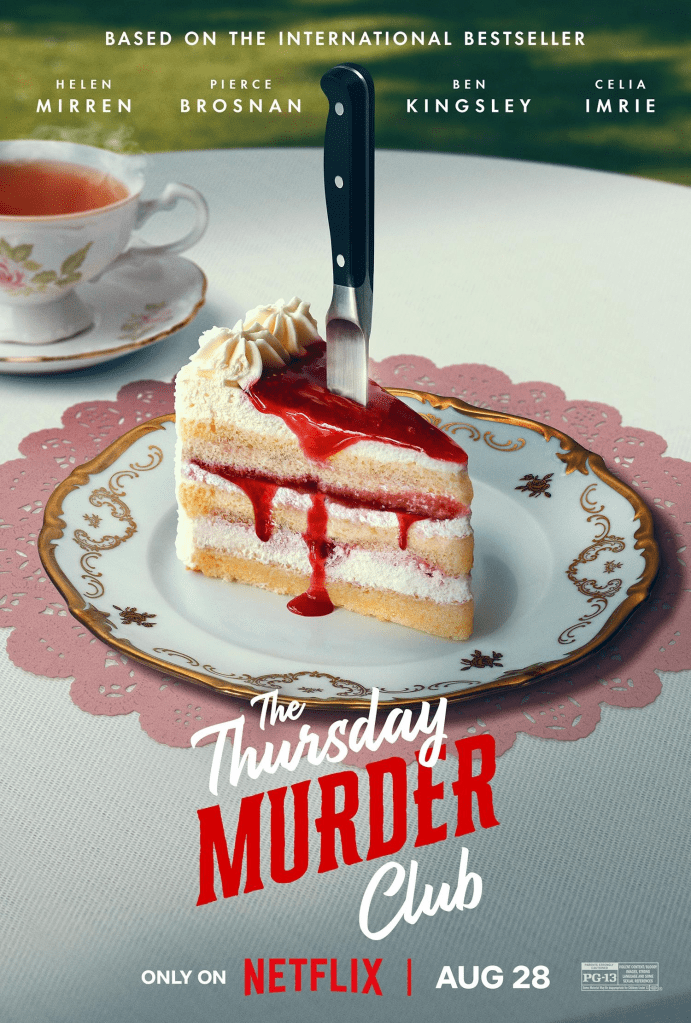
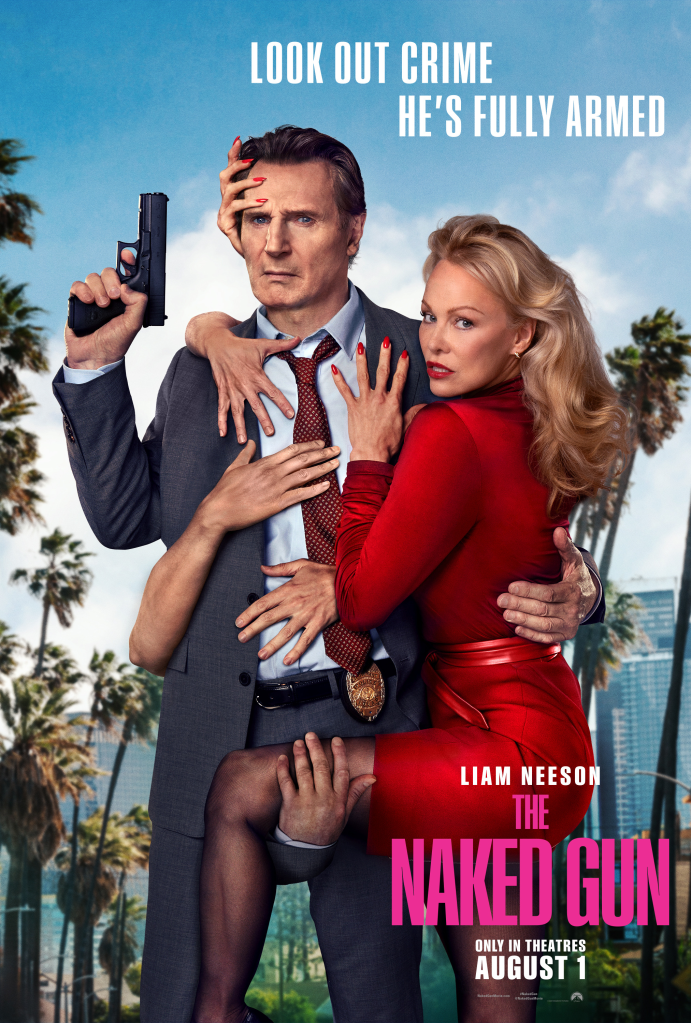


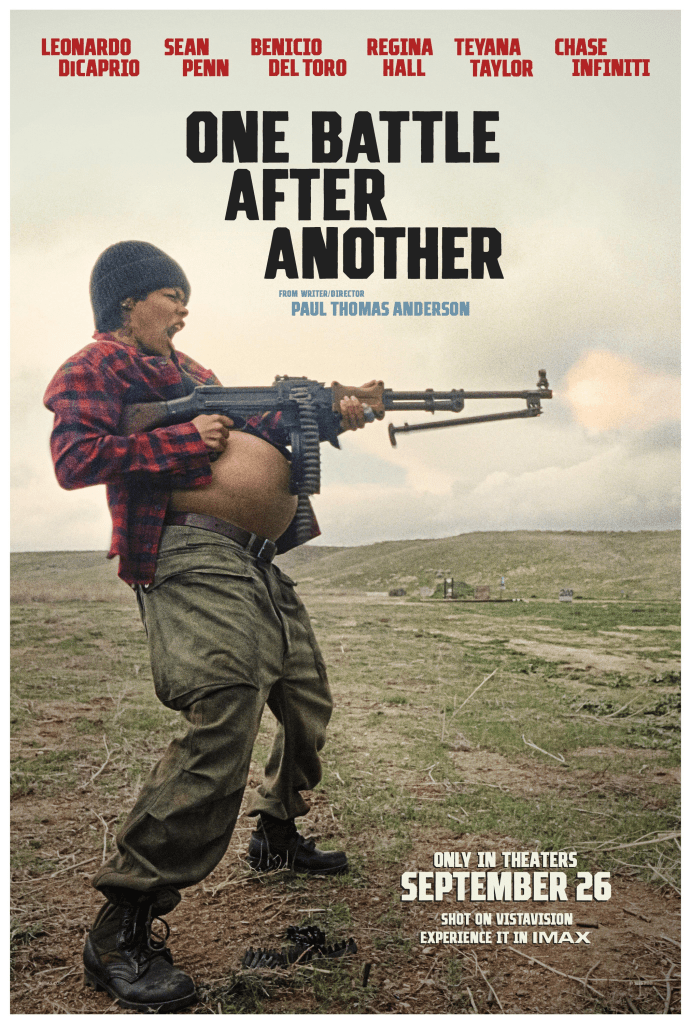
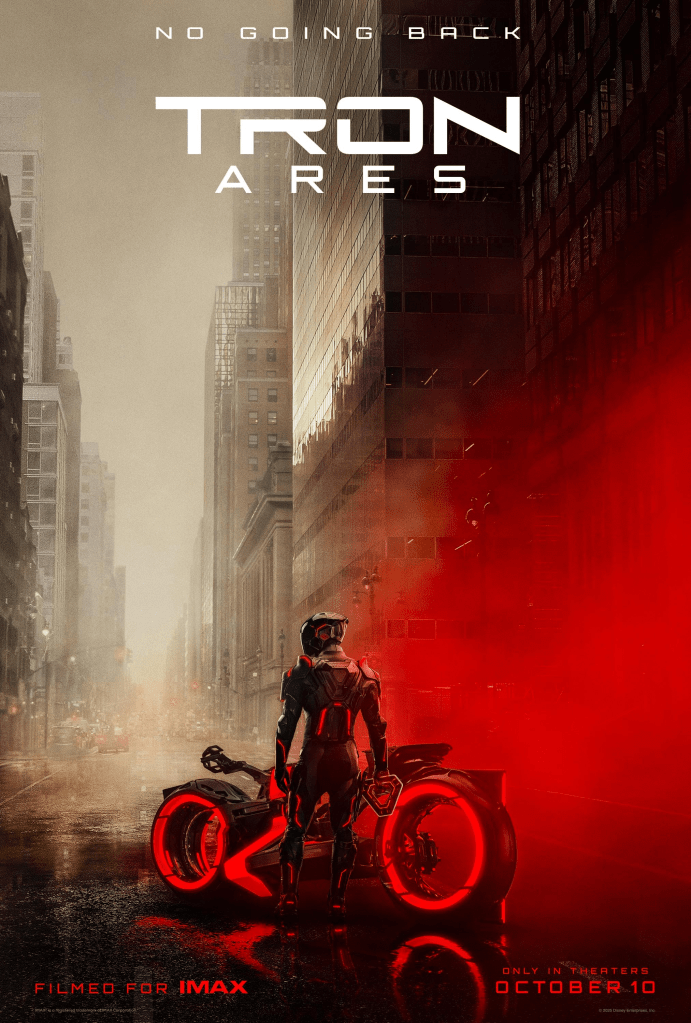
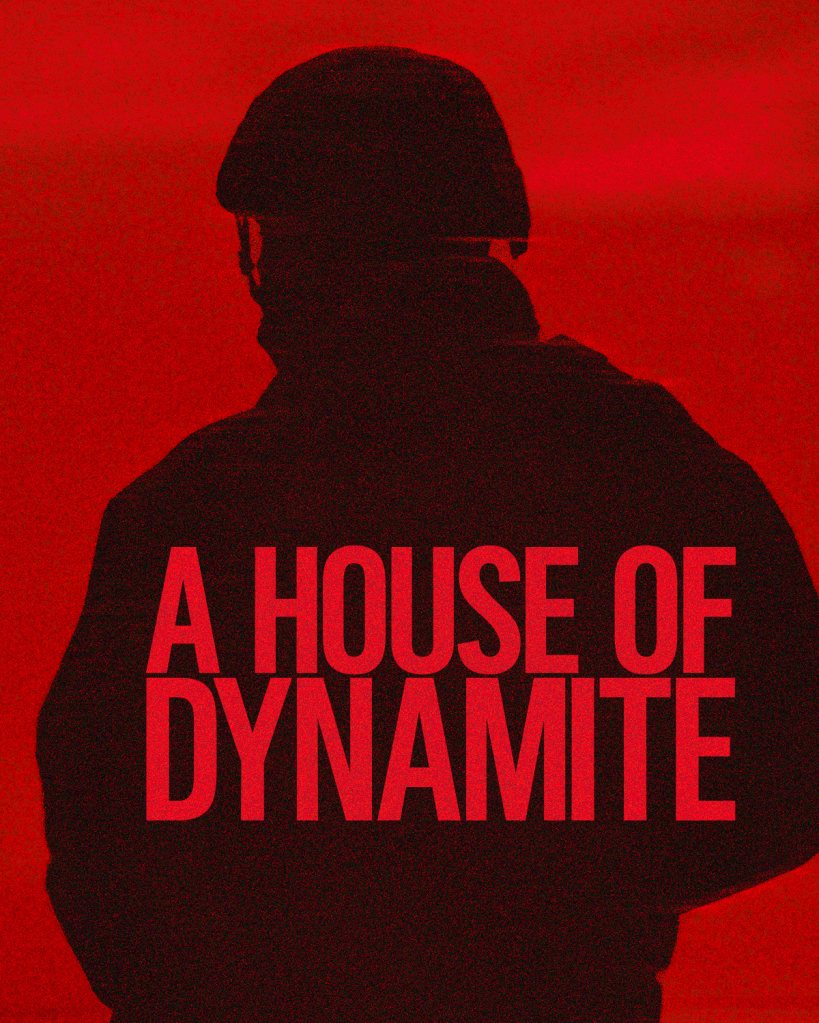

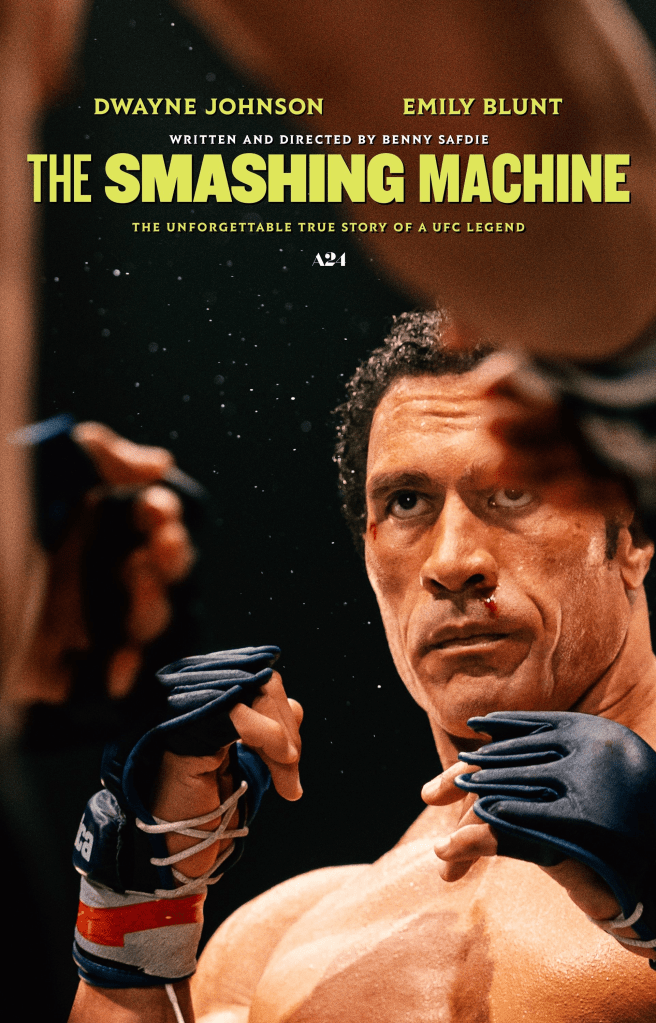

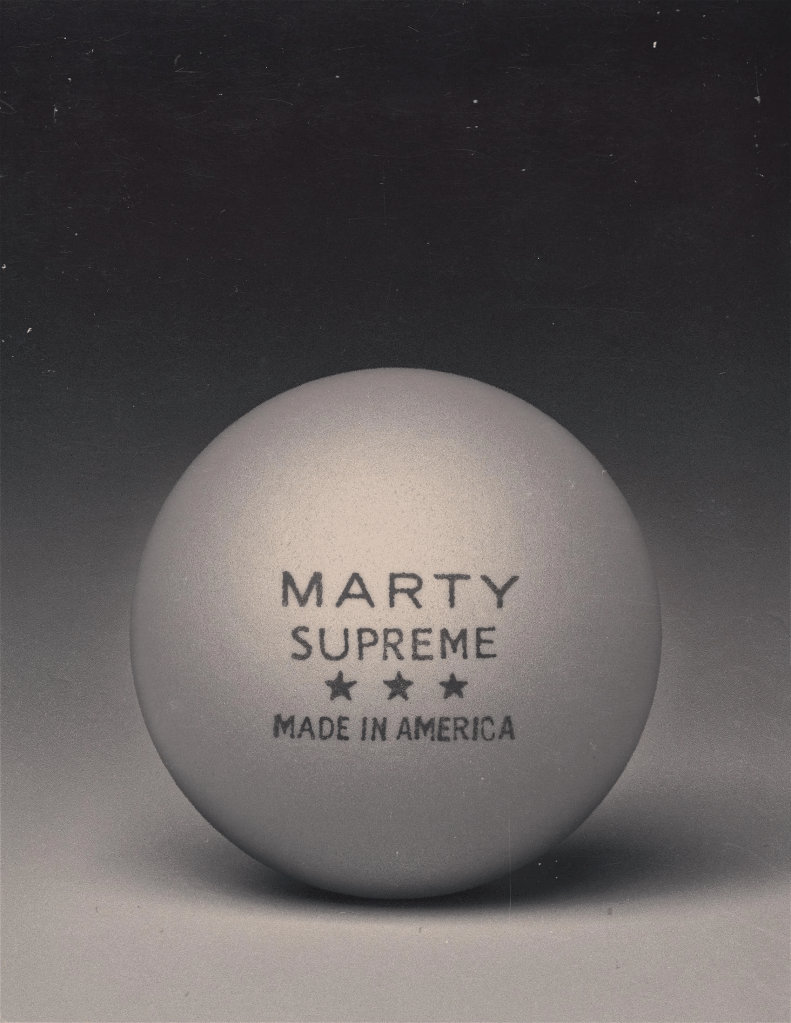

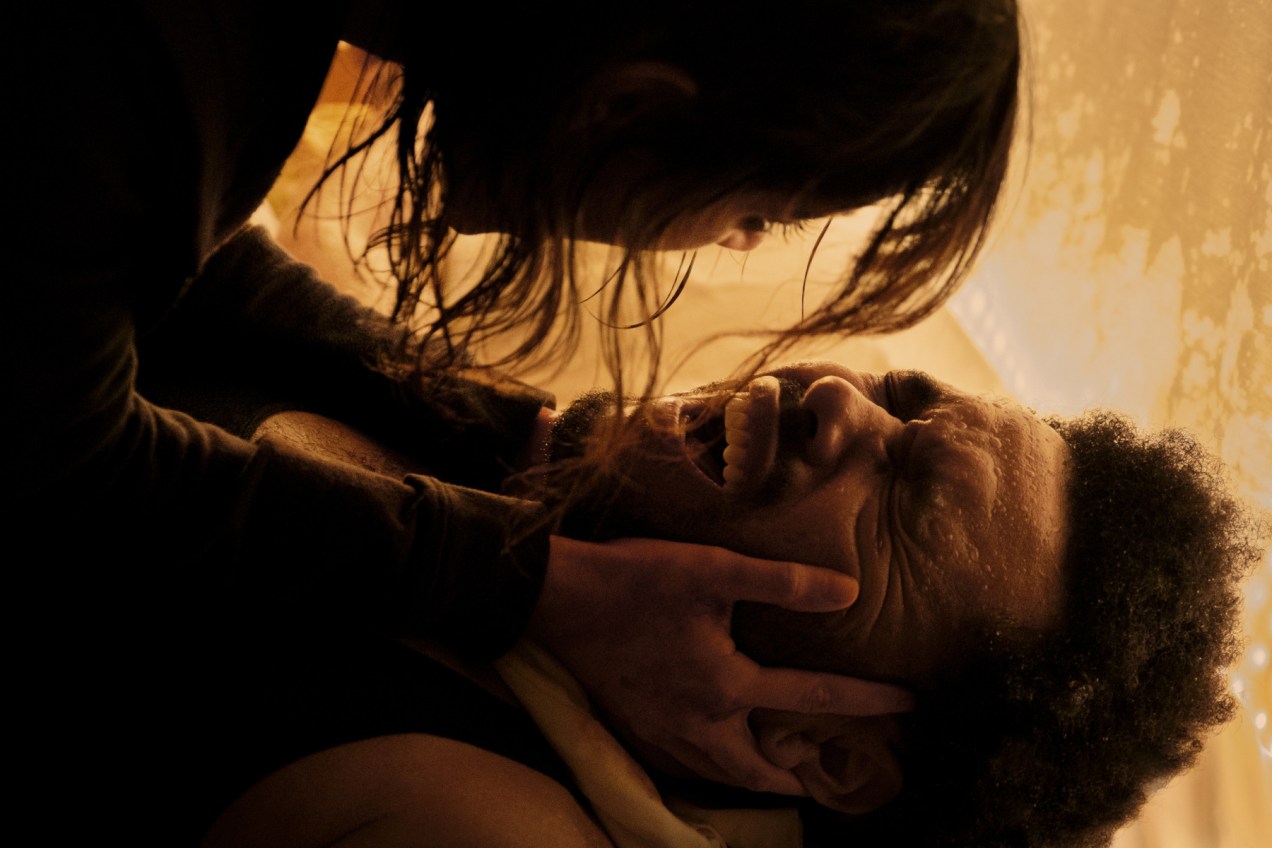
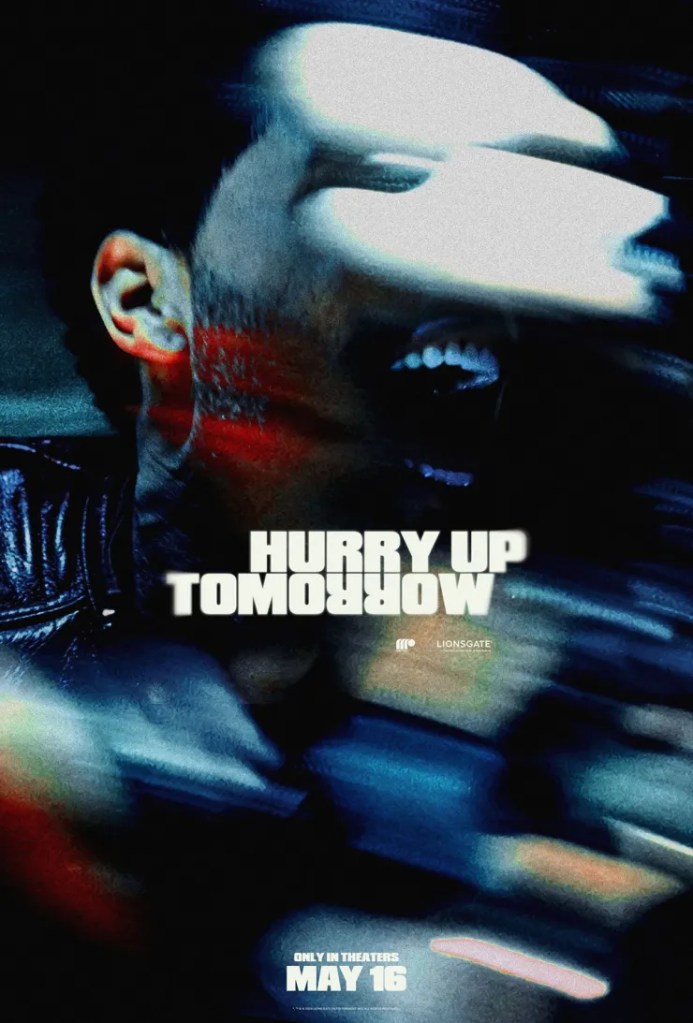
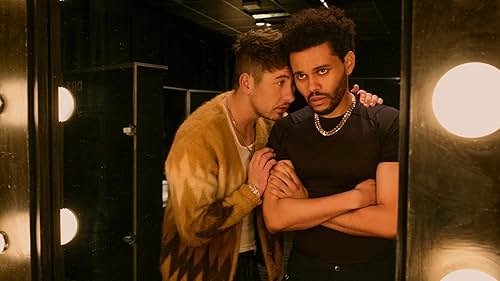
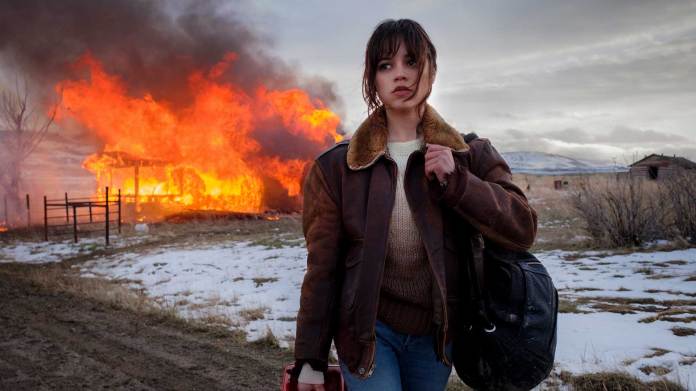

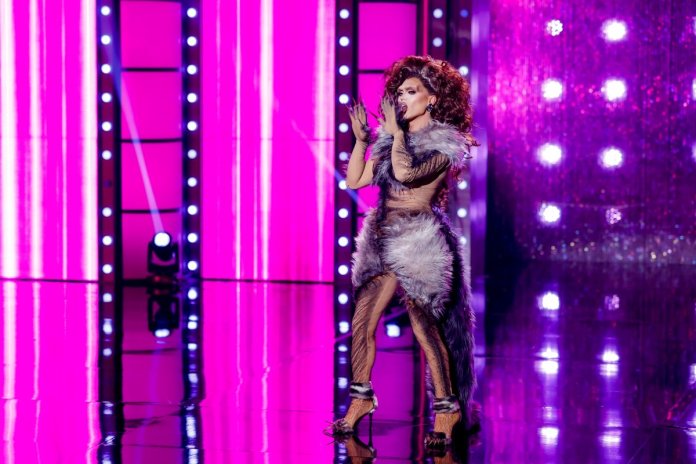

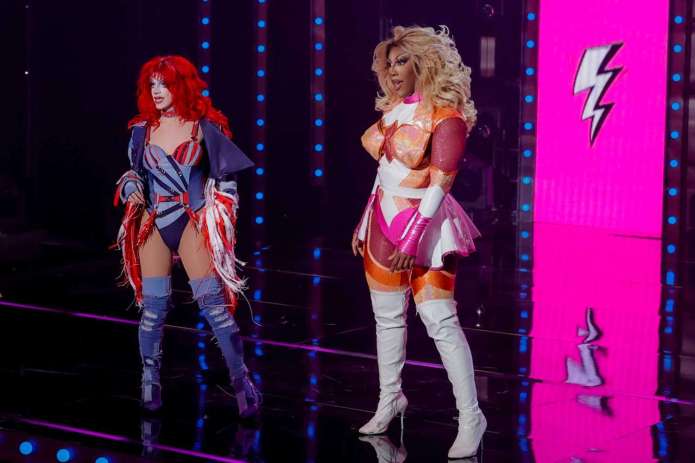


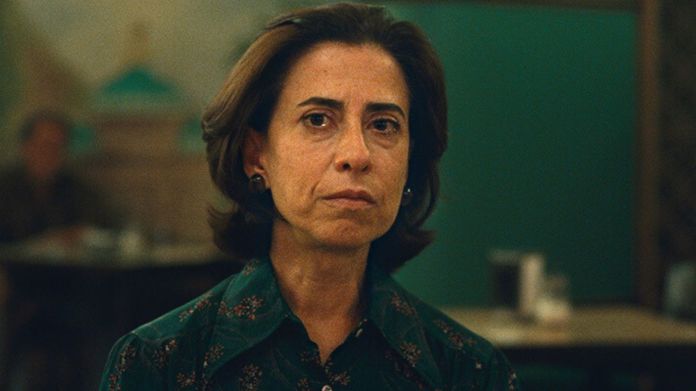


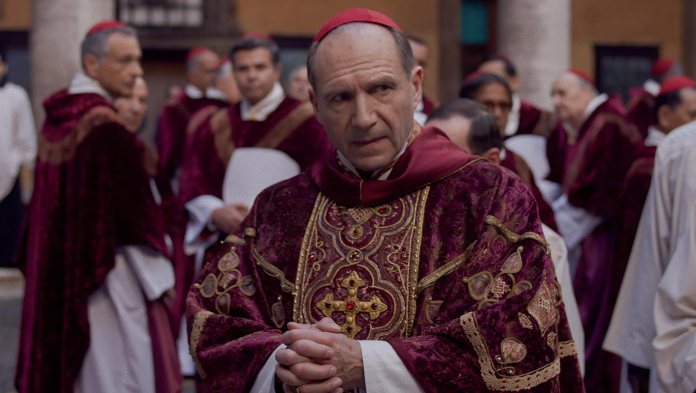
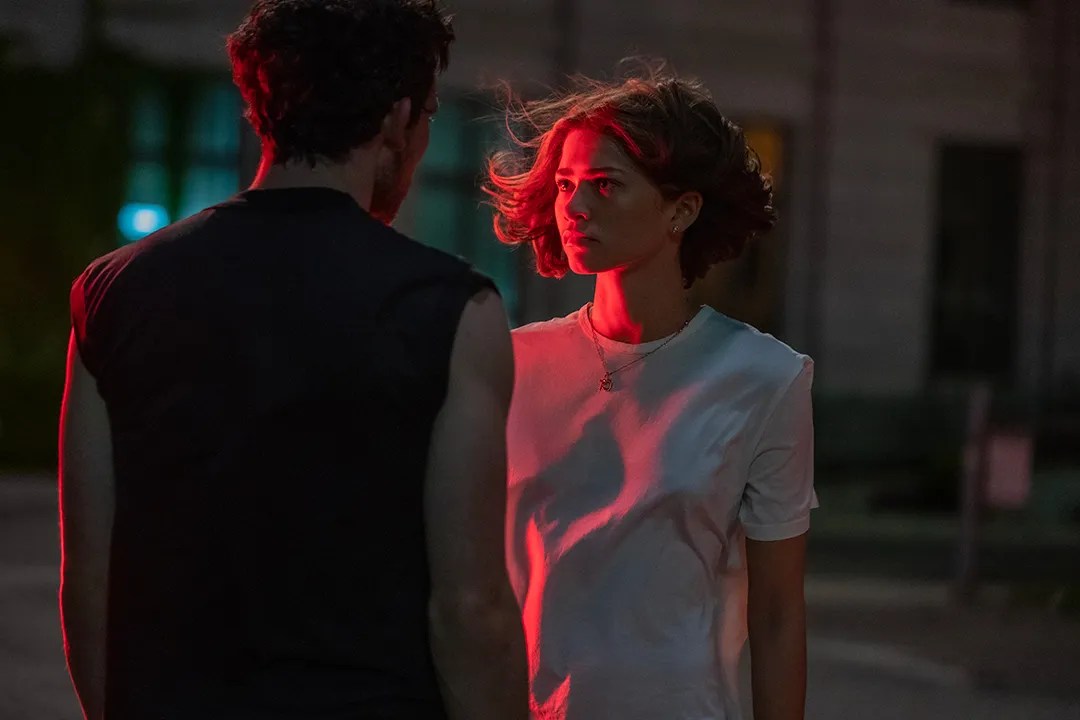

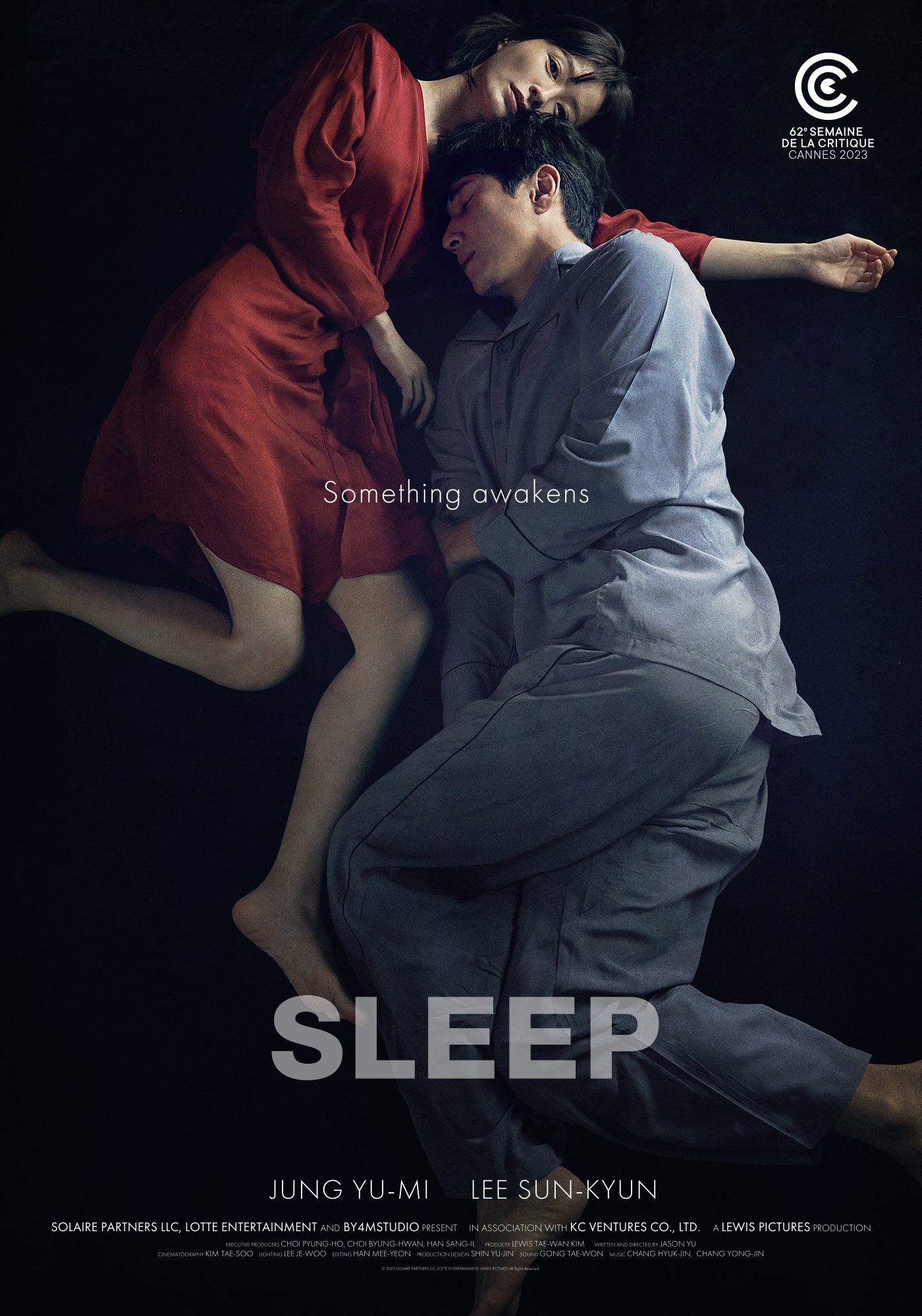


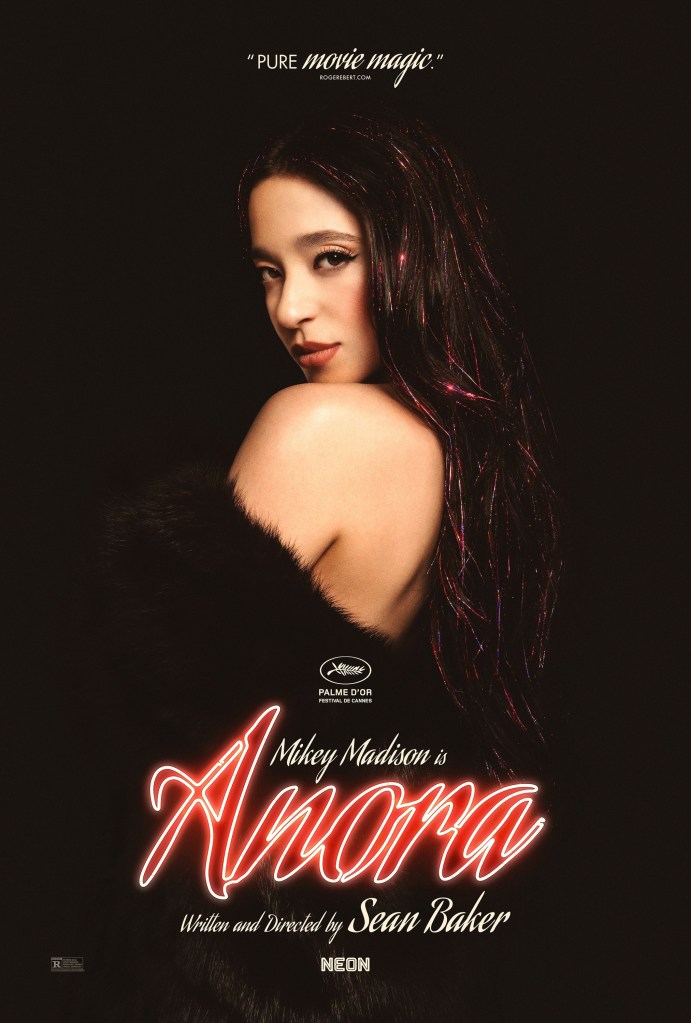



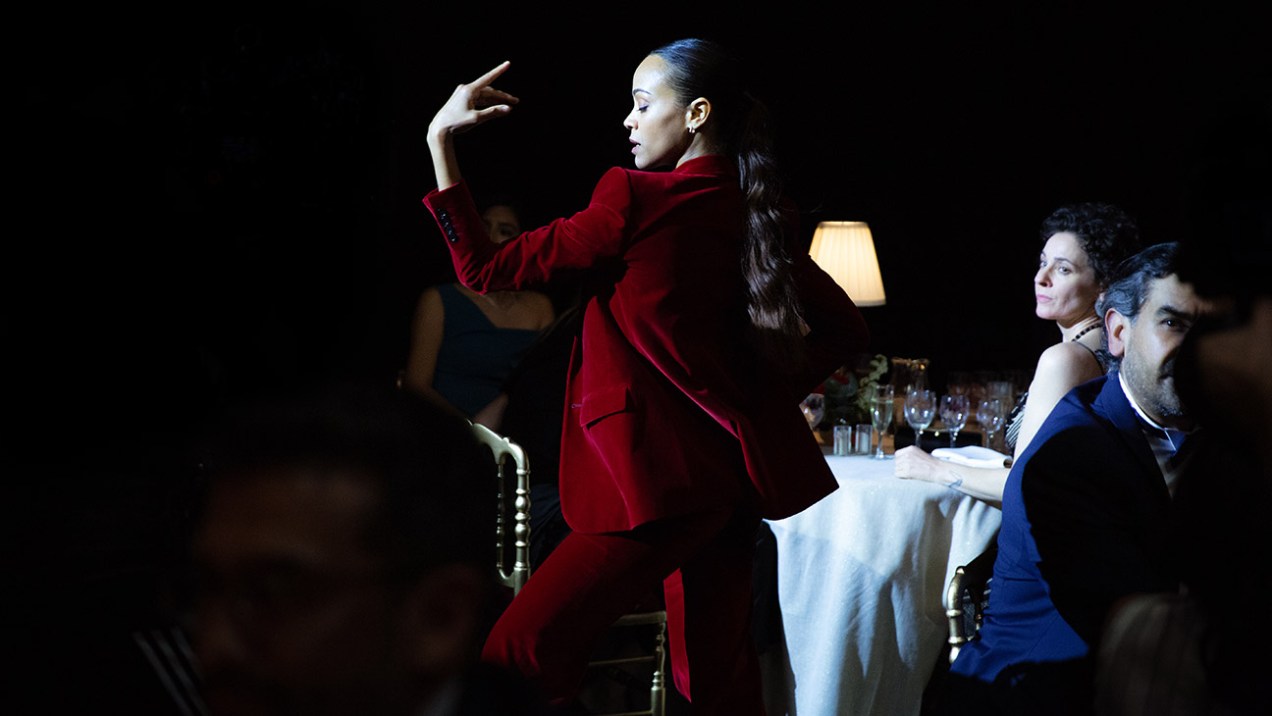
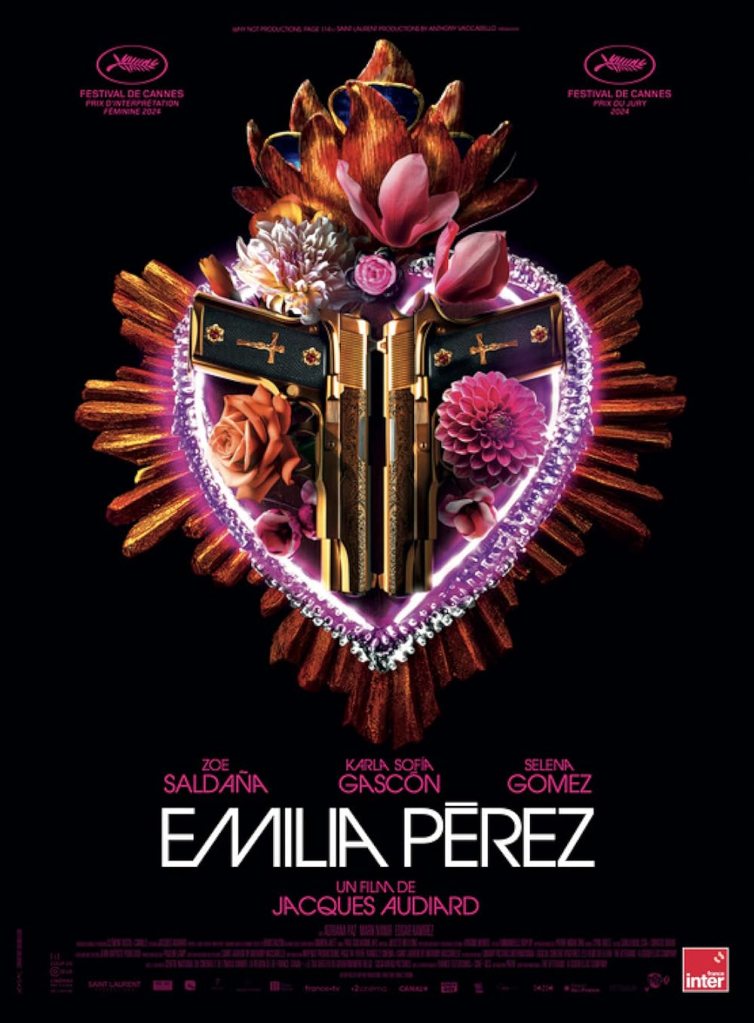
 The Quite Nerdy Blog