Features

RuPaul’s Drag Race Season 17 – The Good, The Bad and The Suzie Toot

I felt I needed to add something at the top here because things aren’t great in the LGBTQ+ community right now. You probably know that here in the UK, the supreme court ruled that trans women are not legally considered women. That’s disgraceful. We’ve still not felt the repercussions of this ruling but anyone with their head screwed on can see it’s a sign of worse things to come, both on legal levels and on social levels. If you’re someone reading this who has a little extra money floating around right now, I would like to ask that you donate it towards a charity that supports trans people. Feel free to do your own research but if you need help, I can get you started. Mermaids do a lot of good work at supporting young trans people and their families, I have attended sessions from Gendered Intelligence which are a really valuable way of keeping workplaces informed of how to support trans, non-binary and gender questioning staff or visitors, and I will personally be giving some money to The Clare Project because they’re a local charity to me, they run support groups and workshops hosted by and for trans, non-binary and gender questioning people who need a little extra support. And if you don’t feel you have enough money to make a difference but you do have trans friends or family, just look out for them, be an ear for whatever they’re worried about and just take steps to be an ally. Buy their coffee, get that book they wanted, make sure you pay for their cinema tickets for a little while. These are small things but when something so big and so terrible has happened, a little treat goes a long way. That’s me, that’s my soapbox, I just didn’t feel I could talk about drag and not mention this because it’s an artform that owes so much to the trans community and as a cisgender man it’s something I owe it to the community to mention. We will now move to your regularly scheduled programming, fix your hearts or die.

I haven’t really talked much about RuPaul’s Drag Race on my blog, because in the grand scheme of it, I’m only a recent fan. It’s also one of those things where I don’t know how much demand there is for me to talk about it, so I rarely do. However, I would be lying to you if I said a great deal of my time isn’t spent watching and thinking about Drag Race. Which brings us to today, shortly after the conclusion of Season 17, a season that I find myself so full of things to say about. Seeing as it’s my first time really talking about Drag Race on the blog, let me give you my credentials (and lack of.) First off, I am a straight cis man, I have only been to a handful of drag shows in my life and though I have a lot of lovely queer people in my life, I have also been primarily surrounded with other cis-het men and women. However, what I do have is knowledge of Drag Race. I have seen all of the American, All Stars, UK, Canadian, French, Swedish, Australian and New Zealand seasons, and have dabbled in Philippines, Germany, Spain and Mexico. I’ve been to Drag Con twice and been socially awkward around very friendly icons of the international drag stage. At this point of my life, I am someone who intricately understands the shape of a reality competition like Drag Race, so while I couldn’t quite describe myself as “in queer media”, I’ve read the core texts. It’s also important to state that, along these lines, Drag Race is a TV show and I will talk about it as such. When I refer to queens, I am referring to them by their stage names because these are characters on a show and we can’t assume to know what the people behind the characters are like. With this all laid out, it’s time to start our engines and find out if the best drag queen won.

Perhaps controversially, I felt this season got off to a poor start. The premiere itself was curious, as we dedicate a lot of time to an elaborate, unfunny and pointless Squid Game parody. So far, so Drag Race, someone let those writers touch grass. However, we do get some air when we’re introduced to the queens, proving that honestly it serves to just do the formula that has been refined over the past sixteen years. Speaking of the formula, it is time to do what we always do on a premiere now and have a talent show (split across two episodes for our viewing pleasure). What was once something so unique and exciting (I need not say more than “same parts” “is she gonna jump from that” or “brown cow stunning” to remind you) has devolved into a show that is mainly queens lipsyncing to their own original “bitch tracks” (songs written to tell you how much better they are than everyone else, “Mama Ru I’m gonna snatch the crown” type things). It’s telling that even in this over saturation, the winners of both episodes were queens who did a bitch track with a twist, those being Suzie Toot tap dance syncing and Lexi Love roller skate syncing. Both shows were fine in general, we just need to radically alter the show and do something crazy like banning pre-recorded music, so that real talents can come to the fore (Shannel, we never forgot what they took from you).

Anyway, that is all by the by, there are two main reasons this premiere is a spanner in the works of an otherwise exciting season. The first is Katy Perry, our space goddess who returned to Earth out of the kindness of her heart and her love for the LGBTQ+ community. She is the exciting premiere guest judge and not to be that guy, I completely called it. When “Woman’s World” came out, it immediately slapped us all in the face as a song whose lip service to feminism was so detached that it was clearly only made for West Hollywood gays without female friends, which led me to make a prediction. Drag Race famously films its seasons almost a year before airing, so there was a chance we were hearing the song after production on Season 17 had wrapped. However, I predicted that Perry would not only give her song to Drag Race early so they could use it, the song would be used on the premiere and she would be a guest judge. Her desperation was as embarrassing as it was transparent and the prophecy did indeed come true, with Perry lacking an ounce of humility and doing her best to act odd enough so that at someone might, just might, shout “MOTHER”. The other issue is the “badonk-a-dunk tank”, a gimmick that allowed two people to be saved from elimination by randomly pulling levers at the end of an episode. It fortunately didn’t last past episode 5 but it cheapened the stakes for a while and I was glad to see the back of it. It did mean though that the culminating lip-sync of these two talent shows was an underwhelming mess which no one went home for. Oh well.

After this though, the show starts finding its rhythm. If I’m honest, it’s always in the middle where Drag Race is at its best, when it doesn’t have to set up new characters or ensure all the storylines are resolved, but can just relish in the momentum it has gained. The challenges are good, but the weight of the season is on the back of the queens, who are charisma machines. It has been pointed out a lot how young this cast is, and while I think their inexperience (i.e. they’re my age) means they don’t do as well in the challenges, it means they have a cattiness and a vivacity that lights up the screen. Take our first three eliminated queens, Lucky Starzzz, Joella and Hormona Lisa. All three have an interesting perspective but just seem broadly unprepared for the types of challenges that Drag Race asks of its contestants, which means we say goodbye. On their way down though, all three get iconic moments in which their larger than life personalities can shine and it means that I remember them fondly months later!
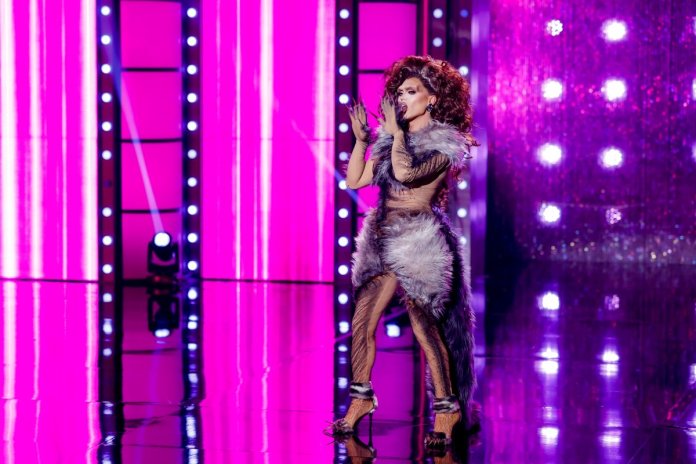
What served as a really good bellwether for the trajectory for the season was the elimination of Crystal Envy. Again, this is about the character presented on the show, not the performer in real life nor their off-stage self. Crystal was a queen I just didn’t connect with. Like Q last season, her drag was high quality, looked expensive and she was able to do what the show was asking her to do. The problem is, I didn’t get a perspective from her. I know Hormona does drag like a good Christian housewife, I know Joella is THE Slaysian diva of LA, I don’t know who Crystal is aside from someone whose nude illusion suits are grotesque. And so, when she was eliminated by Lana Ja’Rae (a performer so charismatic that she lost her wig and still easily won the lip-sync, a new and unique move for her), I felt relief. The show was telling me that it wasn’t going to reward quality without a perspective but that it was interested in queens who had something to say, no matter how consistently well they said it. For me, that commitment to exciting personalities is exactly what makes Drag Race such a consistently rewarding piece of reality TV.

With Crystal gone, our little weirdos continue to get to flourish, doing just okay at the challenges and absolutely nailing Untucked, refusing to keep a single thought inside their heads when it could instead spill out and create drama. As I said earlier, this is a cast whose strength is not in nailing challenges but in being good TV personalities. Take Arietty, the undeniable villain of the season. Her runways were great and her everything else wasn’t, but her mean confessionals were a treat and were a sign that a bigger meltdown was coming. That meltdown came in the phenomenally entertaining Villains Roast episode, in which she proved, in front of three other notable villains, that she was actually the biggest villain of the show’s past decade. In a spiteful rage, she stole jokes from Tampa’s sweetheart Jewels Sparkles, then delivered the stolen jokes badly, then left a mirror message that revealed Onya’s personal medical history on her way out. That was a blaze of glory if ever there were one and you know what, it was phenomenal TV. Thank you Arietty for being an evil little elf.

I’d also be remiss not to mention the sweethearts of the season, Kori King and Lydia B. Kollins. Very quickly, the two began a romance that has continued to grow since this day. Kori was initially worrying as she is the drag sister of Plane Jane, but fortunately Kori inherited the personality that Plane did not. Her confessionals were great, the other queens enjoyed her reads and do I even need to mention her illustrious Cameo career as the premier Suzie Toot impersonator? Initially, it didn’t seem a natural fit that she would go for Lydia. After all, Lydia is your classic weirdo queen, who would reliably be in the most interesting (though rarely the best) thing on the runway and who played David Lynch in the Snatch Game. Despite this, the two worked and got a magical lipsync moment to “Kiss Me Deadly” in which they got to show RuPaul how they really felt about each other. Both immediately make complete sense for an All Stars return (and curiously, Lydia is already confirmed to return for All Stars 10) but only to redeem their challenge performances. Personality wise, entertainment wise, these two did themselves very proud.

Which brings us to almost the end, which confusingly will be the end, as in the winner of the season. A season is often defined by its winner and how well their legacy perseveres. Season 16 has a complicated legacy because it choose the wrong winner whereas season 15 would have felt like a cheat if Sasha Colby didn’t win. Fortunately, season 17 fits into the latter category. All the finalists this year apart from the winner would have been “a good choice, but…”, the types of queens who have an open path to victory in an All Stars season but maybe weren’t ready now. Jewels was great but needed to apply the confidence and humour she had in the confessionals into her challenge performances. Lexi was a super promising queen, but was clearly very in her head and is still working through some personal stuff that is holding her back from being her fullest self. Sam is high quality but needs a hook other than being country. Looking at our final four, it could only be Onya Nurve who took the crown.

Onya Nurve has absolutely commanded season 17, being a dominant personality from the second she appeared. While she was never a queen who would be wearing the best outfit on a given runway, she is a queen who knew how to work the stage, how to work a script and how to work RuPaul very specifically. She was an absolute treat to see on screen week to week and is a testament to the quality of a different kind of drag queen. Her outfits don’t look as expensive as others and she isn’t even doing drag full time, Onya revealing in the final episode that she works as a burger chef for her day job. I feel the same about her as I do Spankie Jackson from Drag Race Down Under. Both were the obvious frontrunners for most of their seasons, but lacked the polish of some of the other competitors. However, through sheer talent and force of charisma, they won. It once again is a promising sign that RuPaul’s Drag Race is moving away from rewarding queens who throw a bunch of money at designers to cover up a lack of perspective and instead moving towards rewarding queens who are born superstars that are only short of a platform to showcase themselves on.

There’s one key building block of the season that I’ve not covered yet and that is the lightning rod of the season, the one thing we all can’t stop talking about. If you have watched it, there is one thing you certainly have a very strong feeling towards and that is Suzie Toot. Suzie is a queen from Fort Lauderdale (we love another Florida girl) and her style is heavily influenced by twenties and thirties cinema. Naturally, I was besotted quite early and she won two episodes very quickly, the first of which she won by tap dancing at Katy Perry instead of actually singing “Woman’s World”, an iconic move. Her makeup was distinctive in a way that a lot didn’t like, but she was quick to change it up and try something fresh. However, as the season develops, something shifts. Suzie hits Snatch Game with an intense delusional edit, claiming to have won when she clearly didn’t do well. This sets her on a downturn in which she becomes the punching bag for the girls, specifically Lexi, whose entire storyline starts to become about Suzie. By the time Suzie is eliminated just before the finale, we have been shown her as a great competitor, a delusional menace and someone who didn’t live up to her own potential. It felt odd, considering that we knew the first to be true and had conflicting evidence on the other two.
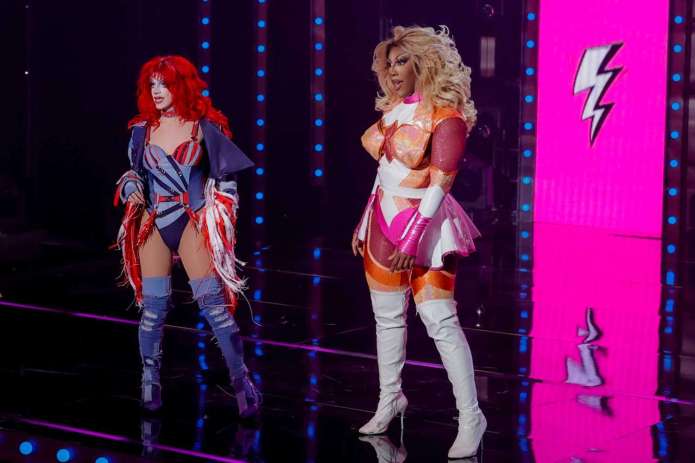
However, Suzie’s arc is wrapped up in the Lip Sync Lalaparuza. It starts very business as usual, with everyone (including Michelle) laughing at Suzie because she doesn’t get the Liza Minelli song. Instead, she is forced to tackle the Dua Lipa song “Training Season”. And guess what? She crushes it. A new Suzie emerges here, a cool and effortless one, akin to the rocker chick Suzie we briefly saw at the start of the season (and that she should have won the challenge for). She wins the lipsync and moves onto “We Found Love” by Rihanna. Once again, she is calm and composed, winning the lipsync without whipping out a single trick more complex than a stanky leg. She easily moves forward to the final round against Kori King, where they perform to “APT” by Rosé and Bruno Mars. This is the best lipsync of the season, no doubt. Once again, Suzie is in control completely, relying on smooth and carefree movement as Kori attempts to do tricks. She swishes and she glides and for many viewers, she cast an intoxicating spell that two weeks on has yet to be broken. Suzie blows Kori out of the water and wins a $50,000 prize for her troubles. It’s the kind of redemption arc she needed and, after the way the show presented her, the kind of redemption she deserved. She is a superstar of immense and admirable complexity and while Onya always deserved to win the crown, I would have loved to have seen Suzie in the finale giving her a run for her money.

All in all, a season well done! We had some reasons to be worried in the first few weeks but once the production tricks got pushed to the background and we let a group of charismatic drag queens hang out, we got some really exciting TV. As it always is now though, we look to the future and ask what next? I think a lot of production decisions with this season, specifically Crystal’s elimination and Onya’s win, push the franchise in the right direction. Drag Race has become a show that people will literally re-mortgage their house to appear on (I am told it’s just as bad, if not worse, for the UK franchise), so it’s a comfort that the show is being explicit in rewarding what it claims to have valued this whole time, in charisma, uniqueness, nerve and talent. All Stars 10 is already on the horizon and shows lots of promise, especially because as a huge fan of season 14 it’s nice that this is basically a full reunion. We’re also getting the first edition of Drag Race France All Stars this year, on top of all our regular franchise outings. After a disaster with Global All Stars and a course correction with UK season 6, Drag Race feels reliable again. If you’ve never jumped in, these past seasons from the US and UK franchises are perfect places to start, with casts full of personalities you are doomed to fall in love with. Or, if that isn’t enough to convince you, can I again remind you that this is a season where a queen inspired by the great depression tap dances to “Woman’s World” in front of a befuddled Katy Perry?

Standard
End of Year Favourites

My Favourite TV of 2024 – The Traitors

At the tail end of 2022, my partner and I were searching for something fun and easy to watch together and stumbled across a show on iPlayer called The Traitors. The show is a British adaptation of a Dutch format called De Verraders in which Claudia Winkleman guides a series of guests through missions to earn cash. Amongst them, however, are traitors, looking to murder faithful players every night and sew the seeds of chaos. Players vote to eliminate traitors and if any are left at the end of the game, they steal the whole prize pot. It’s a simple format, which has spread across the globe to broad success, but the British series is king for me, primarily because it casts normal people. The American and Canadian versions both fill their casts with celebrities, which still makes for entertaining TV, but loses the sheer purity of the game. And if we’re talking purity, the second season of The Traitors UK is the place to go for the purest joy that reality TV has to offer. It kicked off the year in TV with a bang in a way that left everything else in the dust.

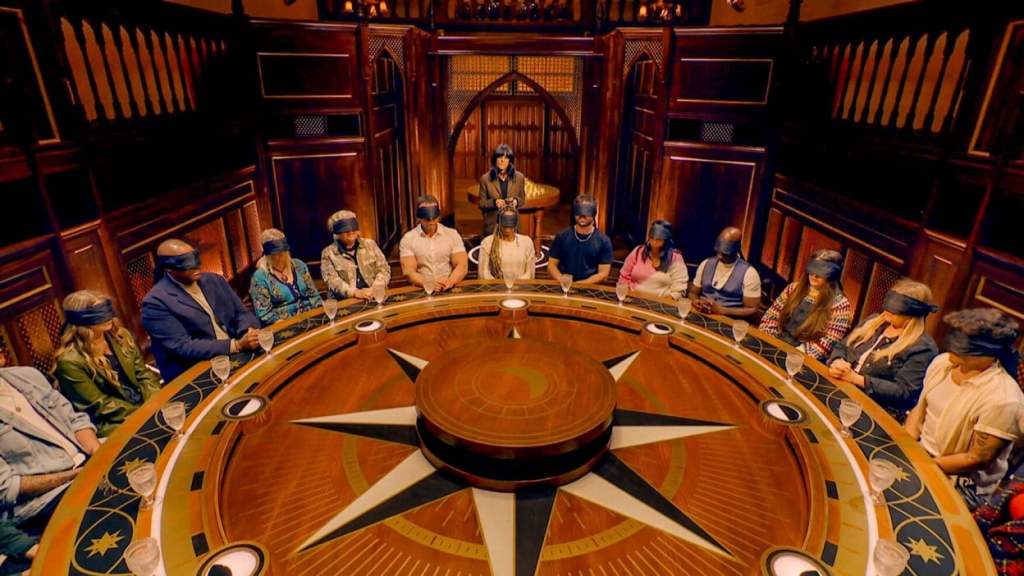
As a warning, this is sort of going to devolve into a recap of The Traitors UK season 2 as that’s the easiest way to explain why it’s so excellent. I will keep spoilers on other seasons light so that there is still plenty for you to discover if this makes you realise what you’re missing out on. Our first two episodes are pretty standard fare, with the players going on missions together and our traitors being chosen. This series there are four traitors, three chosen by Claudia who are then tasked with recruiting a fourth. Our first three are Harry, Paul and Ash, who recruit Miles and start off pretty strong. Ash’s name is thrown around but the traitors all look out for each other. Things start to get special though in episode three. Everyone has been joking that Paul looks like the son of Diane, another contestant on the show. Diane jokes about it in a confessional interview and says “Paul’s not my son… But Ross is.” Usually on the show, when a pair know each other from the start the audience are told this information. Here though, we are surprised, deceived and flummoxed. It is an incredibly exciting structural move that sets up an insane episode.

One of the joys in every single season of The Traitors is that the people who breakdown, lose their mind or otherwise act a fool are almost always innocent. People with nothing to hide suddenly become the most volatile cast members and borderline force the group to banish them out of sheer confusion. Episode 3 features one such case, as a faithful named Brian gets in his head. During a mission, it is revealed that the other players all think he is a sheep, allowing himself to be led blindly by others. This disconnect between how the others see him and how he saw himself sends Brian mad and he is rabidly running around the group asking people what they think of him. It is unbelievably suspicious behaviour that itself pushes him to a rambling monologue at the round table in which he cuts off Claudia Winkleman, just to dig his own grave deeper. Early on, it felt like a special moment we would all remember forever, a chorus of “am I or amn’t I?” ringing out across the nation.

The moments kept coming though. Ash eventually found herself banished and the three male traitors carried on, planning to murder Diane, which was to be a murder in plain sight. For this to work, they had to convince Diane to drink a glass of pink fizz. Unfortunately, Diane bloody loves pink fizz and downed the whole thing. However, the juicy part of this is that the murder isn’t instant and the traitors all have to come to breakfast, expecting Diane to be dead and seeing her alive and well. That’s because today is her funeral. The mission for the players is to work out who hasn’t been killed, slowly whittling down options and leaving a handful of players walking to what might just be their grave. Once we reach the graves, the final three must climb into caskets and the players put flowers in the grave of the person they think has died. This leads to a genuinely heartbreaking moment as Ross walks up to his mother’s grave and throws a rose on her body, having to avoid tears because no one knows about their connection. This whole scene is a moment that somehow rides a delicate line between delicious camp and genuine sentimentality, in a way that I think even a scripted show might struggle to.

Shortly after Diane’s death comes a big moment. This season, Paul was a particularly smug traitor, someone who seemed very certain of his own success from the word go. Even though the show often has you rooting for the traitors, he was someone whose downfall promised to be legendary, a promise which the show wisely delivered. You see, while faithfuls usually crack over nothing, traitors are often tripped up when they buy too much into their own hype. Become popular, get traitors out, but don’t look too in control while doing it or people will be suspicious. It’s a tough balance and it’s fair to say Paul got vertigo. Earlier in the season, he attempted an elaborate double bluff that, to cut a long story short, ended with Paul losing his place as the most trusted faithful and casting a permanent shadow of doubt on himself. Harry saw this and understood that a downfall was coming. With Paul having kicked out two fellow traitors already, Harry lays his trap, allowing all the faithfuls to do the talking for him while he comes in with the killer blows. The mere reaction alone to what comes next is a highlight of the show. Paul is voted out, delivers a speech and bows as he admits to being a traitor. Cue screaming and shouting, chairs being thrown, people hugging Harry, pure cinematic chaos.

With Harry being a “traitor hunter” now though, he needed a get out scheme, which leads us to the smartest play a player has ever made for their game. In a mission, Harry picks up a shield, meaning he is safe from murder that night, though obviously as a traitor he is safe every night. His friend Molly, a faithful, sees him get the shield, but he asks her to keep it a secret. Later in the day, Harry tells two other players about this shield in order to gain their trust. That night, he recruits another traitor and at breakfast, magic happens. Due to the recruitment, there was no murder, but the three who knew about Harry’s shield immediately start blabbing that the traitors must have tried to kill Harry the night before, meaning Harry couldn’t be a traitor and that anyone gunning for him probably was. It was an absolutely stunning move which cemented a trustworthy clique around Harry and made him one of the all time great Traitors contestants.

After that play, there was almost no way Harry wouldn’t have made the final, which is fortunate as he leads us somewhere very emotional. Over the episode, the numbers are slowly whittled down and the only thing standing in Harry’s way is a man named Jaz, also known as Jazatha Christie. Jaz has been picking up clues very slowly but has been the only one with solid suspicions of Harry. It became a race against time for Jaz to gather enough evidence and create enough alliances to take Harry down before it was too late. Alas, Harry’s trump card was Molly, an ally who he knew would take him straight to the end. Indeed she does, eliminating Jaz and triggering the end of the game. The two stand there, excited. Both are asked to reveal their allegiance. Molly smiles, saying faithful. Harry pauses. Molly’s smile fades. She has been absolutely played like a game of Kerplunk and now the balls have finally dropped. She runs off crying and Harry wins every single penny of the prize fund. What a brutal game, ending on a note that only isn’t dour because the strategy was just that impressive.

Those paragraphs leave out so much, so genuinely, don’t consider this season a loss if you still fancy watching it. It really is one of the most gripping seasons of television I’ve ever been lucky enough to witness. This year I also got properly into the franchise as a whole, watching all the US, New Zealand and Canadian seasons, as well as the final Australian season. The only one of those I wouldn’t recommend is Australia S2, in which the faithful are complete fools the entire season, reject all potential evidence and are blindsided at all times. Its sole redemption is the final three minutes in which the traitors face off and get what was coming to them. As I say though, all the others are well worth your time. Aus 1 is a special blend of a season with some phenomenal moments, the New Zealand seasons have some of the best connections between contestants and both UK seasons do remain a golden standard. With UK and US seasons 3 starting this week (and in fact, UK starting tonight), now is the perfect time to get into The Traitors. Enjoy what these new seasons have to offer, before enjoying the extensive and highly rewarding back catalogue of the greatest reality competition show with men in capes that isn’t Ru Paul’s Drag Race.

Honourable Mentions:

Ru Paul’s Drag Race US16, All Stars 9, UK vs the World 2, Canada vs the World 2, France 3, Global All Stars, UK 6, Down Under 4 and Canada 4 and 5 – Welcome to Drag Race corner! Lots of confusing seasons this year with wrong winners (according to what the show was telling us, all love to the queens), with the highlight being, for the first time ever, the UK season. All the queens were instantly iconic, wore terrible wigs and made us fall in love with them in every fantastic lip sync. Something to be patriotic about finally!

Hunted – This year I finally got into Hunted, a show in which contestants must go on the run from fake police officers. The hook is simple and the show always seems to deliver the goods, it’s that good kind of reality TV done well.

Baby Reindeer – Look, I did watch things that weren’t reality TV! Baby Reindeer burst onto the scene with an unbelievable mix of gripping shocks, dark humour and complex exploration of how we allow ourselves to be manipulated. If you didn’t see it, it really is the show this year you have to see to believe.

Doctor Who – I like Doctor Who and I think it’s nice to have a good series of it again. Nothing mindblowing, just fun Saturday night viewing with big ideas and a heart, even (and often especially) when it’s being stupid.

Guy Montgomery’s Guy Mont Spelling Bee (Aus and NZ) – One of my favourite discoveries from Taskmaster New Zealand was Guy Montgomery, whose dry absurdism I find hysterical. Here, he transplants that to his own show in which spelling is mixed with torturing comedians for our enjoyment. Until you watch it, you won’t realise what you’re missing.

Taskmaster (UK and NZ) – As I was saying above, nothing warms my heart like dry absurdism, stupid challenges and melting comedians brains. Of the year, my highlights were cricket nut Andy Zaltzman, as well as frenemies Rosie Jones and Jack Dee. Long may the mighty Davies and the pathetic Horne reign!

Boybands Forever – I have an issue with where this documentary ends, especially given recent incidents in pop culture, but it’s a really interesting documentary that allows its villains to dig their own graves and allows the exploited boyband members plenty of time to air their grievances.

Standard
top 7

Top 7 – Best Films of the Last 10 Years

Today marks the tenth anniversary of me writing this blog. It hasn’t always been this exact site, we’ve jumped around as I’ve tried to change and evolve with the times and I’ve drifted from weekly to fortnightly to whenever the energy emerges, but all the same I’ve been doing this funky thing for ten years. As someone cresting the age of 25, there’s not a lot I’ve been doing for ten years that isn’t breathing, eating or urinating, so writing is a big deal! For anyone who has been here for ten years, thank you. Anyone who has been here for five years, thank you. One month? You’ve done your best, there’s a lot of lore to catch up on, but thank you nonetheless.

To celebrate, we’re going simple; a top 7 list that celebrates my favourite films from the entire time I’ve been writing. Some of them have had reviews but I’m not linking to them because to be completely honest, the idea of reading things I wrote when I was 15 fills me with a level of dread that I’m still working out how to convey in words. If you’re desperate, seek them out, but I’ll be giving you my thoughts the whole way and my thoughts have also evolved a lot over the last decade. With all this said, it’s time for honourable mentions!

Gone Girl

David Fincher took a novel with an already excellent narrative and spun it into one of the best thrillers ever made. It is sick, it is twisty, it is some of the best stunt casting in history and if you ever meet a woman who calls it one of her favourite films, she is either a keeper or plotting to take your kidneys.

Interstellar

For most of the last decade, I’ve felt the need to defend the notion of “love is stronger than gravity and time.” I no longer want to defend myself, because anyone who doesn’t believe in the unbearably sincere heart at the centre of one of the coolest sci-fi films yet made does not deserve my time.

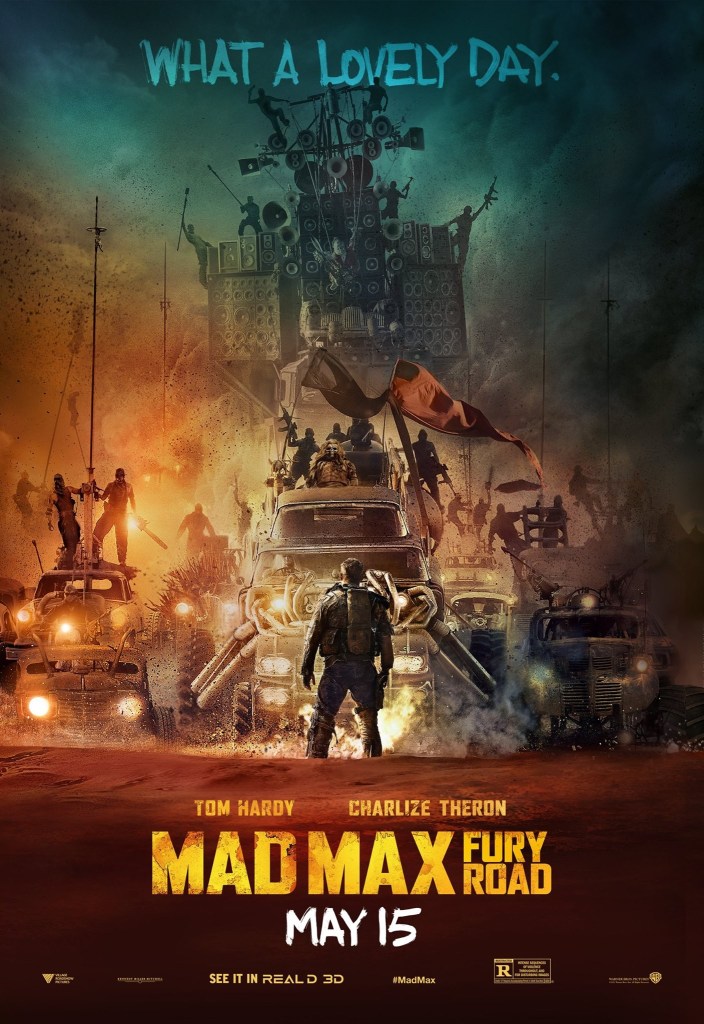
Mad Max: Fury Road

You know that scene in Mad Max: Fury Road where the camera pans along the convoy of cars, constructed out of trucks and bikes and nonsense, eventually landing at the guy who is playing a guitar that shoots fire? That scene alone is why this is one of the best films of the past decade.

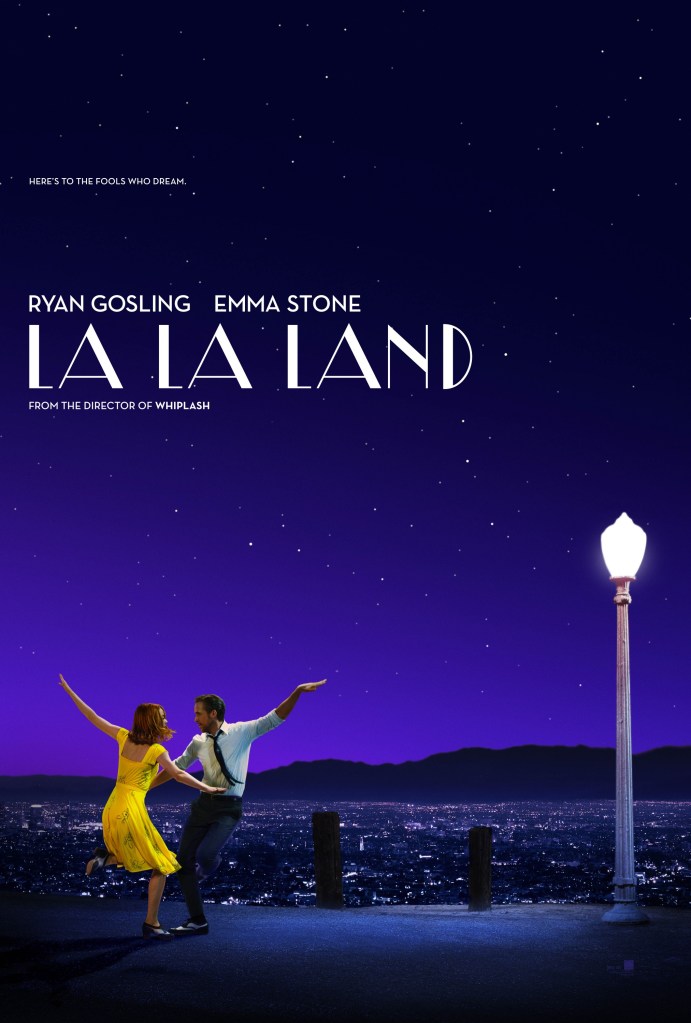
La La Land

Again, despite there being so many people who love La La Land, I feel an inherent need to defend my adoration of it. It is big and bold and a little bit stupid, but crucially it is a blast of joy directly into my heart that I watched five times while it was in cinemas. That can never mean nothing for a musical agnostic.

Call Me By Your Name

Okay, again, I should defend myself about this film starring Armie Hammer and focusing on a relationship with a hefty age gap. I do again refuse. Watching this film transports me to a place of pure sensuality where I drift into Italian landscapes, peachy platters and languorous stares. It announced Luca Guadagnino and Timothée Chalamet to me and both have continued to impress.

The Lighthouse

The Lighthouse has been one of my biggest growers of the past decade. I was interested by it at first but left it low on my Best of 2019 list, before becoming swamped by love for it during the pandemic. That love is yet to waver and I’ve still not seen anything that comes even close to this madcap spectacle of boys, beans and bottoms.

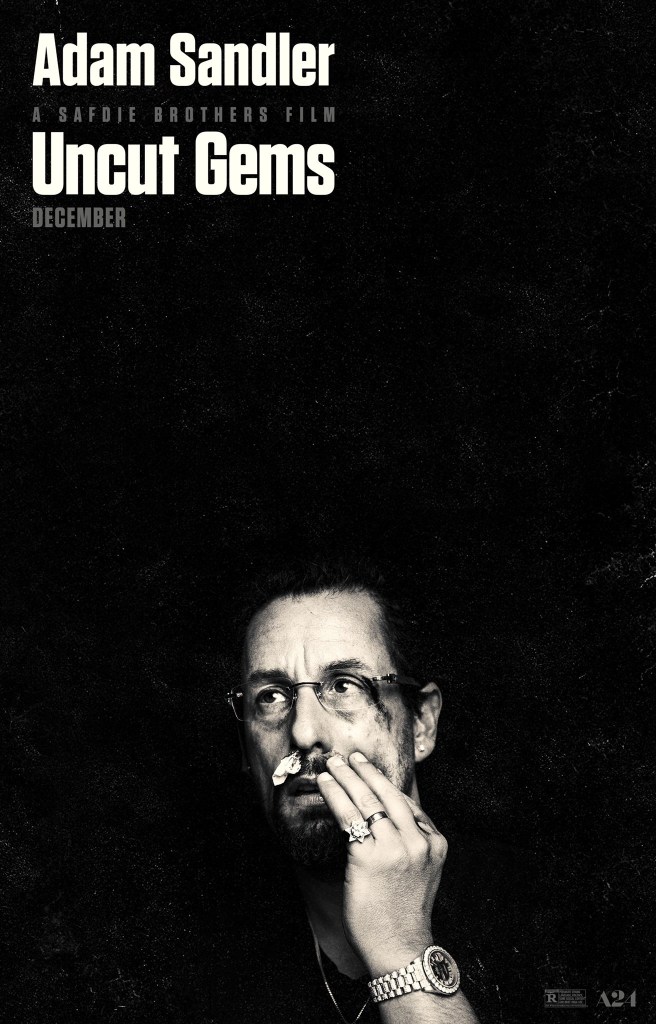
Uncut Gems

For a film that is structured to both resemble and create anxiety attacks, Uncut Gems sure is a film that has brought me comfort. It’s all you could ever want. Funny, tense, unpredictable, gleeful and home to not just Adam Sandler’s best performance but what still remains one of my favourite performances by any actor ever. Stunning.

Now on to the actual ranked bit!

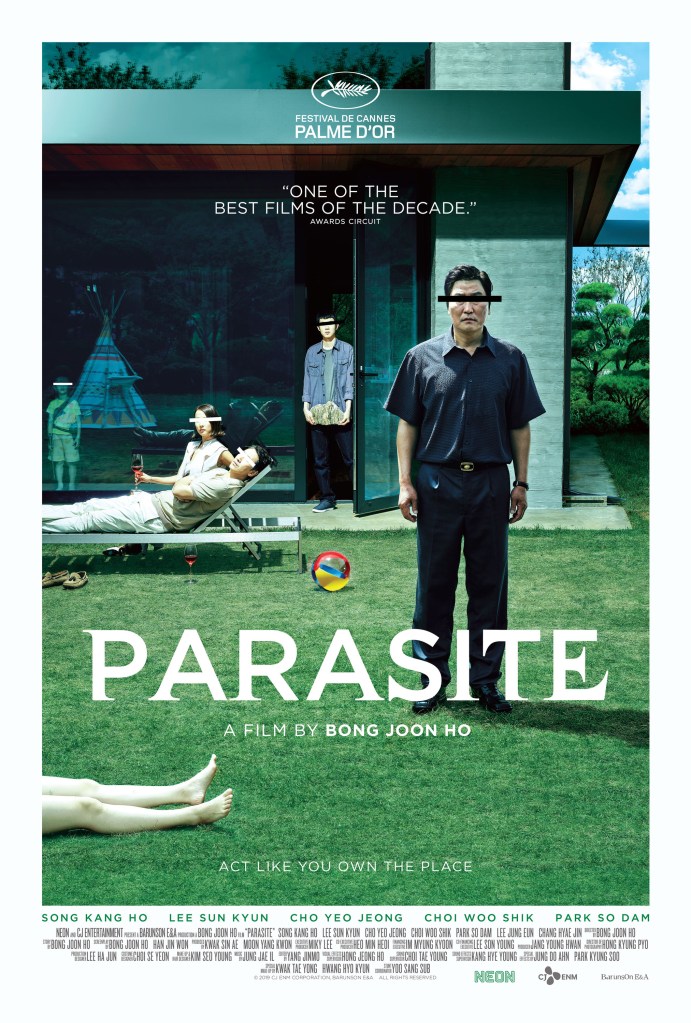
7. Parasite

Not to spoil the rest of the list but Parasite is a fascinating entry on the list as it’s the only film here that won Best Picture at the Oscars (or the Palme D’or at Cannes for that matter.) So exciting was its win that in celebration, it made me throw my back out and be in quite a lot of pain while Bong Joon-Ho was grinning the happiest grin I have ever seen. The only thing that equalled his level of joy was mine after watching Parasite. Everyone loved to say that you should watch it knowing as little as possible but it was actually the rewatching that made this film reveal itself as an all time masterpiece. What initially appears to be an interesting thriller about how capitalism keeps us all down gets to develop into that kind of bonkers space that Korean thrillers are great at occupying (without needing to get into the extremity that other Korean films can often descend into.) It also feels like a weird compliment, but Parasite is the film that got a lot of people watching subtitled films for the first time in their lives. This opened a whole world of cinema up for a lot of people and for that alone, we should celebrate it. That doesn’t have to be the only celebration though because again, this film is awesome. If you still, still, haven’t seen it, just do it tonight. Please, you have no idea what a fun time you’re missing out on until you try.

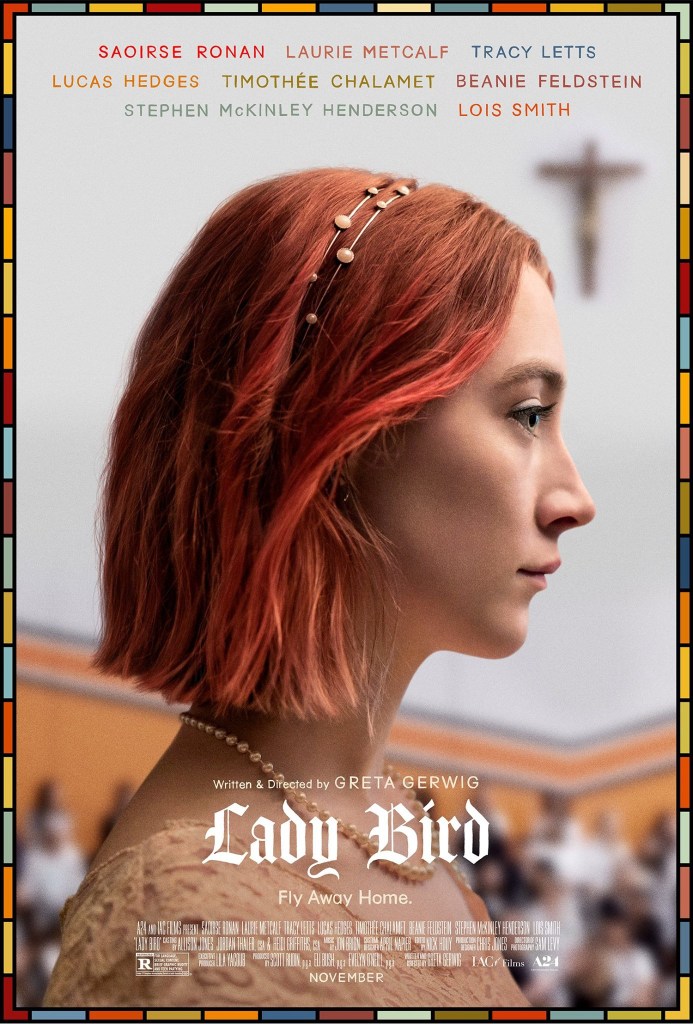
6. Lady Bird

We’re entering a phase of very emotionally charged films that I am deeply connected to and will find tough to rationalise. First of them is Lady Bird. I saw this film at a very specific time in my life. To see a film about a young adult finding themself in the year before going to university in the year when I had myself just gone to university was somewhat shattering. Lady Bird’s world wasn’t mine, yet I felt like I belonged there. The way that Greta Gerwig, directing her first solo feature film, created a film full of love that itself inspired love is intangibly wonderful. Saoirse Ronan does very gentle work in the lead role too, being borderline imperceptible in crafting someone who is utterly and entirely believable. A huge debt is also owed to Jon Brion’s spritely score, which spends most of the runtime zipping us between scenes, before coming in with some last minute sucker punches. The easiest way of explaining the impact that Lady Bird had on me is by saying that it made me visit Sacramento. While in California on a holiday, I knew Sacramento had to be somewhere I visited and I spent my three days visiting as many of the beautifully unremarkable locations from the film as I could (as well as watching two of the other films on this list, Uncut Gems and a film yet to come!) For most, Lady Bird is a great film. For me, it will always be that little bit more special than for most.

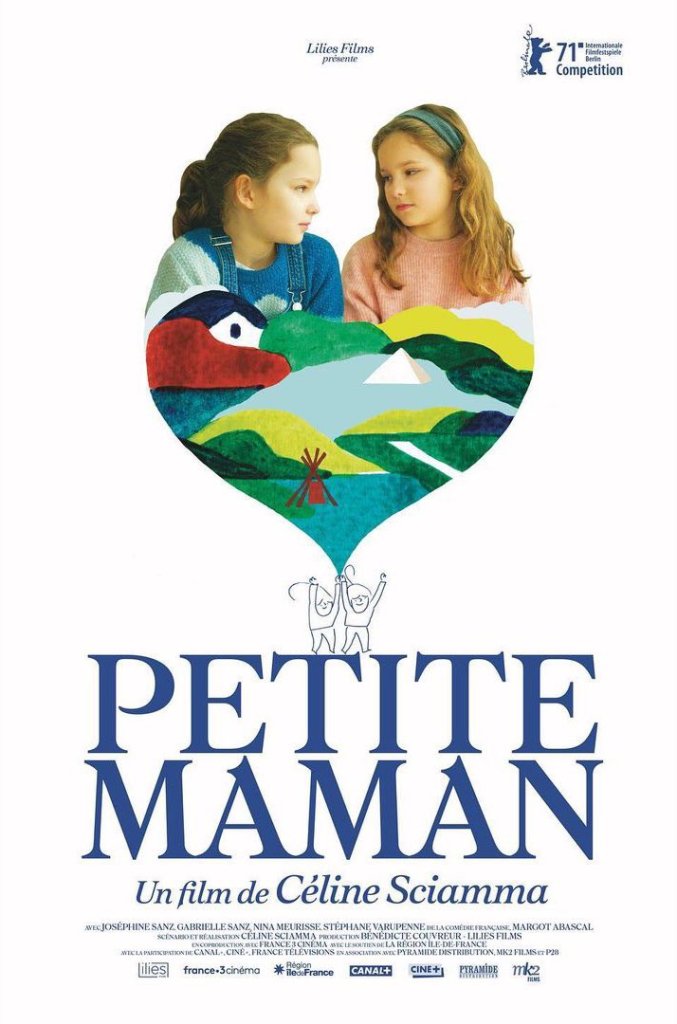
5. Petite Maman

It was tough not to put Portrait of a Lady on Fire on the list, a film that attempts to rewrite film language and sculpt a new way of telling stories about neglected cinematic lives. What softened the blow for me was the unshakable knowledge that Petite Maman would absolutely be on the list. This film is special, genuinely. In less than 80 minutes, Celine Sciamma tells us everything about childhood, the intangible magic of the everyday and the strength of parental bonds across time. The story is simple. A young girl’s mother disappears after the death of the family matriarch and while wandering the woods, the young girl meets another almost identical young girl. As it turns out, this is a younger version of her own mother, brought here through means both mystical and unexplained, and the two spend the film hanging out with each other. They play, they go on adventures, nothing remarkable occurs whatsoever. Yet in that lack of the remarkable is where Sciamma strikes and the simple surface of the film allows a very deep emotional connection. The use of music is sparing but impactful once used, the cinematography presents a sci-fi concept in a fully believable way and I genuinely believe that this film has one of the single best cuts in any film since Lawrence of Arabia. Of all the films on this list, I think this is the film that may have passed you by and if so, it will take you no time at all to remedy it and make your heart overflow with love.

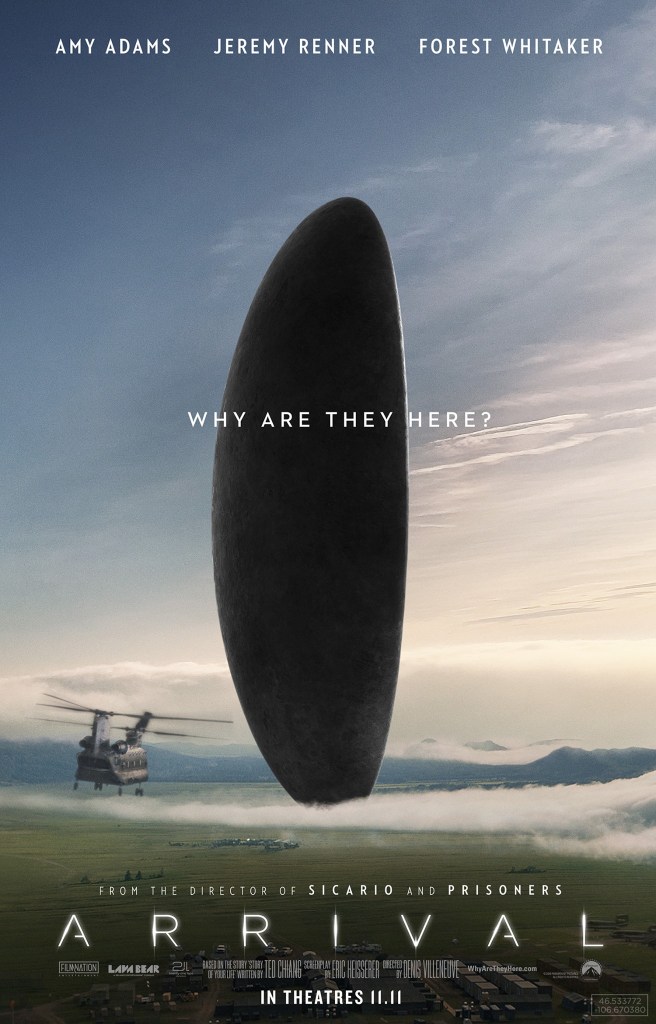
4. Arrival

I was going to do a whole “Arrival is more than just a sci-fi film” thing, but I immediately want to shoot that down as an idea. Arrival is as great a film as it is precisely because it’s a sci-fi film, using the language of that genre to make grand and legitimately profound statements on language as a broader concept. If somehow, all these years after release, you still don’t know where Arrival takes its story, I won’t be the one to spoil it for you, it’s too much of a treat to interfere with. However, even if you did know the trajectory from the start (or if you picked up on the clues quicker than I did) the film is immensely satisfying, a colossal but exquisitely deatailed puzzle box that is aching to be opened. As I said, each piece is perfect. Amy Adams gives the performance of her career, Bradford Young’s cinematography perfectly compliments the design of the world and the structure is such a marvel that its Vonneguttian delights are bound to sneak up on you. When I first saw Arrival, I thought it was seriously impressive, an awesome film and one that gave me hope for the future of sci-fi (not for nothing, Villeneuve has become the face of go for broke sci-fi this past decade.) On reflection now, Arrival is special. It clarifies things for me. I understand what I want out of sci-fi because of it, I understand what I want out of stories because of it and I know what I want out of my life because of it. I also wail like a banshee because of it, in an ending that ironically only gets better the more I see it.

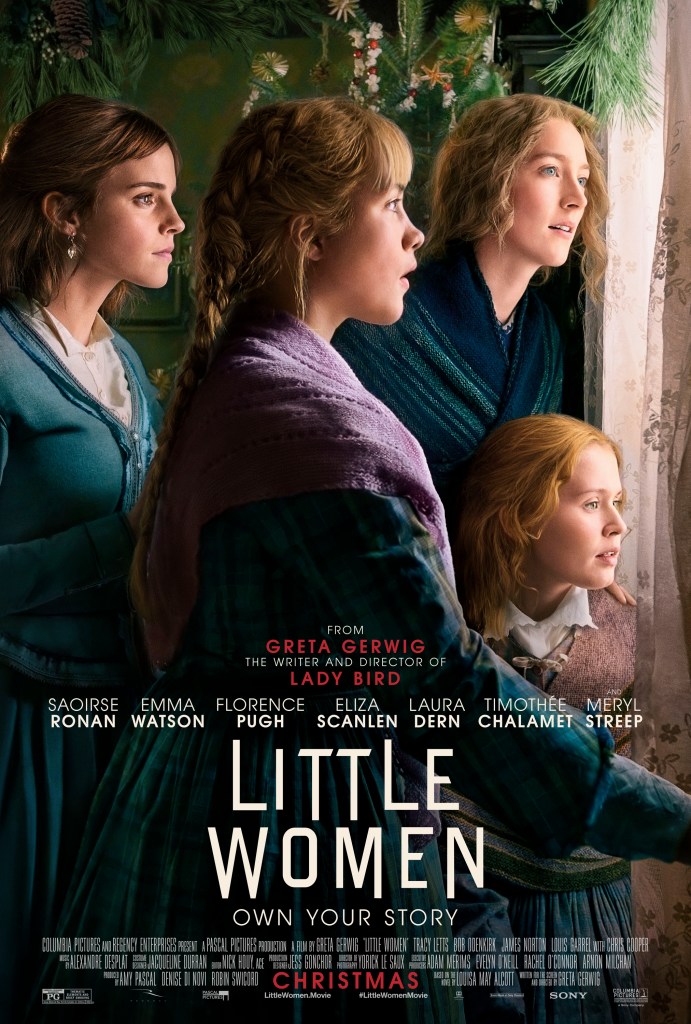
3. Little Women

I’ve never cared for those deluxe recliner chairs that certain cinemas have. I think that they basically encourage you to think of comfort instead of thinking of the film you’re here for and promote a disinterest in anything beyond the experience of “luxury”. The one time I didn’t feel this was when I was watching Little Women in a recliner and was laid back in a way that meant I could cradle myself as the tears, the beauty and the sheer joy took over my body. For someone who instinctually rejects period dramas and has never read the Lousia May Alcott source novel, Greta Gerwig’s adaptation won me over within seconds. The way Gerwig changed the structure so that two time periods run alongside each other and allows for the maximum emotion at every single moment of the film is a simple change but one that becomes revelatory. Every moment of joy is maximised, every sorrow as bitter as can be, yet the world is perpetually exquisite. I genuinely don’t think there is any fifteen minute stretch I can make it through without crying, whether from sorrow or joy. Everyone is at a perfect pitch, all being a little too ridiculous for their worlds, all falling down just so perfectly onto each other. Saoirse Ronan is once again sublime as Jo, a character I still don’t know if I want to be or want to be with, Timothee Chalamet is the perfect level of pathetic and Florence Pugh gets to be stuck up in a way that never annoys. Words don’t really convey the fullest extent of the power Little Women holds. Even phrases like “my little women,” “and I’ll watch” or “I just think that women…” barely convey my point, though it doesn’t help that I get misty eyed just writing them. Women! Rad! I need to stop writing this one or I’ll be sobbing over a keyboard.

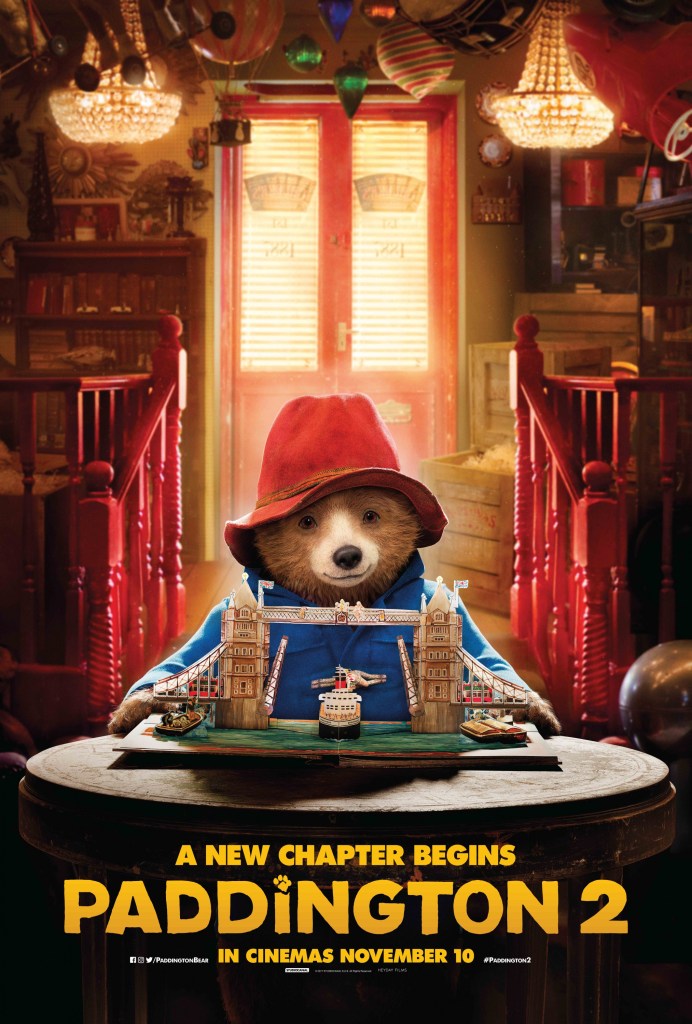
2. Paddington 2

I remember the first time someone tried to tell me how good Paddington 2 is. It was my first year film lecturer and he was absolutely raving about it, coming into our seminar flabbergasted (flabbergasted in the way that only a man called Benedict can be flabbergasted) that none of us had seen it yet. This stuck in my head when the campus cinema had their screening and so with scepticism, I bought my ticket and took my seat. Safe to say, I’m not a sceptic anymore. What some would write off as a bit of a meme now, a nice film that’s unremarkable, is still secretly a genuine masterpiece. Paul King refused to let the shackles of the label “a film for children” stop him in making a film that has ranked (for me) above films by Scorsese, Fincher and Sciamma. The script is air-tight, featuring constant call backs to earlier in the film and refusing to let any end be loose by the end, helped by a game cast of “it’s them, from that” faces that are sure to delight every Brit. It also helps that the film is relentless in its ambition to spread joy, a pursuit that will moisten the eyes of the hardest sceptic. Once upon a time, that was me. Now I’ve talked about five films in a row that make me sob. In a very real way, Paddington 2 marked a changing point in how I view cinema. I abandoned my pretensions and opened my heart to films that I could otherwise have closed myself off from. If Paddington 2 had done that despite its quality I would still owe it a great deal. When it has changed me as a person and is a film of honest to God perfection? Well, it’s marmalade sandwiches and smiles all around.

1. Whiplash

Yeah yeah yeah, I talk about how much I love Whiplash all the time, grow up and get over it. It genuinely is that good and any scepticism on your part is your loss alone. I’ve rewatched Whiplash a few times now, always going in with the mindset of “well surely it can’t be as good as I remember, I’ve put too much pressure on it in my own head and it will now be merely fine.” Each time, I have been wrong. Whiplash is, on the surface, a thriller about a drummer chasing greatness and the lengths to which he’ll go for it. It’s a common trope, other films of the same era like Black Swan also had very good takes on this concept. While Whiplash does have some really strong and well realised themes though, it is as good as it is because it’s the best thriller I’ve ever seen. The tension is unbeatable, with even the lulls serving as moments that make the audience worry about what may happen next. Sharone Meir’s tight and sickly cinematography pair with the percussive pace that the drums give us, setting the stage for one of the all time great film performances. I am of course talking about J.K. Simmons as Fletcher, an unrepentant monster who pushes all of his students beyond breaking point. He is the great and eternal mystery that keeps the legacy of Whiplash alive, in that the constant question of the film is “why is he doing this?” and “is his cruelty worth the greatness?”

One of my favourite scenes in this film (of which there are many) is one in which Fletcher and our protagonist Andrew have a relaxed conversation at a bar. It’s a moment where Fletcher lets his guard down and starts to open up to Andrew about why he pushes his students like he does. Suddenly the mask comes off the monster and we can understand why he does what he does. Or so we think. Going into the final showdown, Fletcher once again turns on Andrew and the safety that we felt we had is cruelly revoked. It all builds into what I can confidently refer to as my favourite final scene of any film, a scene which I struggle to watch and not give a standing ovation to, cringe as it sounds. Damien Chazelle has done brilliant work since Whiplash (his masterpiece of mess Babylon could easily grow on me over the next few years) but he has never yet hit this level of perfection. His other films have had moments of perfection, perfect elements, but never since have they been so well wrapped in such a tight and satisfying ball, aimed directly at the viewers heart. Ten years on, there are still very few films as good as Whiplash, so lets hope that we can get even a hint of this cinematic brilliance from the next ten years.

As a bonus, how about some of my favourite TV, video games and albums of the past decade while we’re here?

TV

Twin Peaks: The Return – Call it TV, call it a long film, it doesn’t matter what you call it. Nothing has been the same since Twin Peaks: The Return and even after all this time, we are only just starting to see films and TV that have taken its radical message to heart.

O.J.: Made in America – Again, doesn’t matter how you categorise it, O.J.: Made in America is one of the best documentaries ever made. It has the sprawl and length of a great YouTube video essay but the rigour, research and restraint of a project from true professionals.

Nathan for You – Cringe comedy has never been quite this sublime, as Nathan Fielder stretches the boundaries of fiction and non-fiction in ways that are hilarious until they’re terrifying, before they lurch right back to hilarious.

The Traitors UK – It feels weird to put a reality show on this list, but when it’s as perfectly sculpted as The Traitors it’s tough to complain, especially when greeted with the joy of the normal people who populate the UK version. The plot twists in this would be outlandish if they were plotted but as unscripted TV it is dynamite, and a testament to the power of appointment TV.

Taskmaster – Five comedians get set a silly task and then get shouted at based on how badly they do. That’s the simple set-up of a comedy masterclass, in which no matter whether you’re presented with faces familiar or not, you are set to giggle loudly and constantly for a solid hour.

Albums

Melodrama by Lorde – Being nineteen is statistically speaking one of the hardest things in the world and that hyperbole exists entirely because of Melodrama. Lorde’s second record took all that was already great from her first and sent it into the stratosphere, in which every emotion could exist at its most powerful forever.

We Will Always Love You by The AvalanchesWe Will Always Love You feels like a mixtape that we sent into space for aliens to discover, in the hope that we can teach other lifeforms the variety of our experience on life. Across an hour of sensational songs, The Avalanches take us on an odyssey and it is one I have retaken over and over again.

brat by charli xcxbrat is the newest anything on this list, but I would feel stupid if I didn’t already describe it as an iconic album of this era. The brat era is only just getting going too, with new remixes always dropping, but if Melodrama was a defining album for my late teenage years, brat is a defining album for my mid-twenties.

Jubilee by Japanese Breakfast – I feel very safe when I put on Jubilee. After my friend George recommended it to me, I couldn’t stop listening. The album is beautiful and joyful, but also strangely sad in places unexpected. Every time I come back (and it is often) I find something brand new to love.

Be The Cowboy by Mitski – Like many people during the pandemic, Mitski did an Irish jig on my heart. For me, Be The Cowboy is her opus, an unstoppable bull in a china shop full of my emotions. I love it deeply and for my own safety, I cannot listen to it too often or I will start eating drywall.

Video Games

Disco Elysium – No world I’ve entered has been quite as well written as Disco Elysium, which is a relief as it’s a game built almost entirely of text. Like my favourite novels, it’s not so much scenes or characters that occupy my dreams, but an atmosphere, a feeling of growing dread and nausea in a world unlike our world in fewer ways than we hope.

Baldurs Gate 3 – Where Disco Elysium is amazing because it’s a dense world to pick apart, Baldurs Gate 3 is an equally dense world that positions itself as a play area. If you can dream it, you can do it, and you’ll be delighted to discover that everyone else who played it dreamed and did completely differently to you. Plus, how can you not love that rotating party that follow you through the game?

Slay the Spire – For sheer hours dropped, Slay the Spire rivals even Animal Crossing: New Horizons for me. This rouguelike deck builder has had many imitators but nothing has come as close to this perfection, through which I can constantly battle with a smile on my face.

Hades – Rougelikes have had a real moment in the past decade, with the crowning jewel being Hades. Supergiant Games took all their skill in character design, music and narrative and applied it to a gameplay loop that I got stuck in for a long time. To this date, my longest single session of gaming is for Hades, a blistering 13 hour day spent grinding the dungeons while I ignored Uni essays.

Mario Kart 8 Deluxe – For sheer joy, nothing beats Mario Kart and the deluxe release of Mario Kart 8 gave us everything we could want from the franchise. The racing was slick, the tracks were sick and it was immediately accessible to anyone whether this was their first or fiftieth race. It is perfection and a ninth game has a lot to prove.

Standard
End of Year Favourites

My Favourite TV of 2022 – The Rehearsal

Once again, I haven’t really watched a lot of TV this year. In fact, once you see the honourable mentions list down at the bottom, feel free to have a good chuckle that basically the only stuff I watched this year was reality TV. Sue me, I like the way TV moulds reality into compelling little nuggets of drama. Weirdly, that’s also exactly how we find our way to my favourite TV show of the year, which is not reality TV… Probably. Maybe. It’s hard to tell and I’m honestly not sure if I do want to make the distinction. If you haven’t heard of The Rehearsal, none of this makes any sense to you, so let me explain a little bit what the show is.

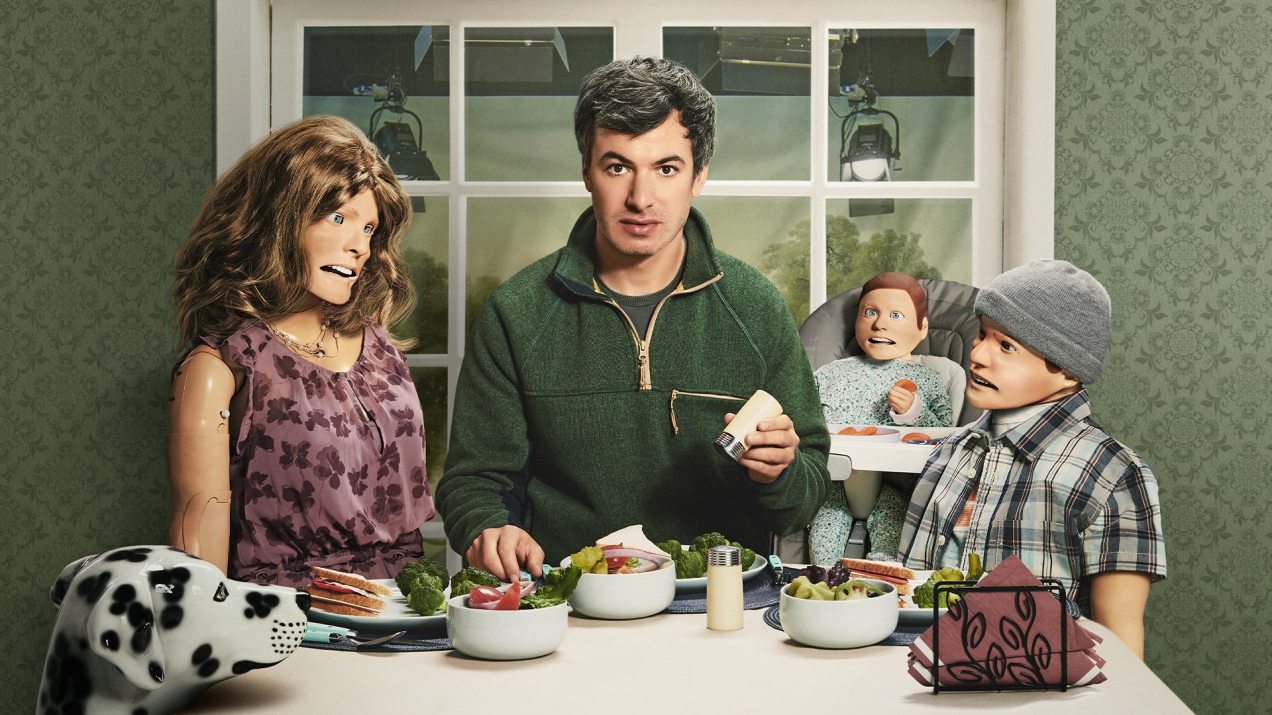
Nathan Fielder, former host/main character of the legendary Nathan for You, comes up with the idea of creating a space where you can rehearse for important life events. Maybe it’s a pivotal confession, perhaps it’s a family confrontation, or it could even be the raising of a child. That last one is what most of the show orbits around, as Nathan helps a woman practice the experience of raising a child. With this example, you can start to see where the strange, uncanny and often hilarious side of the show emerges. The fake children are played by child actors, but due to child labour laws the actors have to be regularly swapped out and for the evening the child must be played by a robot. The child is slowly aged up over the course of weeks as they are replaced by child actors of slightly older ages, all with the aim of “rehearsing” the process of raising a child. But who is the rehearsal for? Is it Angela, the woman playing the role of the mother? Or is this rehearsal all for Nathan’s sake, as he masterminds the plan from a room full of security monitors? Even though the answer feels obvious, it is never as clear as you’re expecting in the execution.

If you know Nathan Fielder from Nathan For You, he’ll feel familiar here. It’s a similar character to that show, in that he plays a fictionalised version of himself who is incredibly awkward and deadpan to all the real people he meets. Fielder also operates on largely the same principle, of just letting people talk at him. I genuinely think it’s a unique skill he has as a comedic personality, in that he never pulls out the truly ridiculous things his guests say. By Fielder remaining quiet, the others on screen fill the silence with some of the strangest confessions or statements you’ve ever heard. On Nathan for You, that included things like a shop owner talking about drinking his grandson’s pee when he gets scared. Here, it starts at a guy who sees conspiracies in all numbers, which help explain why he crashed his car while drunk driving, but slowly and suddenly escalates into quietly troubling places. As you might have worked out from that, it means that the comedy is often a little dryer and a little more underplayed, but it means the shocks are even greater.

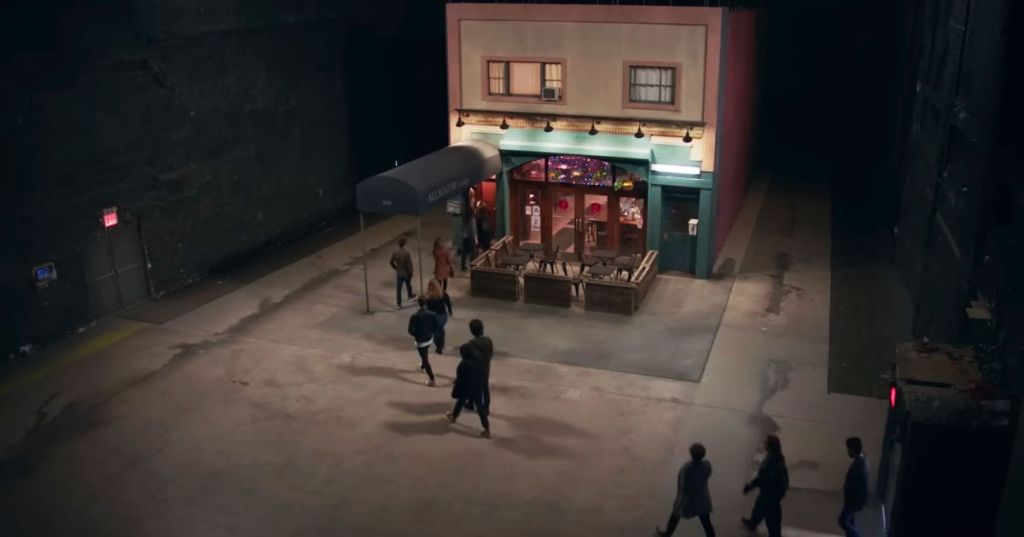
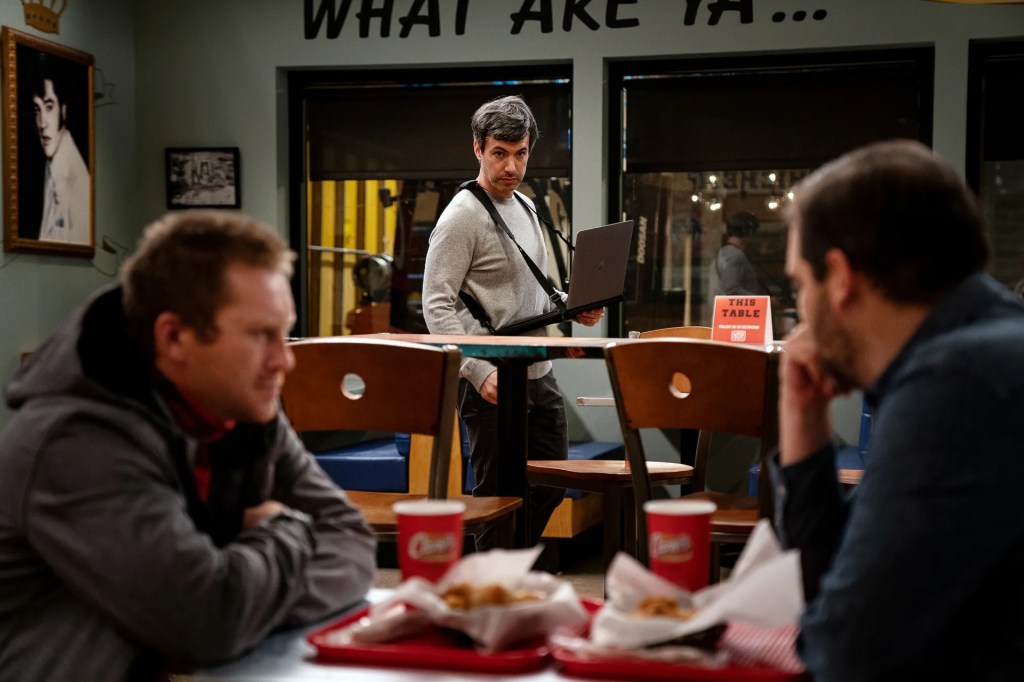
In The Rehearsal, the character of Nathan becomes more part of the picture than ever. That’s not his intention from the start, but it’s a spiral, as things go absolutely bonkers. The only place you can really compare it to is suddenly not other sitcoms or comedy shows, but the Charlie Kaufman film Synecdoche, New York. In that film, a man creates a play that is a reflection of his own life, inside of a large warehouse, where actors play him and the people in his life. The barriers slowly start to dissolve between the play and the outside life and things go real crazy real fast. If you’ve been paying attention to the images here, you might have worked out that this is exactly what Fielder is doing. He builds these real locations and populates them with actors to get the most accurate recreation of an event. The spiral comes when he panics about not being accurate enough and starts to integrate himself into the rehearsal, while also keeping old sets and actors around for his own personal gratification. It is weird from the word go and it doesn’t get any less weird.

As a show, I find The Rehearsal less consistently hilarious than Nathan For You. Admittedly, it’s not an easy bar to clear, comparing a show to one of the funniest shows ever made. What The Rehearsal does have though is its consistent WTF factor. The barriers of reality and fiction have always been blurry in Fielder’s work, but he takes it to whole new levels now, as well as actually addressing some of the ethical complications that his experiments can create. The actual answer to “where is reality and where is fiction?” is that it doesn’t matter. What matters is the ambiguity of the line and the fact that you’re always thinking about it. Where Fielder plans to take a commissioned second season I have no clue. This first season feels like a complete thesis statement on artifice and reality, ending with an absolute bombshell moment. But, I will also be there the second it drops. For people like me, who don’t watch much TV anymore, The Rehearsal is powerfully compelling enough to lure me back to that world, for a taste of pure imagination.

Honourable Mentions

The Traitors – Though it was a reality TV show, The Traitors was the kind of reality TV show so special that it rivalled anything scripted. As a huge fan of social deduction games, this was the concept taken to the top, in all its scheming brilliance. No show had my mouth on the floor as much as this one did this year and if you still haven’t got around to it, I genuinely think you’ll still be rewarded.

Ru Paul’s Drag Race – So, I got really into Drag Race this year. I’ve watched huge amounts of the show (and it’s probably a large reason why I’ve seen so few other shows this year), but the 2022 entries I’ve seen are US14, UK4, Canada vs The World and the legendary All Stars 7, the all winners season. If I’m forced to pick one season, it would be All Stars, a victory lap for the franchise if ever there was one.

Taskmaster (UK and NZ)Taskmaster remains one of the single funniest shows on TV and the reason I’ve included the New Zealand version on this too is that the format is so rock solid that even when you don’t know any of the comedians, you can still laugh so hard that it hurts. Greg and Alex are probably TV’s strongest double act right now and we should treasure them.

The Boys S3The Boys has never been the best show on TV and it probably never will be. However, it is the most fun, the purest example of what I think TV could be and once was. Week after week, it was the show I wanted to talk to people about, the show that I got excited watching and the show that I am still excited to watch whenever its next season arrives.

The Suspect – I’m still not entirely sure if The Suspect is any good or not, but it was compelling! It was one of those ITV dramas where it’s moody and has twists and is a little trashy, but totally watchable from the first scene to the last. Like The Boys, it reminded me why I love TV as a medium.

Standard
Features

“For the Last Time” – Five Years of Twin Peaks: The Return

By now, you probably know me. I love Twin Peaks. It is a show that does things for me that even shows I love more cannot do. It’s also a show that I will take any excuse to talk about for annoying lengths of time and this time, that excuse is the five year anniversary of the release of the first two episodes of Twin Peaks: The Return. Let me set up what the angle is here then. This isn’t me reviewing all of The Return, this definitely isn’t me trying to explain what the show is about or what certain scenes mean, it’s just me talking about how I feel about these first two episodes after five years with them. I’ve seen the whole show twice before and am rewatching it again for this piece (and for a follow up one in September about the finale), so it’ll be a mix of me talking about things I’ve picked up this time and also reflecting on what it felt like back in that first summer of Twin Peaks. There will obviously be some spoilers for these episodes in the post, but by now you either have seen the show, will never watch the show or don’t click on articles where I chat Twin Peaks, I think we’re all clear.

We knew this would be the return of Twin Peaks. Anything more than that, you have to tune in.

In the run up to Twin Peaks making its grand return, we knew basically nothing about what the show was going to be. Eventually, we started to be drip fed information. One of the earliest and most curious pieces of information was a full cast list, which contained a bunch of surprising names. Monica Bellucci? Sky Ferreira? Michael Cera? It was odd and especially among the expected returning cast, a lot of these newer names stood out. What role they would play in the show we didn’t know but we knew to expect them around in some form or another. More cryptic teasers appeared in the run-up to release and offered just the barest of information about what was to come. First, it really was absolutely nothing, just footage of Angelo Badalamenti playing iconic music from the series, to the point where footage of David Lynch eating a donut felt like a big step up. Eventually, some of the final teasers gave us fleeting glimpses of iconic locations or characters from the original series and then, that was that. We knew this would be the return of Twin Peaks. Anything more than that, you have to tune in on 21st of May (or be at Cannes, but we can’t all be that lucky).

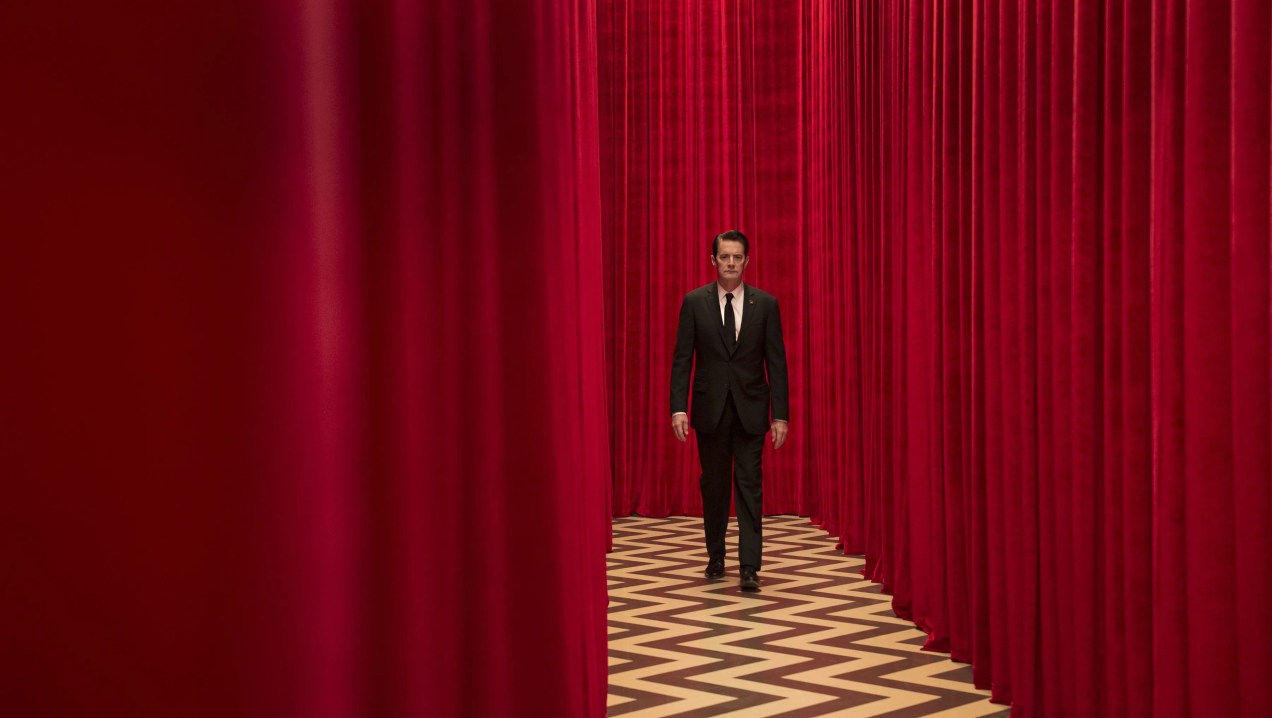
The first two episodes were released as one “feature length presentation”, which is why I’m clumping them together and though I really am going to try to not just talk this through scene by scene, I need to spend a moment on how well the opening sets us up. We open in the Black Lodge, the most iconic Twin Peaks visual there is. In fact, we open with footage from the original show, as Laura Palmer says to Agent Cooper “I’ll see you again in 25 years. Meanwhile…” Cut to, 25 years after we had last been in Twin Peaks, we are reunited with Coop and a character we will come to know as The Fireman. The Fireman gives both Cooper and the audience a series of clues that will help decipher the mystery, in a way that feels reminiscent of Lynch himself giving audience members clues to decipher Mulholland Drive. These clues all come back into play by the end of the series, but also don’t expect them to reveal the true hidden meaning or anything like that. They’re for exploration, not guiding. Coop says “I understand” but as an audience member, feel no shame if you don’t, whether on viewing one or five.

If this were a revival show in the same way that other classic shows have had revivals, we would immediately move from this into a scene of another beloved character getting up to classic hijinks. We kind of do, these early episodes have a surprising balance of that, but it isn’t quite that simple. The scene following the Fireman’s clues is one of Doctor Jacoby getting a delivery of spades. It’s odd in a way that Jacoby is odd, but not… Well, not immediately punchy. The payoff is worth the wait, but I remember initial confusion about why we were shown something that felt unsatisfying. The only immediately satisfying reunion is that of Ben and Jerry Horne, owners of the Great Northern Hotel. Little seems to have changed for them since the season two finale, with Ben still being a sleazeball who tries his best and Jerry being a guy who is free to goof around whenever he pleases. Other than with them, you’re going to have to wait for some really satisfying character moments. Once again, I cannot stress enough how much some of these moments justify their wait (a moment with Big Ed remains one of the most fantastically moving moments I’ve ever seen on TV), but don’t start The Return hungering for immediate comfort.

Things can never be as they were. We can never truly return home.

It’s one of the things that makes this revival such an impressive piece of work, because all our expectations are upended immediately and place us in total suspension. Things can never be as they were. We can never truly return home. Time’s arrow marches on with or without us. Nothing is as brutal a reminder of this as the appearance of The Log Lady. In real life, Log Lady actress and long time Lynch collaborator Catherine Coulson was battling cancer during the production of The Return and revived her character out of adoration for Lynch and Twin Peaks co-writer Mark Frost. There was no way of sugar coating this and so in the show too, The Log Lady is also battling cancer, requiring dialysis tubes and losing her hair due to chemotherapy. Her scenes are patient, as she says the last few messages her log needs to give the world and on the other end of the phone, Deputy Hawk listens with nothing but respect and love.

These scenes are still set in the otherworldly land of Twin Peaks but, as the best of Lynch’s work does, they ground fantastic worlds in understandable emotions; in this case, grief. Not every actor can return to Twin Peaks looking as glam and wonderful as ever, buoyed up by a little medical enhancement and a lot of good genetics. Not every actor can even return, like the much missed David Bowie and Jack Nance. And heartbreakingly, since the premiere of the show, we have lost yet more actors who brought their characters back for one last ride. There’s an argument to be made that because of this, The Return is a show forced half into mourning, which is never felt more strongly than in the absence or the imminent absence of those we have always loved.

Which leaves the question, what do we fill those spaces with? Lynch and Frost’s answer is, a huge world full of loads of other weirdness. In these two episodes alone, we dash between New York, Las Vegas and South Dakota in between our time in the town of Twin Peaks. That felt very weird for me on a first watch. The original run of Twin Peaks worked so well because while it gestured towards a larger world, it was almost always grounded in small town America, aggressively refusing to compromise on that vision. So in going out into the big city, had Lynch and Frost lost their spark? The answer, of course, is no. This isn’t a losing of a spark, just the two channelling their spark into a new circuit. We have good reason to be here, it just might take time before we work out what that reason is.

It might take time for some of those locations, but not New York. An enigmatic setup of a man, watching a box, itself watched by a series of cameras, is disrupted first by a sexual encounter and then by a violent one, as *something* (even now, I don’t have a great answer for what the something is) explodes through the box and murders the two lovers. Whether you know what this story means or not, you can grasp what the emotion means. We aren’t in the cutesy world of the original Twin Peaks series anymore, we’re in the world of David Lynch’s feature films, where sex and violence are hyperreal explosions perforating a surreal status quo. The freedom of modern TV means we don’t have to shy from gore or nudity anymore and Lynch is promising that he won’t. This is far closer to the griminess of Fire Walk With Me than even the darkest moments of classic Twin Peaks.

Sex and violence are hyperreal explosions perforating a surreal status quo.

While Lynch only directed a handful of episodes of the original Twin Peaks, he directed every single of the 18 episodes of The Return, which helps explain why it fits into this broader pattern of his filmography. For a caught up surrealism nerd like me, that was great news then and remains great news now. For those who wanted cutesy fun and a splash of murder, it’s also worth noting that Riverdale came out the same year, and may offer a watered down version of what you want. Because make no doubt, The Return is the show David Lynch wants to make. He doesn’t care if you understand it, he doesn’t care if you like it, he definitely doesn’t care if you think a scene is too long. You either have to take his world exactly as it is or accept that this isn’t for you. There is no shame in that, despite my Riverdale quip, this really is an acquired taste from episode one.

Once you have acquired that taste though? Oh my God, delicious! Re-watching the show, everything fits together so much more comfortably. I’m no longer worried about how (or if) everything will fit together, because I can see the bigger picture of the narrative. That feeling allows moments to really breathe. Comedy can be funnier, scares can be scarier and Matthew Lillard can be more Matthew Lillard. I wanted to talk about him (in my notes this section was just about him) but I had to tie him in to a wider thing somehow. I love his performance in The Return, fitting into the classic trope of a man accused of a murder he’s sure he didn’t commit, a role that offers such delicious room for him to flex the acting muscles.

When I first saw this episode, Lillard was just Shaggy from Scooby Doo for me (an admittedly great time, no slander here), but now that I’ve seen him in films like Scream, I have a better appreciation for him as a performer. The guy is crazy versatile and if you too only know him from those crazy roles in the nineties and early noughties, just watch his scenes from this on YouTube and prepare to have your socks knocked off. He is frightened, forceful and furious in incredibly subtle ways, balancing on the edge of about six different knives. Lillard gives one of the best performances in The Return and the more you see of the show, the more you’ll realise what an immense compliment that is. If you had any fears about what new characters might do to pollute a world you loved, he assuages them immediately.

“Shadow” evokes a comfort in me that everything will be alright, yet it still allows an excitement about the uncertainty to come.

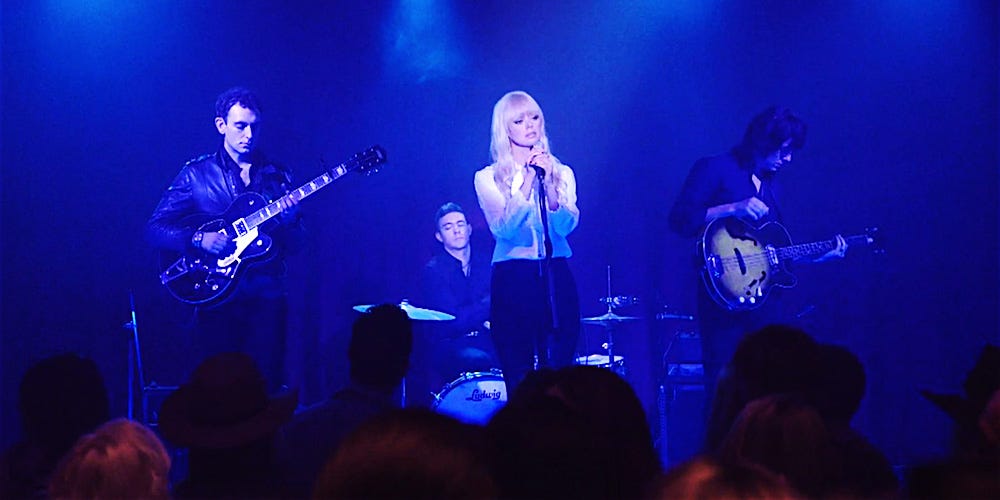
And finally, after a very bonkers two hours, we reach the end of the episode. We’ve watched the Black Lodge tear itself apart (a metaphor so perfect I’m furious I never wrote an academic essay on it), seen old friends show their age and also been introduced to the new threads that we’ll spend the next 16 hours following, probably. So we have earnt one last return to Twin Peaks and where better to cool down than The Road House or, as it has now been trendily updated to, The Bang Bang Bar. Playing at the bar are the band Chromatics with their song “Shadow”, a song that now never fails to give me goosebumps. It is quietly and ethereally beautiful, excellent in ways that I am far too stupid to actually explain other than “it fits the vibe very well”. The song evokes a comfort in me that everything will be alright, yet it still allows an excitement about the uncertainty to come. There are plenty of other amazing songs played in The Road House, but “Shadow” is the perfect one for this moment.

In this scene, we also get one last reunion, as we are reunited with Shelly and James, two of the characters from the original series with the most screen time. Here we find Lynch and Frost at their sappiest, allowing two characters to reminisce. Though it was pretty much immediately made fun of by many fans, Shelly’s line “[James] has always been cool” always landed for me. It’s a lie, but a lovely one to indulge in, a rare moment where The Return does feel like the show fans expected it to be. Even this is undercut though by the appearance of actor Walter Olkewicz, last seen 26 years ago as Jaques Renault, a character who died. Why is he here? Is this the same character? Perhaps The Road House exists in a different world than the rest of the show? These three questions will never get conclusive answers, yet their appearance is the needed salt to undercut the sweetness of Shelly’s comment about James. No matter what it looks like, this will not be the return you expect from Twin Peaks.

There was so much just in these two episodes that I never got to mention. The first appearance of a woodsman, the brilliant use of uncanny CGI and the excellence of Kyle MacLachlan in two of what will eventually be four roles. The Return is so dense that after five years, it doesn’t feel like we’ve come close to finding everything and yet it is also so well balanced that this density is never cumbersome. Regardless, at this point you have to go along for the ride that Lynch, Frost and all their collaborators are taking you on, because the places they are going are wonderful and strange. I’ll be back in September to talk about the last two episodes so if you’re looking for my thoughts on the stuff in the middle, just message me, talk to me, demand my ever-so-interesting thoughts on the way “Episode 8” fits in with a globally surreal vision of the impact of the atomic bomb. But until then, I’ll write on something more accessible, I promise. Maybe another review, remember those?

Standard