Reviews

Review – Hurry Up Tomorrow

You were probably expecting me to review something really big this week. Maybe you wanted me to lavish praise on the final Mission Impossible film, maybe you wanted me to slate the live action Lilo and Stitch, or maybe you wanted me to get all giddy over The Phoenician Scheme the latest box of treats from Wes Anderson. Instead, I am talking about Hurry Up Tomorrow, one of the worst reviewed films of the year, and I am hoping to make you change your mind on it.
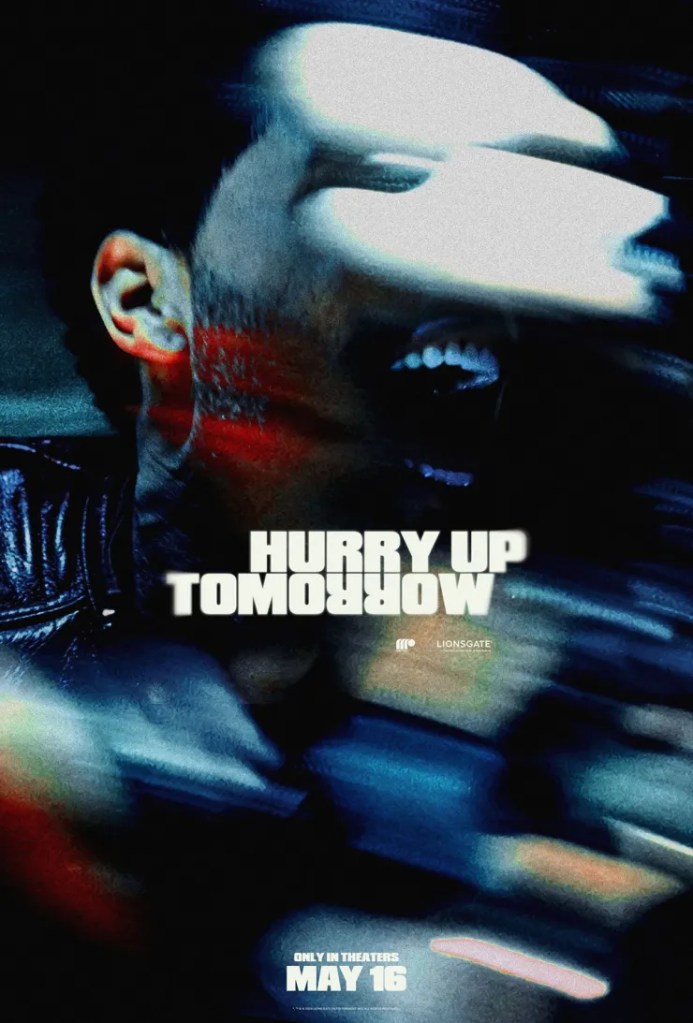
If you’ve heard of Hurry Up Tomorrow, you’ve heard of it for one of three reasons. The first reason would be that you’re a fan of the director Trey Edward Shults, whose last two films (It Comes at Night and Waves) were divisive cinematic treats that I hold dear. Second, maybe you’re a fan of The Weeknd, whose musical career has gone from strength to strength as his acting career has… well, has gone from Uncut Gems to The Idol. Third reason, and probably the biggest, you’ve seen the reviews. I would not recommend Rotten Tomatoes as a yardstick for film quality, but if you do subscribe to those sorts of ideas, the film is rated lower than anything else currently in cinemas, at 16%. If I’m honest, I’m baffled by that. Hurry Up is certainly a film I expected to be divisive, but 16% feels plain incorrect. Art is subjective, blah blah blah, but did everyone watch the same film I did?

The plot is, to be fair, not exactly complex. We follow Abel, as a fictionalised version of The Weeknd (played by Abel Tesfaye, a real version of The Weeknd), while he begins to lose himself on tour. He is having problems with his voice and his manager (a skeezy Barry Keoghan) is interested only in money and drugs, all the while Abel is caught up thinking about his ex-girlfriend who he did wrong. At the same time, we follow a mysterious woman (Jenna Ortega, whose agent is randomly picking her roles with shotgun precision), a character wrapped in mystery, containing many mysteries. She’s quite mysterious. Our first glimpse of her is while she is burning down a house, and it becomes apparent shortly after that she is set on a collision course with Abel.

What follows is hardly a ground-breaking narrative. Even in the domain of nocturnal odyssey films (think Good Time or After Hours), the plot is low-key and you know exactly which films are inspiring particular narrative beats. What we get by the end is quite metaphorical and quite interpretive, which may be the first issue people have with it. Without a traditional narrative to follow from start to finish, lots of viewers may struggle to engage at all with the events on screen, and may never engage with the film on a deeper level. I don’t mean this to sound like a superiority thing, but I don’t think everyone is expecting a film that strays from the path of the typical narrative and veers this excitingly into the interpretive.
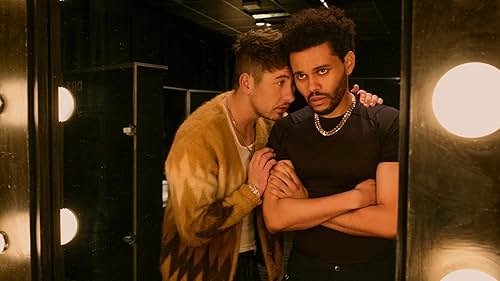
One criticism I have seen of the film is the performances. People still hate Tesfaye’s acting from his work on The Idol and I think it’s colouring how his performance is being seen. As will be a theme through this review, I’m not going to try and tell you that Tesfaye is a secret genius and is giving the best performance of the year. He’s not, he is not even one of the two best performances in this film that has three performances. However, he is compelling as a pathetic popstar who is losing focus on his place in the world. The Weeknd looks like a loser in this film, a loser you believe in because he’s so pathetic. That doesn’t work without Tesfaye at least putting in decent work and we overestimate how hard it is to play yourself.

He acts opposite Jenna Ortega who… who I now realise I’m ambivalent on. I’ve seen her in quite a few things now but she’s never stood out to me, positively or negatively. She’s never made a project worse by being in it, but she is never the best thing in a film. That’s the case again here; she performs well and is mainly a compellingly blank slate for the cinematography and score to create meaning with, which I am so excited to get to, in just a minute, hold on for me. 

I also want to briefly chat Barry Keoghan, who gives my favourite performance in Hurry Up. He plays Abel’s manager and friend, doing a compelling job at being absolutely terrible at both. We all know Keoghan can play rancid little freaks and the streak continues here, big thumbs up from me, good on ya lad.

Alright, let me really lavish some praise on this before I have to admit this isn’t perfect and I can’t be an unstoppable contrarian. The cinematography in Hurry Up Tomorrow is absolutely awesome. The film expands on the previous style for Shults’ films, particularly Waves, though this time with a new director of photography in Chayse Irvin (Shults’ regular DP Drew Daniels was working on Anora, so don’t worry, he’s doing fine). Irvin has one of the most fascinating filmographies I’ve seen in a while. In the last decade alone, he has worked on BlacKkKlansman, Lemonade and Blonde. A well respected crime caper, a genre shaping visual album and a biopic that is widely hated. What do we do with that? Blonde is such an interesting footnote here too, a polarising film yet one that has a distinctive and powerful visual language, for better and for worse. I’m getting a little side-tracked but my point is: it’s really interesting that Irvin seems to be building a reputation as being a great cinematographer in films that people detest. 

I guess Hurry Up is on that list. The swirling and spinning camera is an expansion on Waves, in which the camera would often be plonked in the middle of a scene and just spin around, catching all the characters doing their thing. There’s lots of that here; shots are super fluid and we’re launched around the set through them, never getting a sense of sure footing. For some, I can see how this is annoying and bad. These people are either cowards, suffer from motion sickness, or just don’t get what we’re doing here — only one of these things is a valid excuse. Surely if you’re watching the film as a Shults fan, this is him pushing his cinematography in new and exciting ways? How am I the only one seeing that?

What did you all think this was going to be? To me, this feels like a Trey Edward Shults film. I am a fan of his work and I felt satisfied with the way that he and his collaborators are in conversation with the work they’ve done before, expanding upon and commenting on it. Am I the crazy one for spotting that?

The score is bonkers stuff too. Daniel Lopatin (in collaboration with Tesfaye) is here on business after demolishing both my ears and heart with his work on Good Time and Uncut Gems. The latter is an important touchstone, as many have noted, because it stars Tesfaye playing a fictionalised version of himself in full The Weeknd “weird hair, don’t care” era. Since then, Tesfaye and Lopatin have worked together on a few The Weeknd albums, starting with After Hours, which came out only a few months after Uncut Gems. They’ve got a good working relationship; I like these last three albums and I’m glad they get to keep doing their thing together. Lopatin knows what he’s doing with the score here, and is it evocative of his work with the Safdie brothers? Sure. But it also works as a standalone thing and I dug it.

One really interesting thing about the score though is that it’s also the new album from The Weeknd. We enter a curious ouroboros situation here where it’s not clear where the album starts and the film ends. Versions of songs without vocals appear as the score and the live performances are of songs from the new album, with none of the biggest The Weeknd songs appearing until a very specific moment. More on that later. Personally? Love that. I listened to the album before seeing the film and the two fit together snugly, these bleak little nocturnal odysseys that spin out into different places. Which all leads me to ask: what did you all think this was going to be? To me, this feels like a Trey Edward Shults film. I am a fan of his work and I felt satisfied with the way that he and his collaborators are in conversation with the work they’ve done before, expanding upon and commenting on it. Am I the crazy one for spotting that?

To be fair, to be rational, to be less of a Gogo’s Crazy Bones about this, I’m not going to argue that the film is some perfect masterpiece. It is flawed in some big ways. The third act goes quite abstract and while I always enjoy when a plot becomes abstract, I need something emotional to latch onto. I was doing a lot of thinking during the third act but I wish I was doing more feeling. It’s a big old metaphor of a film and that’s cool, but that doesn’t mean it can’t be something else at the same time. It also pales in comparison to other thematically and narratively similar films. If you want to see an artist playing themselves and playing their music in a world of fiction, it doesn’t reach the heights of True Stories. If you want to see an examination of how the world chews up its music icons, and how they might eventually come to deserve it, Vox Lux remains a singular piece of art. If you just want to see The Weeknd suffer, we will always have Uncut Gems. There’s all of that… And then there’s also the scene. A scene that has required me to lazily use an ellipsis for a third time like some hack fraud writer. This next bit will go into spoilers, so skip the next section if you want to remain unspoiled.
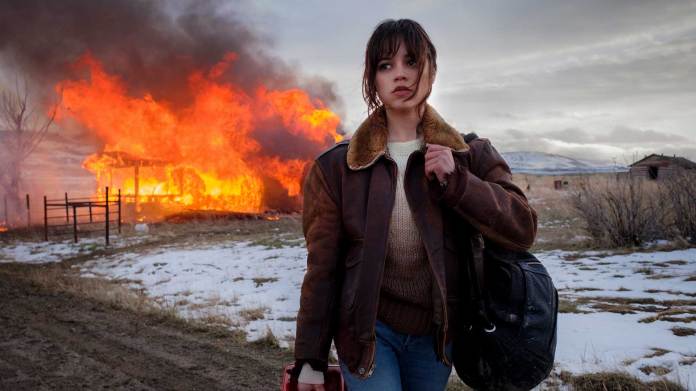
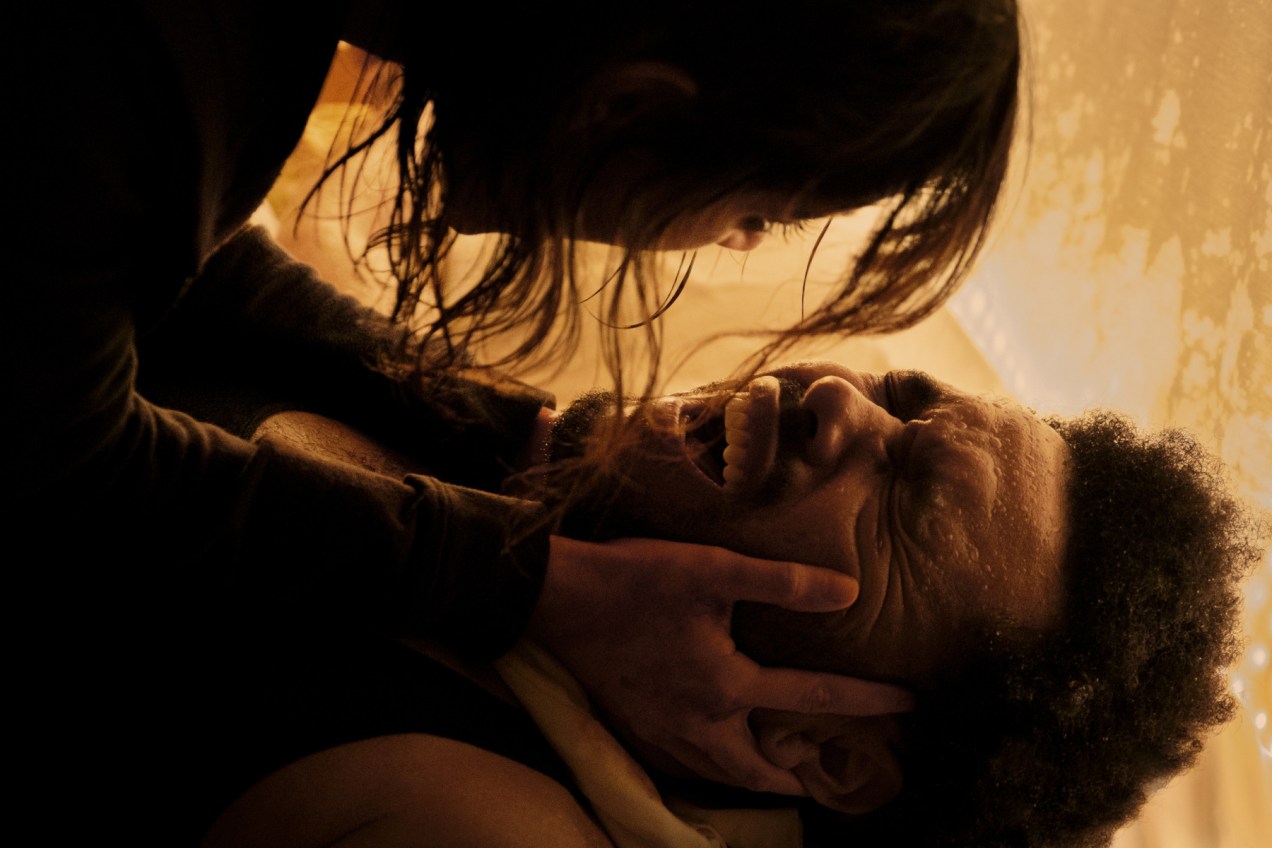
Spoilers lie below, so tread carefully. But if you’re still here, let me tell you about the scene. In the third act of the film, Jenna Ortega’s character has kidnapped The Weeknd and has tied him up on a bed. What does she do with him in this moment? Naturally, she monologues to him, American Psycho style, about how much she loves his songs. Cue extended dance scenes and explanations of the songs “Blinding Lights” and “Gasoline” as a gagged and bound Abel stares on in a divine cocktail of fear, confusion and awe. As I watched this scene in the cinema, I felt like I was levitating. This is an unbelievably crazy swing and I was so happy to follow the film at this moment. If you’re already not on board, I see how you could be repelled, but I was only drawn further in. I was reminded of a scene from Under the Silver Lake (another polarising film from a cult A24 director) in which Andrew Garfield’s character meets an old man who claims to have written all the biggest songs of the past five decades. You’re so busy being baffled at what the film is doing that you allow the music to wash over you and do the magic. They’re really big scenes that take really big swings and really dictate how the rest of the film works for you.

I am left feeling that we have become too cynical as a people. I understand that we enjoyed making fun of everyone involved with The Idol. I rewatch videos talking about it regularly too; I’m only human (Mic the Snare’s video is obviously the cream of the crop.) But Lily-Rose Depp got to earn her indie cred in Nosferatu, Troye Sivan’s new album was widely celebrated, and Da’Vine Joy Randolph won an Oscar. All three are great performers, they deserve it, but if we’re ready to forgive those involved in The Idol, does Abel Tesfaye not deserve to be included in that? If we just need to have a man to blame for The Idol, Sam Levinson is right there, trying to scurry back to make more Euphoria. Condemning this film because he’s in it means people go into this film loaded with irony, ready to hate the interesting risks the film takes. 

Are you seriously telling me we should be dunking on a film like this when the live action Lilo and Stitch is out? This is where our ire is going? Grow up man, sick of it. Go to the movies, take a risk, dare to open your heart to something new. Or, if you really want, let our corporate overlords take over and never have to dare to feel something interesting again. Your choice. Hurry Up Tomorrow is this unique feature that somehow made it to the multiplex and our mockery of it means we’ll be unlikely to see similar again. Banger movie, Henry out, fix your hearts or die.

Rating: 3.5 out of 5.

Standard
Reviews

Review – Emilia Pérez

Despite losing out on the Palme D’or to Anora (more on that here), Emilia Pérez made a big splash at the 2024 Cannes Film Festival. Not only was it the new film from former Palme D’or winning director Jacques Audiard but it also split the Best Actress prize between its four leads, which made it the first time any trans actor has won an acting prize at Cannes. That’s history made, that’s cool, we like this. So with all the buzz building, Netflix buy the film, create a hype machine strong enough to go all the way through awards season and make people ask that crucial question: what is Emilia Pérez? Um, it’s… Well, it’s complicated.

Emilia Pérez is a crime drama that travels from Mexico City to Tel Aviv about a cartel leader who wishes to fake his own death and change his identity. That identity is a transition from male to female. The film is also a musical. So, that’s a lot to take in upfront. This crime boss, Juan, recruits hot shot lawyer Rita to find a surgeon to perform the transition, fake Juan’s death and protect Juan’s family until she returns as Emilia. That’s a pretty intense plot summary for a film. One would argue that it would be three times as intense a summary if it was only the plot summary for the first third of a film, which is exactly the situation in which Emilia Pérez finds itself. The transition is only part of the battle, as Emilia is now living true to herself but not to her family. It all swirls around in an exaggerated version of the mistaken communication trope that goes back as far as Romeo and Juliet, in which Emilia hides her identity from her family and could resolve literally everything by telling any single one of them the truth. As I said, a trope as old as time, but one that nearly drove me to frustration here, especially as relationships become fractured. There’s a lot going on is what I’m trying to say. Often, I like that in a film, give me something to chew on. Here though, I feel less like I’ve been given a lot to chew on and more like I’ve been presented with a big bottle of slop to chug.

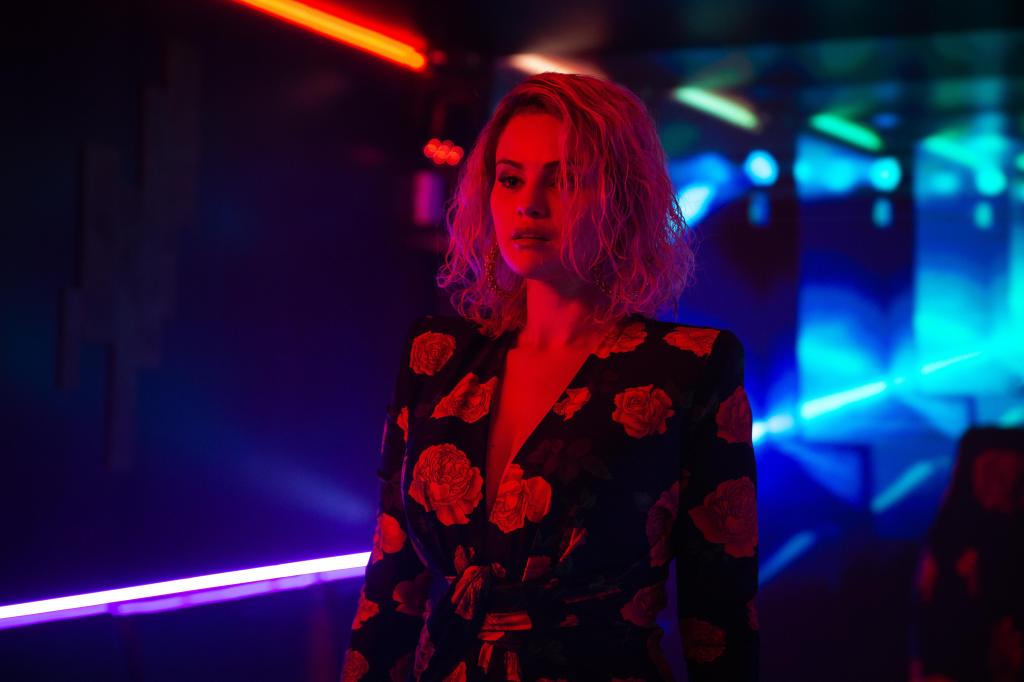
I’m not sure why the Cannes jury felt the need to split the [Best Actress] prize as they did.

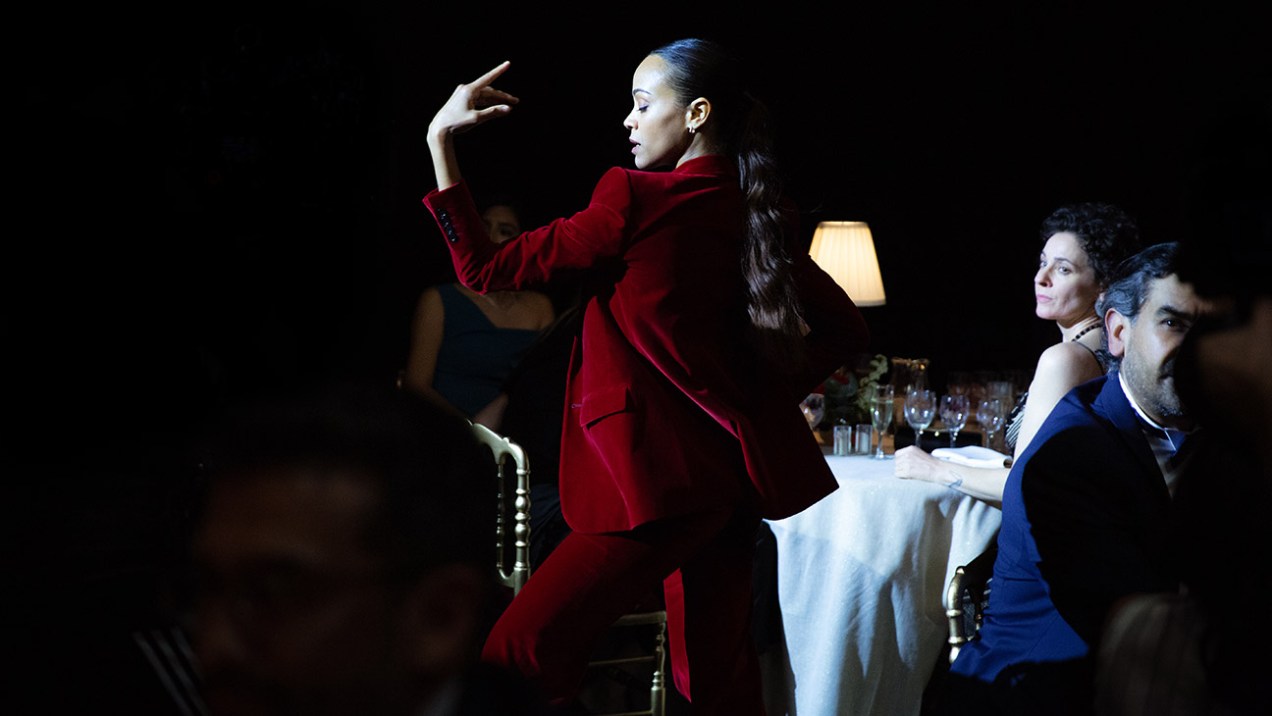
Where the slop dissipates is the performances, which are universally solid. All the actors are being asked to act, dance and sing at a moments notice and no one seemed like “the one who can’t dance” or “the one whose acting is a little funny.” Arguably, it is Zoe Saldana who leads the film (the fact that she’s being campaigned as a supporting actor is only an indication of awards season politics and not her quality) playing Rita, a talented but underappreciated lawyer who is kidnapped and asked by a local drug lord for help, on the condition that accepting means being stinking rich and declining means death. It’s a tricky line to ride but Saldana manages to make it believable, while also singing and dancing with vigour. Selena Gomez plays Jessi, wife of the drug lord about to fake their own death. I think she’s okay? Considering that she has been singing and acting her whole life, you’d expect her to be a bit more of an event than she is, but at no point do you question this character. I suppose I should also mention Adriana Paz, one of the four who shared that Best Actress win at Cannes. She’s solid, an actress I’ve not seen before who turns in compelling work in a small handful of scenes. To be honest, my only qualm is that it’s a pretty small role, so I’m not sure why the Cannes jury felt the need to split the prize as they did.

To be completely honest, I don’t know why they split the prize seeing as Karla Sofia Gascon is very clearly the best performance in the film. She plays the titular character and it is her journey we follow, as she gets to finally exist in her own body but is forced to reckon with the bad decisions that litter her past. When we first meet Gascon’s character, she is pre-transition and gets to play a sort of drag king version of cartel kingpin Manitas, in a move that works far more than it has any right to. Crucially, most of the film from here on is with Gascon’s character when she identifies as Emilia, which works because, as a trans-woman herself, Gascon is able to imbue pathos into the role beyond what is on the page. As we reckon with a character whose past decisions, whether regarding crime or family, are questionable, she grounds us. I’m going to be pretty critical in a moment of how the film treats Emilia, but without Gascon that criticism could become evisceration. This is a big calling card moment for her and I hope she gets plenty of exciting and more joyful roles in the future from this.

If I can dole out one last bit of praise on the film, I think it has an energy that is admirable and easily propels it through its two hour runtime. Though many of the musical numbers are grounded in reality, they have a physicality, embodied by the actors, that I found myself unable to look away from. These, paired with a few decently catchy songs, will help keep you on your toes through the film. That’s good news because time to be negative, the tone on this is a mess. Musicals can be dark or complicated (All That Jazz is a favourite of mine and revolves entirely around the looming death of its lead) but it is a tough balance. So when the opening number begins and we’re watching someone sing a solo as people are getting kidnapped and knifed, I was immediately on the wrong foot. What are we doing here? A later number about the joys of plastic surgery launches to entirely the other end of the spectrum and is hugely silly in portraying the possibilities of gender affirming care, though maybe I was simply overwhelmed at the amount of times I heard the word “vaginoplasty” sung at me. For a lot of people, this unpredictability will be a virtue, for me it was a nuisance.

There is also the unavoidable question of how the film handles its portrayal of a trans character and explores the setting of Mexico. As ever, it’s worth repeating that I am a cisgender, heterosexual white man who lives in England and so while I can read and listen to people as much as I can, I am always talking about these things from an outsider perspective. I’m not an authority, you should read opinions from people other than me too, who can speak from their experiences as opposed to me speaking from a theoretical perspective (I would recommend as starting points this article about the trans representation and this article about the representation of Mexican culture.) All of this is to say, I think the representation is sloppy. Mexico is portrayed almost exclusively as a land full of murder and drugs in which evil often prevails, which runs counter to the country a lot of people know, plus Europe is presented as a safe land of enlightenment in comparison.

What irked me more was the trans representation. Again, this is all with caveats, as what we have here is far better than some of the representations we’ve seen of the trans community in cinema over the past few decades. Emilia is shown to be at peace in herself once she transitions and once this does occur, despite some doubt from the odd character, she never shows any regret surrounding this decision. Unfortunately, despite this and the casting of an actual trans-woman to play the role, Audiard finds himself succumbing to clichés that reduce the whole thing to pastiche. Scene where Emilia wakes up post surgery and uses a delicate hand mirror to examine the surgery? Check. Scene where Emilia, having now transitioned, uses her scary man voice to frighten a petite woman? Check. The audience are left with the ultimate feeling that to be trans is to suffer? Regrettably, check check and check. Emilia Perez was made outside of America and so it’s important to understand the context of its creation, but in its distribution by Netflix and absorption into awards season noise, it will find itself fitting into familiar narratives. In these stories about minority groups that poise themselves for awards success, the crucial element that leads to their success is suffering. To accept Jack and Ennis in Brokeback Mountain, they have to suffer. To understand John Coffey’s heart in The Green Mile, he has to suffer. In Sound of Metal, the journey Ruben goes on through his disability is framed through his suffering. The films I’ve mentioned aren’t bad films, but they do fit into the trope of using tragedy to elicit sympathy, which is directed towards people who may be different sexuality, gender or race than the viewer.

[Audiard] is the wrong pair of hands to create emotional authenticity with this story.

Culturally, we are told we have to work our way through these films of suffering before we can have films of joy. And I’m sick of seeing these people suffer. I want to see black joy, queer joy, disabled joy, plus all the little middle bits in this Venn diagram. Of course, you can find these films off the beaten track. My partner showed me The Watermelon Woman for the first time recently and though this is a film that wants to probe film’s racist history, it is also a joyful film. Characters fall in and out of love with ease, goals are achieved without someone having to be called a slur, we get to see a black lesbian smiling for maybe 80% of the film. I’m realising this is starting to look more like a review of The Watermelon Woman than a review of Emilia Perez but what I’m trying to get at is I want to hear different stories. To go off book again, I Saw The TV Glow is a film that upsets the audience with how it frames a character rejecting their transness, but told through a metaphorical layer that allows uninterested audiences the opportunity to engage with a different part of the story. This is still a story in which a trans person suffers, but it’s a different kind of suffering and crucially, a kind expressed by a writer and director who is trans. Stories like Emilia Perez aren’t stories that have no worth, but they are stories who should be told by other people. Jacques Audiard is a cisgender white man in his seventies and though he isn’t incapable of telling this story, he is the wrong pair of hands to create emotional authenticity with this story.

Ultimately, your patience with Emilia Perez will depend on how much you cared about those last two paragraphs. If you don’t really know what I was on about, then you will be dazzled and probably gripped by this. If you feel as I do about the complicated politics of trans representation, this may be one that will puzzle you. Regardless, those who adore and detest the film alike can agree that this is a film unlike almost any other. You may never see something like this again and for many, that will be good news. For me, I found myself underwhelmed and overstimulated, newly trapped in a world full of discourse yet to come. With it launching on Netflix today though, the choice to dive in will be yours the next time you hit your sofa.

Rating: 4 out of 5.
Standard
Reviews

Review – Anora

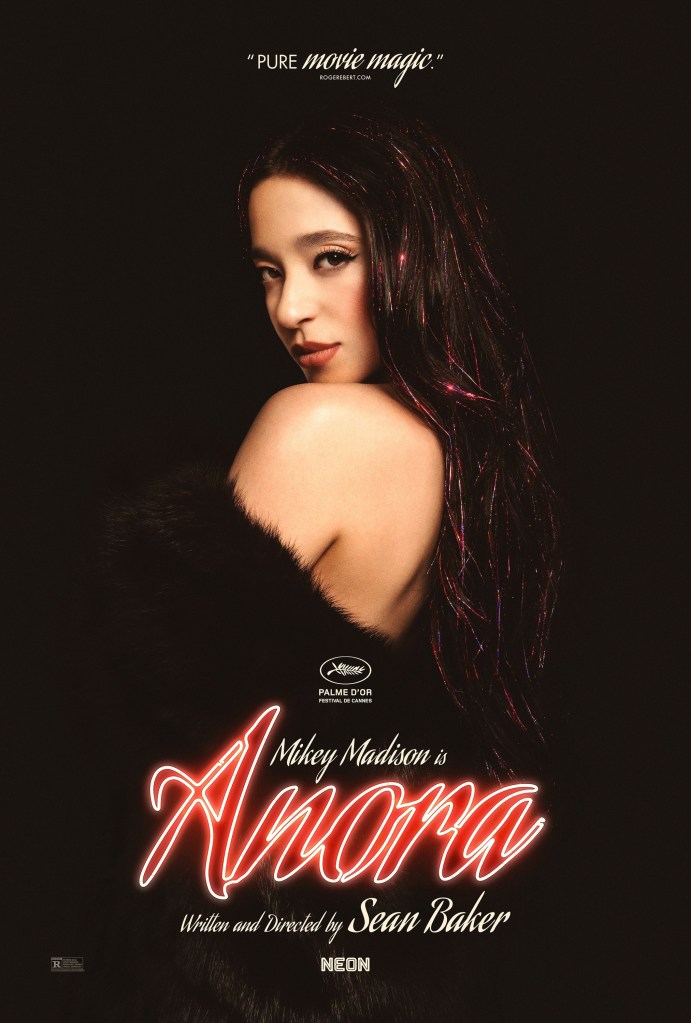
Here’s a fun fact for all my fact fans out there! Three years ago when I “rebooted” my blog and started on the site we find ourselves on today, my first post was a review of Sean Baker’s Red Rocket. It was one of those films where you thought, here is someone reaching the apex of their potential, a director/writer/editor truly blossoming and creating their defining work. In itself, that was a silly thought as Baker’s previous two films, Tangerine and The Florida Project are already recognised as innovative and masterful in their own ways, but the point remains that for me, Red Rocket was this gleeful victory lap of pure cinematic excellence. Reader, I don’t enjoy when I’m quite so spectacularly proven wrong, but in this case my lack of foresight has brought us to the Palme D’or winning film Anora.

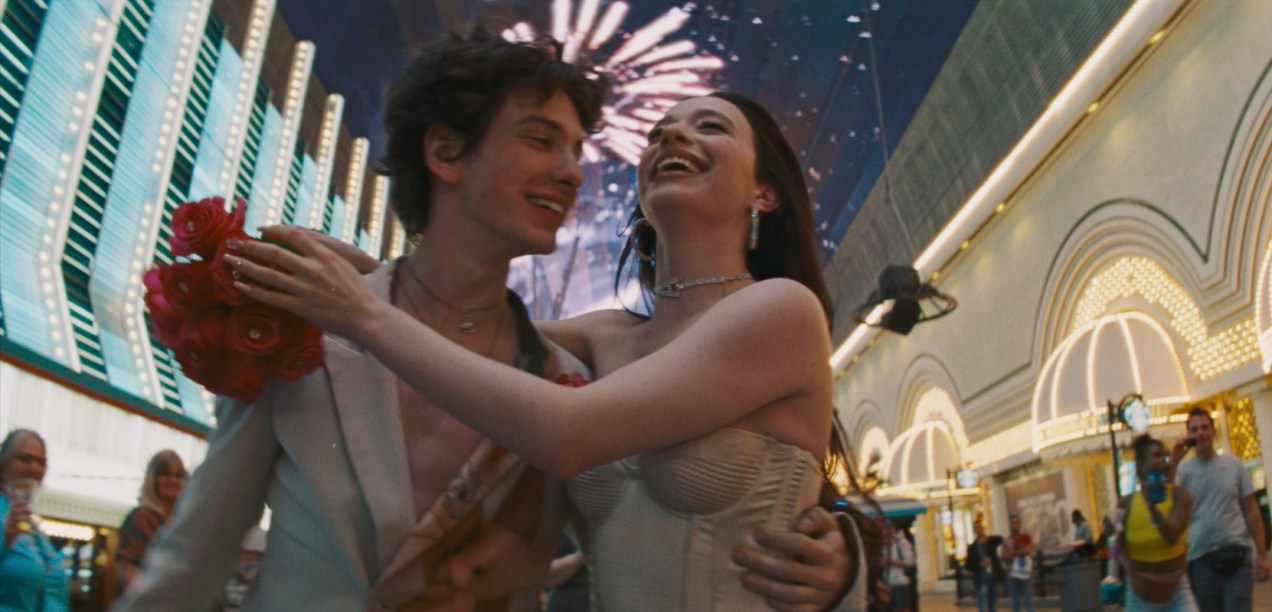
As Baker always does with his films, Anora follows a character whose world is rarely the focus of mainstream films. Anora (who goes by Ani) is a sex worker in New York, working in a club every night to make ends meet with her friends and a few enemies . One day, she is requested to entertain a customer as she is the only girl in the club who speaks his language and is introduced to Ivan, a wealthy Russian who puts the boy into playboy. The two hit it off and quite quickly it becomes clear that this isn’t a case of a horny patron and the worker playing up the charm. Instead, after a week of what’s often dubbed “the girlfriend experience” (in which sex workers are paid not just for sex but also for their presence around the clock and at social events) Ani and Ivan elope in Vegas, smiles immovable from their faces. However, Ivan’s wealthy parents aren’t exactly pleased with their new daughter in law and seek to do all they can to get the marriage annulled. It cleanly splits the film into two parts, with one a breezy and romantic comedy, the other a more hectic and still comedic dive through New York. As a structure, I loved that. The first half gets to set up our characters very cleanly and introduces their world in a way that is almost too intense, before completely changing pace in the second half and bringing in both broader laughs and harder hits. Here, as he did in Red Rocket, Baker uses structure as an offensive tool to put the audience on the backfoot and it’s a tool more writers should learn to love.

If you’re going to name your film after your title character, you need to be sure that you’ve picked the right character to back. To little surprise, Baker knows exactly what he’s doing and in Mikey Madison he finds perfection. She may be familiar to you from Scream 5 or Once Upon a Time in Hollywood, the latter of which I found her performance somewhat unsettling in because of her young age. It was so chilling to see a psychopathic character that young, not least because of the violent end she meets, and by young I mean that Madison is my age. We share a birth year but fear not, we don’t share talent, because she is on fire here in ways that few young performers are, and certainly ways that no young writers are. I was reminded of seeing Timothée Chalamet in Call Me by Your Name, watching a performer come from seemingly nowhere, achieve acting bliss and demand almost every scene of a feature film. That’s exactly what Madison is doing, though carving her own trail with great vigour. To throw in another reference point, her portrayal of Ani reminded me of Julia Fox in Uncut Gems, both creating loud and volatile women who care far more deeply than they are given credit for. Not only does Madison get the gift of a deeper role than Fox had, but she also gets to bring a complexity to her character. Ani is fun and brash and loud, absolutely, but she is her anxieties too, she has faults that are never explicitly mentioned but that filter through to the audience via the decisions she makes. To be honest, with this screenplay I think Anora would have been a great character in anyone’s hands. With Madison though, we find ourselves watching a legendary figure emerge fully formed.

That’s not to underplay how great everyone else is too, Baker once again casting smaller actors or even non-professional actors to terrific effect. A few unknown faces who stood out to me were Lindsey Normington as a villainous colleague to Ani, Mark Eidelshtein as the sweet but stunted Ivan and a hilariously pathetic turn from Vache Tovmasyan as one of the goons sent after Ani. There were familiar faces too to delight in, like scene stealer Brittney Rodriguez from Red Rocket popping up to once again lay down the law. Karren Karagulian is credited in all of Sean Baker’s past films and I confess, I didn’t recognise him from any of them, but I love his work here as the overworked and under skilled Toros, a figure whose opening scene has some of the best laughs of the entire film. All the actors I’ve mentioned here do great work, but the one who comes closest to Madison’s sublime art is Yura Borisov. Funnily enough, I last saw him in the film Compartment No. 6, a film which I saw directly before Red Rocket at the 2021 London Film Festival (and on which I’ve also written a piece I’m deeply proud of.) Baker saw Compartment too and understood the range Borisov had, putting it to brilliant work in his first English language role. I don’t want to say too much about the character as he mainly factors into the last half of the film, but once again Borisov presents us with a character who is so blatantly presenting as one type of person that you don’t even question that this may be a façade for another type of person. No spoilers, you go and discover for yourself.

While I’m writing about the technical elements of a film, especially one I’m seeing at a film festival, I worry it can become easy for the whole thing to seem quite clinical, for me to make every film sound like a bit of an exam for how good a film watcher you are. If so, allow me to clarify that Anora is a hell of a lot of fun. Baker’s films have always been funny but with Ani being a much more (though not entirely) likeable protagonist than disgraced former pornstar Mikey in Red Rocket, the laughs come with more certainty and ease. Her situation is ridiculous and the ridiculousness comes from outside her, so it’s comfortable to laugh along with her at the heightened stupidity of so much that happens. The laughs being more comfortable doesn’t mean that the film is a breeze though, it does get, for want of a better word, sticky. Ani’s profession means that there is an underlying tension to the whole film because of how cruel we know the world can be to sex workers, and with the emotional high point of a wedding coming in the middle of the film, you find yourself wondering how long things will stay this good. That feeling extends right through to the final scene, which I won’t spoil other than to say this; as it was happening I found the ending an anti-climax, yet as I was watching every other film I saw that day I kept thinking about how powerful the ending of Anora is. It reveals a fact about Ani that she has hidden well and it colours the rest of the film in shades you may not have considered. Baker knows how to end a film and with Anora he eschews comedy for absolute pathos.

Baker transforms a Take That song […] into a euphoric anthem that legitimately brought me to tears.

This should be the bit where I talk about the technical elements, but I don’t know if I can? I was so swept away by the pace of Anora that I forgot to remember I was watching a film. Broadly speaking, that’s only ever a sign that the technical elements of the film are pitch perfect. The cinematography from Drew Daniels proves that filming on celluloid will always make films pop out the screen at you, Baker’s editing allows the pace to ebb and flow in ways that allow the audience just enough time to relax and the music choices are absolutely inspired. There’s a lot of hip-hop in the film, exactly the kind of stuff that makes for good music during whatever it is they do in those clubs, but the rogue music choices are even better than the expected. A Tatu needle drop delighted but somehow, using alchemical magic, Baker transforms a Take That song (very specifically, a remix of the song from their cinematic jukebox musical that no one saw) into a euphoric anthem that legitimately brought me to tears. I do not know how he does it. This is a director working not even at the height of his powers but at the height of cinematic power, somehow finding time to do that and nod towards a character from Red Rocket with a billboard that will draw audience minds towards Showgirls in a knowing tip of the hat. Sean Baker has been a talent to watch for about a decade and if you hadn’t been paying attention, now is the perfect time to catch up.

Make no mistake, Anora is a crowdpleaser of a film, a comedy that makes you laugh hard enough that its deeper tendrils are burrowed deep and quickly. You should make your parents watch it, though I wouldn’t watch it with your parents unless they’re very cool about a lot of things that most parents are not. Through such an appealing comedy, Baker sneaks in a fully realised depiction of a sex worker with an interior life as rich as her exterior life is flashy, creating a nuanced portrayal of a group of people who are so often victimised and criminalised, especially in the UK. That’s punk rock as hell. If for no other reason, that should get you out the house and into the cinema for Anora when it releases in the UK on 1st November.

Rating: 4.5 out of 5.
Standard
Reviews

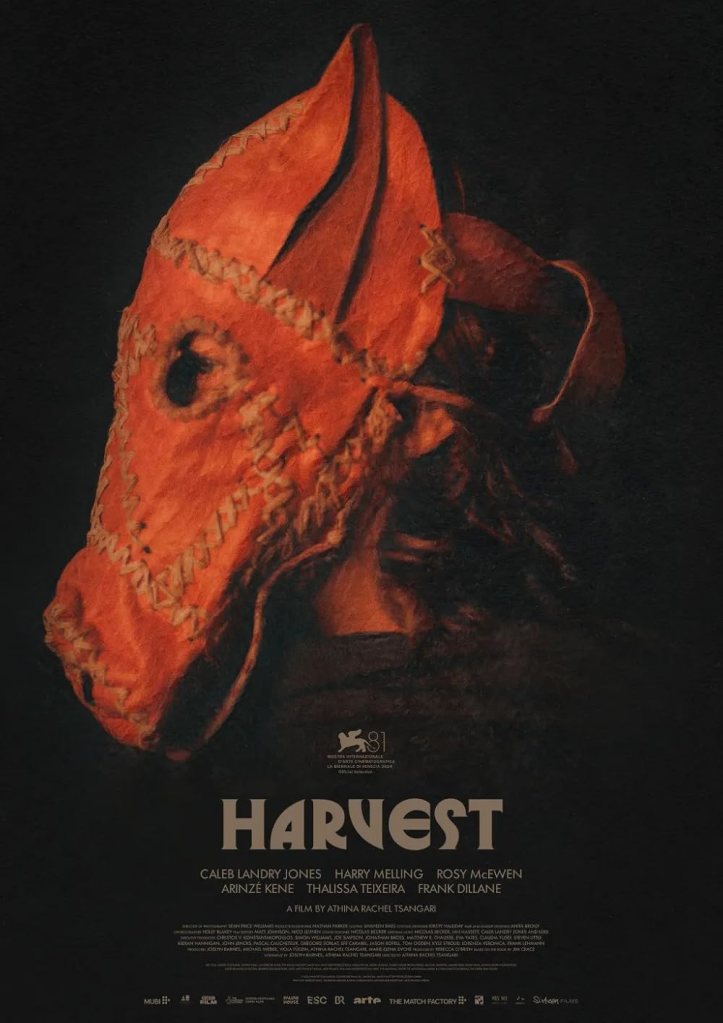
Review – Harvest

For those of you who don’t base their entire lives around film and are based near (enough) to London, you may not know that this week is the start of the 2024 London Film Festival! After a quieter edition for me last year while I moved house, I am back on it this year, using a press pass to its fullest in ways that my sleep schedule does not appreciate. You join me on day two and after five films, I’ve already got one to share with you that is very special. That film is Harvest.

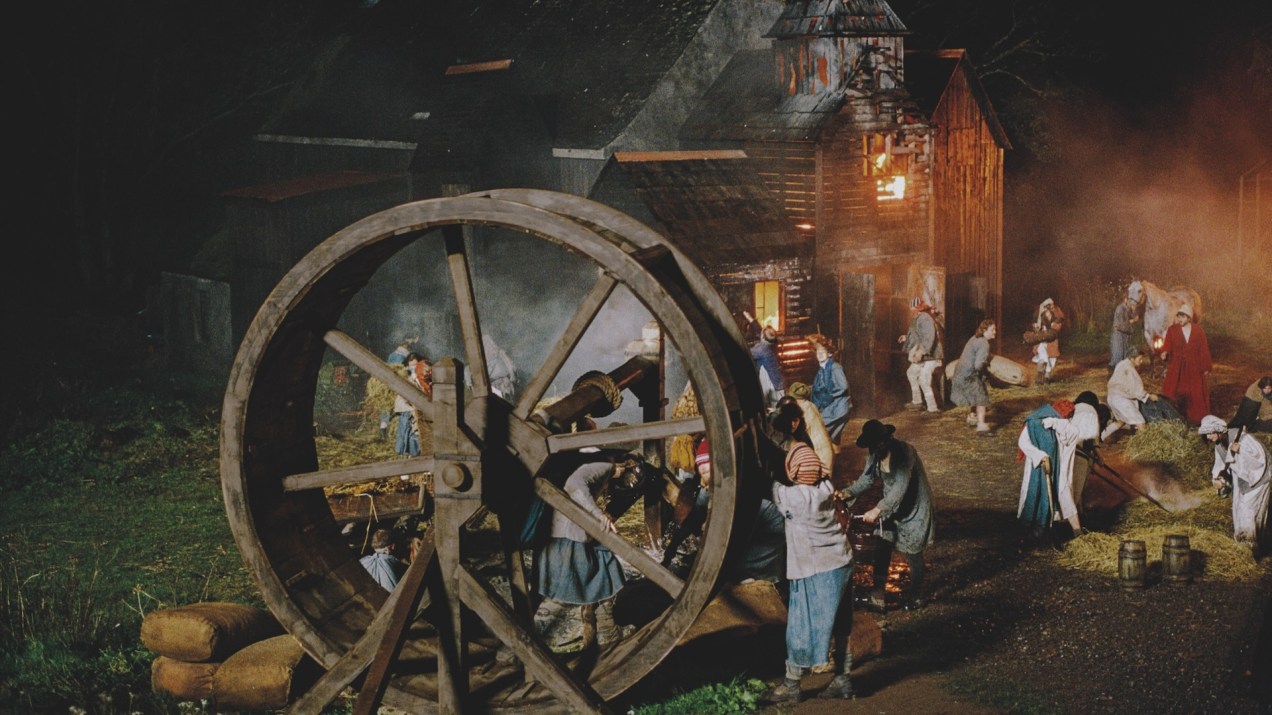
Harvest is the third film from Greek director Athina Rachel Tsangari and her first in the English language. In the film, villagers from a place of ambiguous location (but probably in Scotland) during an ambiguous time period find their lives falling apart at the same time that they are visited by outsiders. First a barn burns down and three strangers face the blame for it, finding themselves humiliated by the villagers. Then fingers start to be pointed at the cartographer who has recently appeared to capture the landscape. Soon though, things take an even greater downward turn as we meet the cousin of the Lord of this village, a man who has his own view on what the future of this village is. That is the broad strokes of the plot and in between those strokes, it doesn’t get much more detailed. That’s the charm of Harvest though, it’s properly mercurial. Eventually, you’ll find out who burned down the barn, but you’ll never know why they did it. At a point, you’ll find out why the strangers arrived, but it’s a real loose reason. You won’t ever understand what main character Walter’s deal is, but that’s a-ok with me. This is all fable, loose events that come together to explain how a village disappeared in the space of a week.

I’ve mentioned Walter, so let’s get into the cast, which was mainly actors I didn’t know. As Walter is Caleb Landry Jones, an actor I’ve known and liked for a while. He’s been in everything from Get Out to The Florida Project and Twin Peaks: The Return, even appearing in things I love that aren’t from 2017. Here, he gets one of his rare leading roles, properly embodying this creature married to his world. We learn a little about his history but never enough to truly understand him. Everything else you have to attempt to glean from Jones’ performance and good luck finding purchase on his slippery work. The cast around him are superb too. Harry Melling continues to distance himself from the Harry Potter franchise with another brilliant performance, effortlessly embodying a man with power who doesn’t really believe his power. He’s pathetic and that’s fantastic. Also fab are Rosy McEwan (who really makes me feel guilty for having still not seen Blue Jean), the perpetually underrated Arinzé Kene and a deliciously villainous turn from Frank Dillane. It’s such a great ensemble, with no one seeming out of place unless that’s exactly what they’re meant to do.

What [Williams] is doing, it turns out, is magic

While you get a sense of the performances and narrative over time, Harvest does its best to immediately strike you as strange. Tsangari comes from the Greek Weird Wave and despite tackling a Scottish period drama, she keeps the weird flowing here. What struck me first was the score, this bizarre prog rock inspired thing that immediately tells you all is not as it seems. Throughout, it veers in and out of the expected, hitting the usual strings of period dramas before heading straight back to prog rock nonsense. Pair that with the cinematography by Sean Price Williams and something special happens. You see, Williams is a cinematographer associated with the mumblecore of Alex Ross Perry and who also shot the brilliant Good Time. What is he doing on a period drama? What he is doing, it turns out, is magic. The camera is this little handheld 16mm thing, being chucked around the village and getting right up into the chaos that ensues, at one point even taking to the sky for a drone shot. Unbelievably, Williams even recreates a version of my favourite shot from Good Time, which sounds impressive before I tell you that the original shot involves a neon sign. Together, both sound and vision create an “out of place”-ness that pervades and absolutely refuses to let you be comfortable at any point during the film.

Another thing that prevents you feeling comfortable is the amount of reference points your brain will be bouncing between. The aforementioned cinematography goes away from Williams’ mumblecore roots to more closely resemble modern day Terence Malick. Where Malick uses his swooping camera to make profound statements on the world, Tsangari uses it to disorient and make you feel gross. It’s a simple swap but one that never failed to throw me off. I also kept thinking of a video game called Pentiment, a handy touchstone for any who are familiar. In the game, you are an artist in 16th century Bavaria who arrives in a small town and becomes embroiled in a murder mystery. One of the joys of that game is the sense of failure, in that you will accuse people of committing crimes and have no idea if you were right until after they are punished for these crimes. Another joy is this feeling of the modern hurtling towards the town, threatening to crush it underfoot. Both those and the anarchic humour played on my mind in Harvest and while I don’t take Tsangari as a gamer, I think it’s a useful reference point for an audience member approaching the film as far as tone and plot. The future is inevitable, but how will the unwashed masses face it?

My favourite thing about Harvest came packaged inside the building sense of tension that the film bestows unto you, which is this veiled critique on capitalism and the modern. If I may dust off my degree for a moment, there was a fantastic course I did on Transatlantic Literary Relations, in which we got pretty into the weeds about the roots of capitalism and what would become late capitalism. One of the things that I learned on the course was how maps can be a tool of the coloniser, placing a country in the centre of a map and artificially shrinking those who are to be colonised. It was a really striking revelation that stuck with me and still shapes how I see the world today, which again meant that Harvest set my brain racing. Quill, the cartographer, is a skilled artist of his craft and makes beautiful maps. However, these are a people without maps and the question starts to arise of what the purpose of these maps could be. I’ll not spell it out for you but it was this absolutely sick moment of “oh, that’s what this film is going to talk about” that made me start grinning ear to ear in the screening room. What a great surprise, what a treat of a turn in the tale. Sure, it’s an angle that is quite specifically up my street, but it’s only one puzzle piece of many in a film that is outstandingly rich.

I feel like I’ve barely scratched the surface of Harvest. I’ve not touched on the ritualistic nature of the villagers, talked about one of the most chilling character introductions where nothing actually happens, nor mentioned the strangest waterboarding scene I’ve ever witnessed. Instead, I leave these as gifts for you. As someone who didn’t particularly enjoy Tsangari’s previous film Chevalier and is yet to see her debut Attenberg, my expectations here were blown out of the water. Harvest is special, a rich film that is immediately rewarding and yet promises more if you let it inside. It currently doesn’t have a UK release date but it will be distributed by MUBI and I can only beg that you go and seek the film out as soon as it appears. I thought it was a real treat and the idea of there being films I might like more than this at LFF makes me practically giddy. Harvest left me intoxicated and deluded and I am grateful beyond words for that blissful experience.

Rating: 4.5 out of 5.
Standard
Reviews

Double Re-Review Spectacular – Guardians of the Galaxy and Dawn of the Planet of the Apes

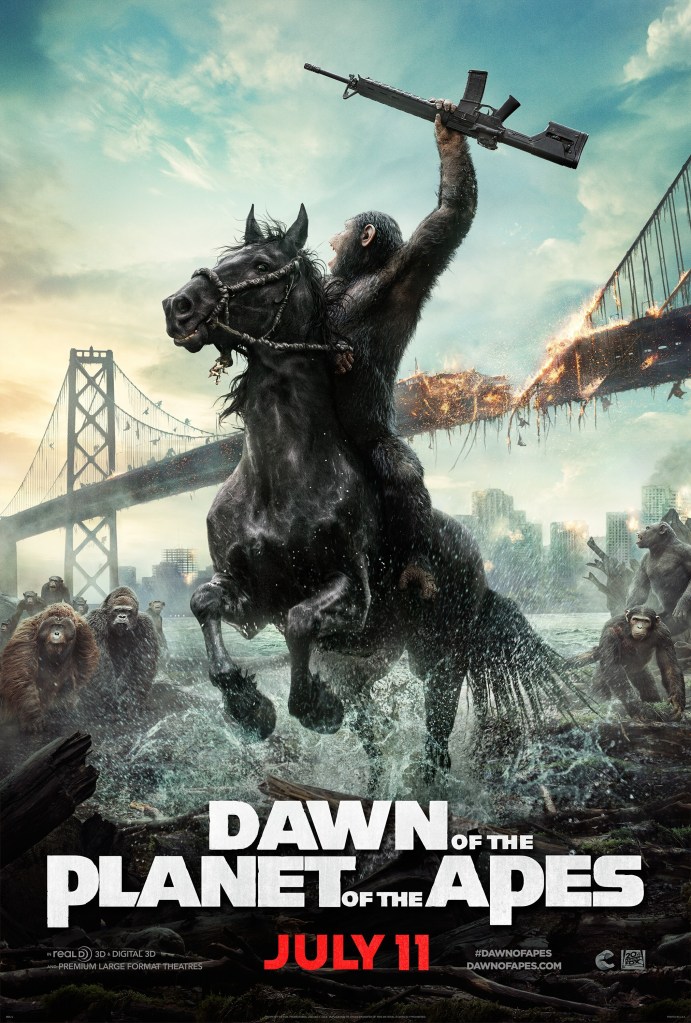
When I first started writing my blog, I kicked it off proper ten years ago with a big double review of two massive Summer blockbusters that I had recently seen. Those films were, as you may have guessed, Guardians of the Galaxy and Dawn of the Planet of the Apes. By chance, both these films turned out to be formative for their own reasons and ten years on, both still provide a lot to chew on. So, let’s review them again! I’m a much better reviewer today than I was ten years ago (you would hope, with a film degree under my belt) and like I say, these are films that do still deserve to be discussed for their place in Hollywood’s output. The question is, how have they aged? Both were 9/10 films for me a decade ago, can the talking raccoon movie and the talking monkey movie live up to the heights a 14 year old Henry held them up to? What a bold and provocative setup, I really do have a Film and English degree.

Guardians of the Galaxy

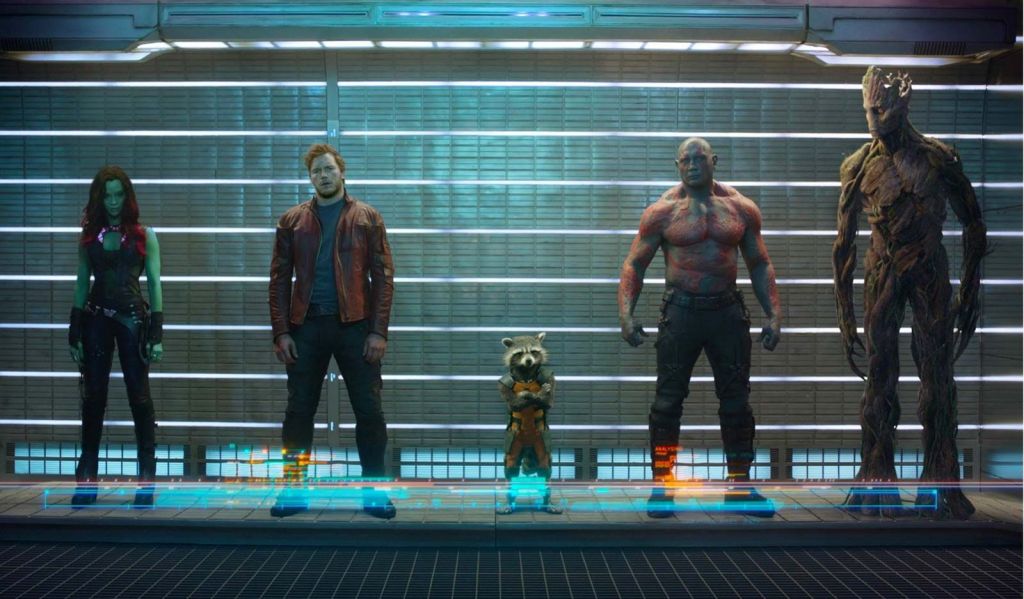
Guardians of the Galaxy is the 10th film released as part of the Marvel Cinematic Universe (MCU). For context, the recently released Deadpool and Wolverine is the 34th, which doesn’t even include the 12 seasons of TV that have also been forced onto us. In case it wasn’t obvious, the MCU was in a very different place in 2014, with only one Avengers movie having been released and the sense of a grand ending still very far off. Still, the films were beginning to knit together, characters crossing over between films and each plot becoming more important to understanding the next. If Guardians of the Galaxy felt refreshing in 2014 for being disconnected from the narrative of the MCU, you have no idea how good it feels in 2024.

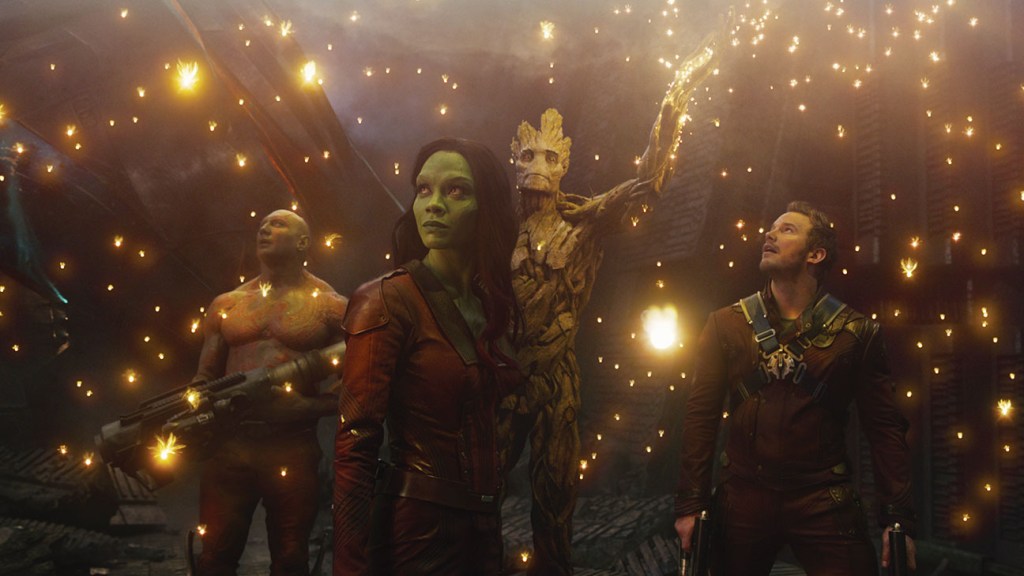
Ironically, the plot itself is weak, appropriating the feel of a space opera without quite committing to the scale that these stories go for. A bunch of misfits are brought together in an unlikely string of events, team up and stop a baddie from using a stone (what we now understand as an Infinity Stone) to blow up a planet. Considering that the past ten years have given us a faithful and bombastic Dune adaptation, it’s hard not to feel cheated by the world building that is in service of nothing in particular. However, the lack of an impactful plot doesn’t feel like a sticking point against GOTG, as its strengths are plentiful in other areas. In particular, the core characters are very well realised. Part of this feeling is certainly the context of these characters having a multi-film arc across the GOTG trilogy and last two Avengers films, but there’s a lot of work done here. My fondness for Rocket, Drax and Yondu is certainly based on the later films, but Groot’s characterisation is remarkably and instantly brilliant. He gets a handful of moments of quiet compassion, in which he very literally gives part of himself to others, and all of these scenes were profoundly beautiful to me. That’s such a silly thing to say about the MCU now but James Gunn and his team of writers really knew what they were doing.

Peter Quill is also shockingly well characterised for a superhero lead. We immediately understand the trauma he holds from never facing the death of his mother and that pathos gives a purpose to the now iconic “Awesome Mix.” The album has been such a phenomenal success in its own right, topping album charts, being the must own CD for every teenage boy of the time (including me) and also helping introduce a lot of classic rock to a new generation. What this success obfuscates though is the importance of the mixtape to Peter. These songs have been the only thing linking him to his home planet for over twenty years and he must have listened to them thousands of times. The music also helps establish Peter as a loser, in a way that is hugely endearing. Compare, to take a random example not chosen with any cruelty, to Deadpool and Wolverine. Both films feature a dance scene over the opening credits but take very different routes to create a very different effect. For Deadpool, our main character is seen doing a very well choreographed dance to “Bye, Bye, Bye”, a song that I don’t think it’s unfair to say is bad (and was also much better utilised in the opening credits of Sean Baker’s Red Rocket.) In GOTG however, Quill dances badly to “Come and Get Your Love”, a fantastic song that was not much remembered since the time of release. Where the Deadpool scene is played entirely for comedy (a comedy which, not to keep kicking the dead horse, does not land), GOTG uses a scene that is comedic to also tell us the importance of music to Quill and express the dorky side that exists alongside his adventurous persona. For my money, it’s the best character introduction in the entire franchise and I doubt we’ll get something as simple and efficient again.

To wrap up the chat about the cast, this is a very well cast film which managed to make stars of its smaller names and use well the bigger names. We love to hate Chris Pratt these days but coming fresh off Parks and Recreations, Peter Quill was the perfect role for him and the one he would deserve to be remembered for if he didn’t love cashing cheques so much. Bradley Cooper and Vin Diesel give genuinely impactful performances with just their voices, Cooper himself bettering everything he did before and since, with the exception of A Star is Born. It is also clear on a rewatch that Dave Bautista was immediately the real deal. He gives a gravitas to Drax that is apparent the second he appears on screen, yet allows his immaculate comedy skills to slowly flourish throughout the film. In any just world, he should be the biggest actor in the world, though I do love his dedication to strange passion projects in recent years. One other thing that feels strange in context is the appearances of Glenn Close and John C. Reilly, actors who never appear again in the MCU but pop in here to have a quick bit of fun. They should be better than this but their willingness and sense of game is warming. Good for them for taking the money and running.

It’s not all positive. GOTG has a lot of the issues that have since come to characterise much of the MCU and its imitators. As I said, the plot is a bore and lead villain Ronan the Accuser is a fantastically dull villain. None of that is Lee Pace’s fault, he is simply given nothing to work with beyond a character who wants to blow up planets. As such, when the third act gets plot heavy it chugs along and loses the great pacing of the past two acts, which is a shame. Also a shame are the lessons Hollywood took from the success of GOTG. One immediate thing Hollywood settled on was turning their ensemble films into jukebox musicals of sorts, with the most notable offender being the 2016 nightmare Suicide Squad, a fetid pool full of ideas that blended like oil and water. Ironically, it would be Gunn himself who would come in and redeem that franchise with The Suicide Squad, a definitive improvement that showed what a difference clarity of vision makes. Even as recent as this month, Borderlands proved that studios want GOTG but aren’t interested in an actual cinematic vision if the noise is loud enough.

I think the other big lesson that studios took from GOTG was that audiences wanted cool wacky adventures in space. Don’t get me wrong, I am broadly in favour of that but there has to be some kind of heart. Recent MCU disasters like Thor: Love and Thunder and Ant-Man and The Wasp: Quantumania prove that simply setting a bunch of nonsense somewhere new doesn’t make a film feel new. Audiences are smarter than they seem, but treating them like idiots makes them feel like idiots. It makes them like Deadpool and Wolverine. The irony of this big speech about lesson learning is that one person did learn from GOTG: James Gunn. He wrapped up the gang’s adventures last year with a third feature and gave the Guardians their best outing yet. Whether he brings that magic to the new DC Universe is yet to be seen, but if nothing else he left Marvel on a high note that they seem determined to squander.

In a twist that seems predictable to any who understands the passage of time, Guardians of the Galaxy doesn’t enchant me the way that it did when I was 14, yet it is still an easy high watermark for the MCU. We didn’t know how good we had it, but we also didn’t know how good Gunn specifically would treat us throughout the trilogy. Considering the mental, financial and emotional damage caused by the MCU and other attempted rivals, it is frankly shocking that I can still find it in me to love this film, yet I do. Despite being such a commercial product, it has at its core a beating heart and no amount of capitalist nonsense can cover that, not then, not now, not ever.

Rating: 4 out of 5.

Dawn of the Planet of the Apes

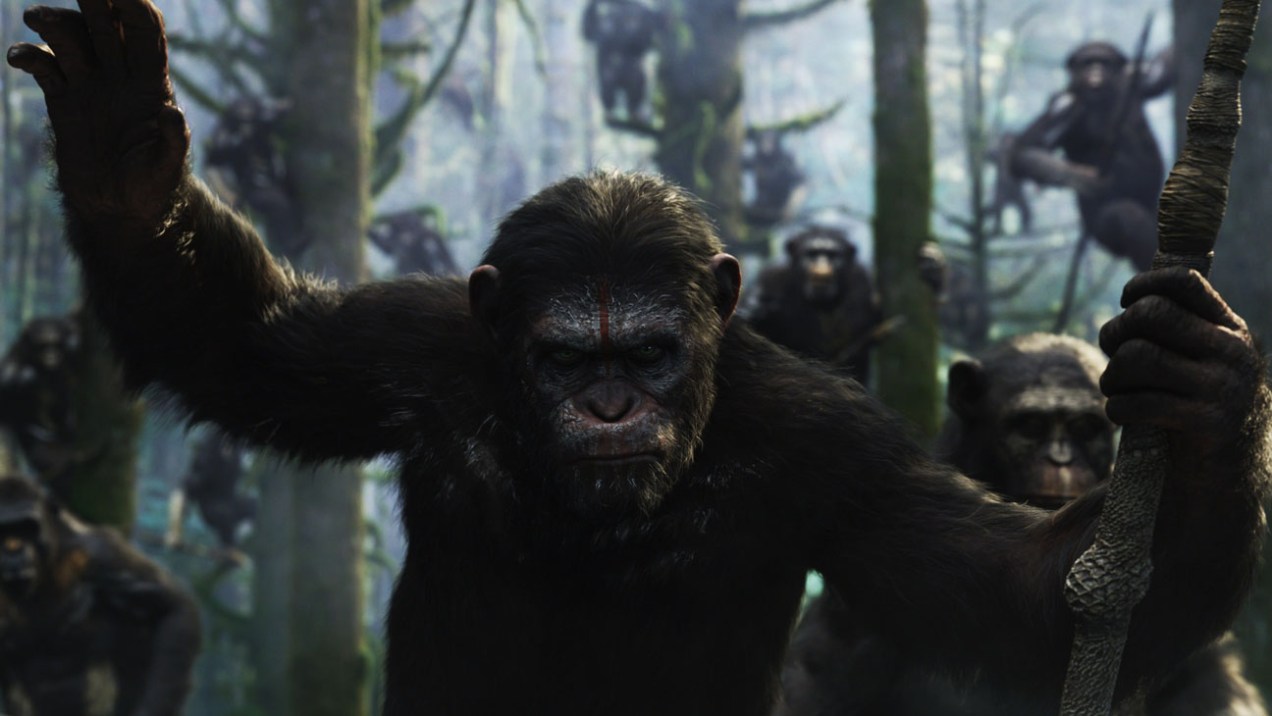
Dawn of the Planet of the Apes was my first Planet of the Apes film. I saw it in a double bill with GOTG because a friend who I had also seen it with was going along to Dawn. I had no expectations, walked in with open arms and now I am the biggest Planet of the Apes fan you know. As I now appreciate, Dawn follows on ten years after Rise, in which the Simian Flu has wiped out most of the human population of Earth and Caesar is leading a tribe of apes who live just outside what used to be San Francisco. One day they encounter a group of humans, who broadly seek no violence but just want to reactivate the dam so they can get electricity back. Both sides agree to let the dam be worked on, but there is dissent within both groups. For the humans, Carver is actively hostile towards the apes and blames the Simian Flu on them, despite the name arising from experiments performed on the apes. For the apes, Koba is rightly angry at the humans for testing on him before the outbreak, but wishes to escalate things and kill the remaining humans who could harm the apes again, whatever the cost. It creates a very strong divide in each camp between those who seek an alliance and those who wish to destroy their rivals and it is a powerful momentum that propels the film.

It sounds silly if you’re not in the know on your Apes lore but the core narrative of this film is one that is deeply political. The entire franchise has always been political, focussing on how power changes hands and what those new hands do with the power they have. In the case of Dawn, the focus is on how the paranoia and selfish desire of a handful of individuals corrupts the greater whole. If you’re familiar with a little show called The News, you might have spotted this recently. Hate figures like Nigel Farage, Andrew Tate and Tommy Robinson create an enemy for people to fear, rile those around them into a violent fury and then plead dumb when this typhoon of bigotry becomes a deadly weapon. Like with all films that are “more relevant now than ever though”, it is less predictive of the future than it is reflective of the past. Humans have always been malleable at the hands of charismatic villains, in this world apes simply are too. Another unintended resonance is the Simian Flu angle of it. In the vein of hatred there is the bigotry aimed at those the flu is named after, like how COVID-19 was euphemistically called the Chinese Virus by Trump, again not foresight but a reflection of history and events like the Spanish flu. The Flu is also compelling though because of having lived through the COVID-19 pandemic. Our virus wasn’t as deadly as this cinematic version so we recovered, but the lingering memory of former bustling spaces becoming liminal is still strong. I’m not going to claim Dawn is unique in this, The Last of Us pulled off a similarly affecting gambit the year before, but it is nevertheless affecting.

Our assembled cast is one that initially appears low-key, but all do roundly wonderful work. The humans are broadly expendable but solid. Jason Clarke is good enough to earn good will that has sustained him until now, Kodi Smit-McPhee gets to lean into his usual quiet loner thing and would I be being too much of a contrarian if I said Gary Oldman is better here than he was in his Oscar winning performance in Darkest Hour? He is wonderful, a quiet figure whose paranoia seeps into the film slowly, yet who is clearly still wracked by guilt. All the humans are in fact, it stood out to me this time, all our characters are plagued with survivors guilt over being the only one of their family to survive. It makes the humans weak and vulnerable in a way that still allows us to root for them against pre-established and broadly heroic characters.

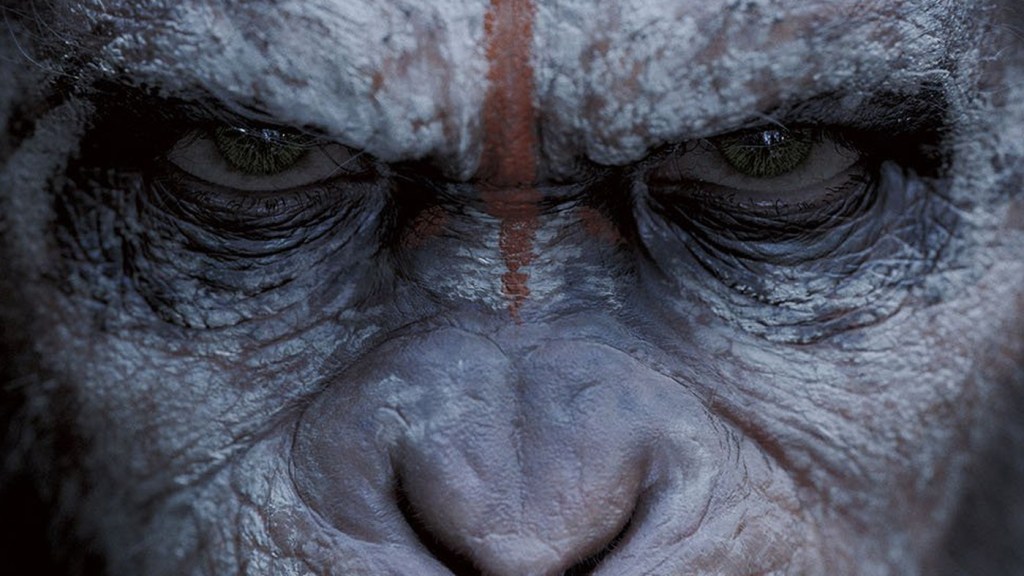
These apes though… Man oh man are they fantastic. Andy Serkis really does bring to life Caesar with ease and his performance makes a difference, especially when compared to the unremarkable lead at the heart of Kingdom of the Planet of the Apes. He gives all his films a grounding and this central film in the trilogy is where he is tested most deeply. Deeply underrated though is Toby Kebbell as Koba. Just after Dawn, Kebbell would have a legendarily bad run, starring in Fantastic Four (2015), Ben-Hur (2016) and the over-hated Warcraft, films for which he became a punching bag. He’s done great work since though, in A Monster Calls and Kong: Skull Island, so is clearly a talented actor stuck in some rubbish films. He is phenomenal here. Koba flits between two modes, either pathetic and weaselly or violent and demanding. In some scenes, he flips between the two in an instant, terrifying humans who witness him. He is a better villain than almost anyone the MCU presented before or since and Kebbell is a huge part of it. Also worthy of a shout is Karin Konoval who plays Maurice. In a weird parallel to Groot, Maurice is a gentle character whose power is in his small moments, like when he reads Alexander’s book. Every single time he appears on screen, whatever is happening gets 10% better without fail. Once again, great job Karin Konoval, we all love Maurice.

None of this talk about great apes would be possible though without the special effects surrounding them. Ten years ago, it was pretty much the selling point of these films and while photo-realistic special effects come as standard these days, Dawn still impresses. The worst you can say is that it looks like a video game but when you consider the outlandish level that video games are now capable of, it starts to sound closer to a compliment than it ever has. Crucially, the CGI never bursts believability. In every single scene, I believed that these fully computer generated characters were real. Even today, that is not an easy bar to clear and Dawn does so effortlessly. Accompanied by music that knows when to stick close to Jerry Goldsmith’s timeless feel and when to veer into Zimmer-esque action, as well as cinematography that is drop dead gorgeous at all times, few films since have felt as good as Dawn. Fewer still, if you rule out Matt Reeves’ other films.

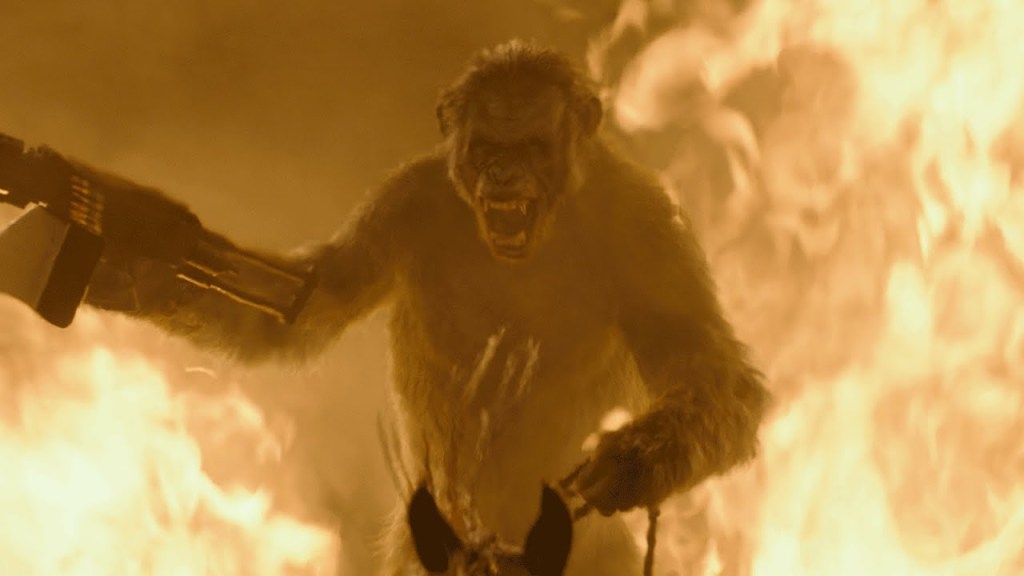
The reason I keep coming back to Dawn though, both to watch and to discuss, is how versatile a film it is. It has the political layer I was talking about, creating interesting characters on which we can see a sociological struggle play out, working on interesting levels. The whole modern series, in fact, has been very smart on even very little things, like the evolving meaning of what was Caesar’s bedroom window, into a sign for hope and a sign that can be hijacked. That is a fantastic thing for the film to have. However, it is also an absolutely banging action film. Do I need to do more to sell you on the action other than saying “there is an ape on horseback dual wielding assault rifles?” I hope I don’t, otherwise I have failed to curate my readership base properly. The point is, the action is amazing and contains shocking weight for characters who only exist digitally. Having now seen what Reeves can do with The Batman, no one doubts his action credentials, but for the dedicated, Dawn showed early what impressively awesome action he can create with a camera, a deep CGI budget and a dream. That siege on the human camp, in particular, is a display of sheer screen shaking bombast that requires cinematic viewing and must now be turned down so the volume of ape violence doesn’t spook the neighbours.

The magic of these modern Planet of the Apes movies is their versatility. Where the old ones were political parables that often thrilled, Dawn signalled a shift into action and parable existing hand in hand, where one cannot exist without the other in a beautiful symbiotic harmony that somehow still allows room for warmth. Honestly, where Guardians wasn’t quite as wonderful as I remembered, Dawn was even more so. It is a true example of spectacle that has something to say and a film that feels out of place in Hollywood even ten years later. We were and are blessed to live in a world where Dawn of the Planet of the Apes exists.

Rating: 4.5 out of 5.
Standard
Reviews

Review – Maxxxine

Maxxine is the culmination of a weird little trilogy made by Ti West and starring Mia Goth, one which we’re missing a catchy name for but which regardless consists of X, Pearl and now this. If I’m completely honest, neither of the first two films properly clicked for me like they did for others. I knew people who argued that X was some kind of subversive genius but I found it at its most satisfying when eschewing subversion for gory kills. Pearl I found even more hard work, a formless piece that hinges entirely on the threat of something cool happening and then also Mia Goth’s performance. Both I enjoyed overall but neither felt special. I expected the same from Maxxxine. I got something much more interesting, by which I mean worse.

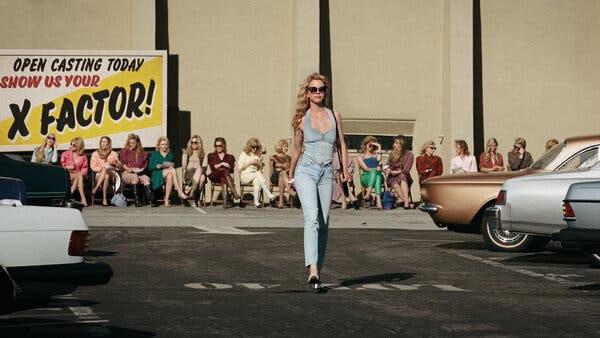
The story here follows on directly from X, with Maxine working in the adult film industry in LA and auditioning for horror films. She gets a big part in an exciting horror sequel and we follow her getting ready for that. A series of murders is happening at the same time, targeting those around Maxine, all in the shadow of this satanic panic stuff that actually was a big thing in the eighties. Into that realm is also thrown a private detective who is chasing down Maxine and putting pressure on her about the events at the farm in X. The thing is, the plot does feel like the way I’m describing it, disparate strands just floating around until eventually there’s a big sloppy mess at the end. I could forgive the plot being a bit of a mess for a while as it was just a vehicle for set pieces, but once the end slaps us in the face with narrative, you can’t help but feel insulted.

[Kevin Bacon is] channelling Foghorn Leghorn by way of Jake Gittes from Chinatown if he was the human villain in a Muppet movie.

A big sloppy mess of plots requires a big sloppy mess of casts, all of whom seem to be from different films. We have the ever elegant Elizabeth Debicki playing a tough but fair director, Lily Collins showing a misunderstanding of the Yorkshire accent that is usually only reserved for Americans and Michele Monaghan getting to play a hard boiled cop for her two scenes. Two rise above the crop though. Naturally, having been in all three of these now, Mia Goth is getting pretty good at this thing. She has a wonderfully cinematic face, full of weird angles that you can’t look away from and given absolutely nothing, she is able to spin something. My favourite performance though, for some reason, is Kevin Bacon. He gets to play the private investigator, channelling Foghorn Leghorn by way of Jake Gittes from Chinatown if he was the human villain in a Muppet movie. I don’t understand what he’s doing or why, but when he crawls into a scene, his stench of corruption briefly turning the film into a 4D experience, I sat up. In this big confusing gumbo of a film, Bacon is a gift.

And now we get into my real beef with Maxxxine. The film, to its genuine credit, looks and sounds amazing. All of the people who worked on the production, visual effects and sound work for the film have knocked it out the park recreating the scuzzy feel of the world. Obviously, I didn’t spend a lot of time in LA during the eighties due to reasons involving my birth and lack thereof, but the important thing is that it feels authentic. It reminds me of other films made in that time, drenched in the stench of the time, like a good and nasty Brian De Palma film. Unfortunately, this is the root of the issue. Maxxxine is not a Brian De Palma film but it really believes it is.

[Maxxxine] will satisfy those who are vaguely familiar with the films of the time but if you’ve seen even one De Palma film […] you’re going to find the film empty.

For those who haven’t trawled the dusty shelves of eighties erotic thrillers, Brian De Palma is the mind behind such trash as Dressed to Kill, Phantom of the Paradise and most importantly for this review, Body Double. His films are full of nudity, violence and a general feeling that you wouldn’t want to watch this with your mother. I know for a fact that Ti West is trying to make a De Palma film because of how much he cribs from Body Double, whether it’s the focus on Hollywood, the gloved killer (which De Palma himself took from giallo films) or most egregious of all, a sequence soundtracked by Frankie Goes to Hollywood. West plays “Welcome to the Pleasuredome” over a disco scene in a move that pales when compared to the excessive brilliance of De Palma taking five minutes out of Body Double to walk onto the music video of “Relax.” It’s the kind of pointless yet intoxicating move that even a lower budget film like Maxxxine would get test-screened out of it, and it’s also the kind of thing that means we still talk about Body Double decades later. Maxxxine has no such scene and it’s making me worry if posting the review a week or two after release is delivering the review into a world where this film is already irrelevant.

I don’t know if Maxxxine is terrible, that’s what makes this review tricky. Weirdly, the film I keep comparing it to in my head, more than any Brian De Palma film, more than any 80s slasher, more than even the previous two films in the trilogy, is Joker. Very specifically, the reason I kept thinking about Joker was the reliance that Maxxxine has on reference points, to the point of almost parody. Cast your mind back five years, remember how the conversation with Joker was mainly “you’ll like this if you haven’t seen The King of Comedy and Taxi Driver.” I think Maxxxine is the same. It will satisfy those who are vaguely familiar with the films of the time but if you’ve seen even one De Palma film, one giallo film, one straight to video slasher, you’re going to find the film empty. This quote from David Schmader rattled around my head in the aftermath of my viewing, where he says of Showgirls “the subtext is stunning until you realise there is no subtext.” That is Maxxxine. It wears the clothes of a film that’s about something but underneath is merely cheap thrills that are neither cheap enough nor thrilling enough to disguise from the lack of aboutness. And again, the film insists upon itself constantly. It opens with a Bette Davis quote and then closes with “Bette Davis Eyes”, it is desperately trying to seem to be about something when it is deeply and genuinely hollow.

My final question is one that is for the people who have already seen the film, because it’s a point that confounds me; how are we supposed to feel about Maxine as a character? Are we meant to like her? Feel sorry for her? Are we meant to think she’s a great actress? That last question in particular was in my head the whole time because of the opening audition scene. Maxine does a great performance in that audition, but it’s clearly for a film that is terrible, hence them asking to see her breasts and the script having the line “she addresses the camera through her trauma”, a clunker of a line so clunky that even Ti West couldn’t have put that in by accident. Is she meant to be some lost talent forced to work in low rent horror sequels? Or are we meant to be judgemental of her past? She seems ashamed of it and is trying very hard to erase any trace of what happened in Texas, so is she an evil figure? Pearl complicates the conundrum because is that West trying to draw parallels between a murderer and a survivor? Are the two one and the same? Is he spending so long with his head in the sand of subtext that he has failed to include any actual text? It all feels like a mess, one of those trilogies that, when the three films are taken as a whole, weakens each individual product.

So yeah, Maxxxine! It’s pretty rubbish! If you want a handful of wacky performances and a few cool gore scenes and literally nothing else, this will sort you out. However, in the time it took for me to write this review, Longlegs came out and showed that it’s not as hard to make a good horror film as Ti West makes it seem. If you saw the other two in the trilogy, sure, I guess watch this one. If you didn’t, the homework is not worth it and your time would be better spent getting a copy of Body Double and feeling authentic eighties sleaze, not this off brand, sugar-free, “Professor Peppy” knock-off of a film.

Rating: 2 out of 5.
Standard
Reviews

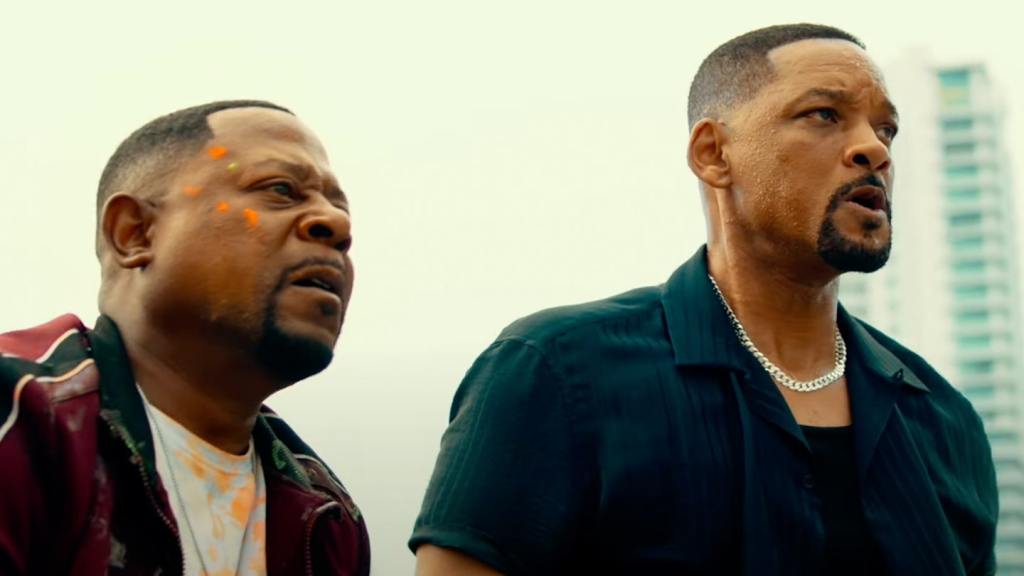
Review – Bad Boys: Ride or Die

Last week, I asked people on my Instagram, you people, what you wanted to see me review next. Did you want to see me review The Beast, a complicated and heady movie that immediately became my favourite of the year? Or did you want me to review the fourth Bad Boys movie? By now, the answer is probably obvious, but I have the last laugh here, because I think you all expected this to be a rant. You expected me to get so worked up at this silly action movie and start swearing and doing all that nonsense. My friends, the joke is on you, as I have found myself with an inexplicable fondness for the new Bad Boys films.

Let me explain. I think the first two Bad Boys films are pretty repulsive, films that have a great deal of unearned swagger and show all the worst instincts of Michael Bay. Bay has done great work away from these films (for whatever reason, I am infatuated with The Rock and Ambulance), but everything I don’t like about him is on very full display. That’s what made the third film, Bad Boys for Life a surprise for me. Directors Adil El Arbi and Bilall Fallah took the reigns and injected a surprising amount of life into the franchise, while stripping away the worst urges that tainted the franchise before. Adding to the fondness is the fact that I saw this film in Florida with my housemate Maysam, a genuine Florida man, minus all the negative connotations of the label. I couldn’t say for sure whether the swaying factor was that these new directors knew what they were doing or that I was getting into that Florida spirit, but I found myself enjoying it, as did Maysam who described it as “almost as good as Uncut Gems.” The point being, you thought I had no love for these films, when in actual fact, I have a little bit. Looks like you just got out played by the player.

Anyway. That was four years ago and it would be an understatement to say that things are different now than they were in January 2020. I’m no longer in Florida, Arbi and Fallah had the Batgirl movie ripped from their hands in the cruellest way imaginable and Will Smith… Well, he did a thing that if nothing else, is responsible for the funniest thing Judd Apatow has ever written. We’ve all had a few setbacks. But when you find yourself in bad times, you know which specific type of boy to call… Bad.

I had to start a new paragraph because I had no idea how to recover from that joke and there was no smooth and easy way to segue into telling you the plot of Bad Boys: Ride or Die. Instead, I’m just placing it down in front of you, blatant as can be. The plot is, not what you’re here for. Mike and Marcus both find themselves thinking about their place in the world, whether from brushes with death or the arrival of some holy matrimony. However, it all goes awry when some terrible plot is revealed to frame their former captain and send the two men on the run. As I said, plot isn’t crucial, though some credit is due. This film leans a lot on plot points from the previous film and when those are coming, it does remind the audience of crucial details. Some might call that lazy writing, I call that helpful, because I forgot who most of these people are. Ultimately, the film understands that you’re not here for narrative depth and that all double crosses can be predicted from the second an actor walks on-screen, so it does just enough to hang everything else off.

To which we may ask: what is hanging off that flimsy plot thread? The main response is, charisma from our two leads, the thing that brings many people into these films yet conversely makes a very good attempt at pushing me away. I should be transparent: I don’t like Will Smith or Martin Lawrence. It’s nothing personal against the two of them and it has always been this way, I just don’t enjoy either of their star personas and have never seen a film that proved me wrong hard enough to not be a fluke. That feeling remains in this, the fourth Bad Boys film. Smith and Lawrence do nothing you haven’t seen from them before, but by design. Fans want this. Fans like this. I see Martin Lawrence gurning his way through every scene and roll my eyes, I see Will Smith posing all tough like with a gun in each hand and my heartbeat drops a BPM or two. This is fine. Lots of laughs and indeed lmaos were had in my screening and good for them. This is just not a dynamic I’m invested in, whether they’re wittily trading barbs or wistfully staring at that sweet Miami skyline.

In this void, one would hope a strong supporting cast would jump in to save the day for me, but alas Smith and Lawrence try their best to strong arm them out the way as well. Rhea Seehorn is cruelly wasted in a gruff turn, Tiffany Haddish turns up to do her shouty thing for a scene and our old friend DJ Khaled returns to atone for his crimes. Two actors do get to shine though. Dennis McDonald returns as Reggie, the quiet boyfriend of Lawrence’s daughter, and he gets a genuine stand out scene that is a culmination of all the bullying the franchise has handed him. Clear runaway though is Joe Pantoliano, who does the best acting in the film despite his character dying in the last entry. He keeps popping up, whether in old videos or hallucinations, and serves as a reminder of how much we all love Joe Pantoliano. Wasn’t he great in The Matrix? Didn’t you enjoy trying to work him out in Memento? Isn’t it fun to point at the screen whenever he appears and go “hey look it’s Joe Pantolinao?” The answer to all of those is yes. He’s a veteran character actor who never seems to get enough flowers and if he appears in every Bad Boys film as a ghost for the rest of his life, I’ll be happy.

I was saying earlier that this new era of Bad Boys is one that I find less repellent than the old one and while the lack of leering is welcome, we still find energy and personality through the cinematography. Again, this isn’t me dunking on Bay, you don’t make a film like Ambulance while resting on your laurels, but Adil and Bilall have a real dynamism to the way they throw their camera around that Bay’s BB films just didn’t have. Think of the smoothness of the fight scenes in a film like John Wick: Chapter Four. Think about how precise the camerawork and blocking is in those, how we’re neatly led to the action at all moments. Now think about what it would look like if the camera operators had downed two cans of Red Bull and started lobbing the camera between each other. Congratulations, you’re now picturing Bad Boys: Ride or Die. It’s not quite as slick or masterful as any of my beloved Wick flicks, but the energy is certainly infectious and while messy, I can’t say I wasn’t entertained. I had to reach for my pocket ibuprofen once or twice, sure, but I was giggling regardless.

The big issue though, and the thing that stops me enjoying these new films any more than I do, is that there are only ever three things happening on screen. Either there is action, there are quips or there is wistful staring at that sweet Miami skyline. Sometimes, if we’re lucky, there is more than one of these things happening, but never all three. I had this realisation about half an hour into the film (which to be fair, is close to seven hours into the franchise) and it coloured everything I saw after. Oh, this is an action scene. Oh great, now they’re quipping. Oh cool, some quips and some shooting. Oh well, now time to look at that sweet Miami skyline. You become entirely detached from the film and just start losing yourself in the concept of a Bad Boys film. Is this a universal complaint? No, almost certainly not. However it was something that just ate and ate at me, through decent action scene and decent quip scene and decent staring at that sweet Miami skyline scene. By the end, cinema itself felt deconstructed. Maybe this is the Bad Boys film that the late Jean-Luc Godard would have vibed with.

All in all, it’s alright! If you like the Bad Boys films, you won’t be let down. If you haven’t liked any of the last three, you won’t be converted. And if you haven’t seen any Bad Boys films, why on Earth are you starting with this one? It has enough energy to whittle away an evening, but not enough to lodge firmly in your brain. That said, if there is a fifth one, trust and believe that I will be there again, opening weekend, ready to savour that sweet Miami skyline.

Rating: 3 out of 5.
Standard
Reviews

Review – Challengers

By this point, Luca Guadagnino being attached to a project is enough to have it skyrocket to the top of my Must Watch list. Since that first time seeing Call Me By Your Name on New Years Eve, I knew I had encountered a director who created special worlds. The release the following year of his polarising (but ultimately marvellous) Suspiria remake confirmed it and in 2022, Bones and All truly sealed the deal. Wherever Guadagnino went, I would follow (eventually follow, my unwatched copies of I Am Love and We Are Who We Are still look at me with very sad eyes.) The point I’m getting at is, whatever film Guadagnino made next I would watch, even if it was about something I don’t care about like, say, sports. Lo and behold, his next movie is about tennis. But, in a brave and Italian twist, Guadagnino asks us: what if tennis was sexy?

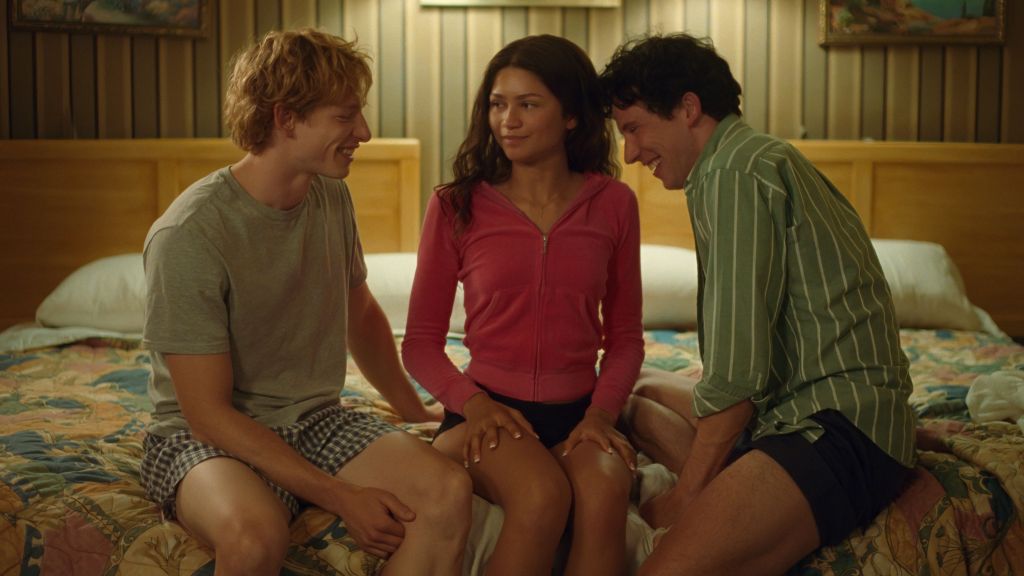
Challengers is the story of “what if tennis was sexy” but also unfurls into a great deal more. We follow a triptych through a 13 year period in which they fall in love, play tennis, fall out of love, stop playing tennis and eventually, find themselves playing tennis. I’m being glib but the impressive thing of the story isn’t necessarily the events of the story but the way they play out. From the opening five minutes, we get the basic idea of the plot. Two close friends fall in love with the same girl (who is forced out of playing tennis into coaching it by an injury), she ends up with one of them as he becomes a professional tennis player while the other fades into obscurity, but the two are reunited at a pivotal match for both their careers. Real simple set-up. But, the skill of the film is in its structure and how it bounces between its timelines like a ball in a tennis match (I am the first person to notice this, thank you for appreciating how smart I am.) While I was initially worried that it would get tiresome returning to the same tennis match and bouncing forwards and back from the past, what the structure actually does is layer meaning upon the initial premise. A simple tennis match becomes a fraught battle in which two former friends may be about to finally destroy each others lives, powered by lust, capitalism and pride. It’s a structure that I think will lend really well to multiple viewings but even on a first viewing, the constant build of narrative information creates a whirlwind of emotional meaning.

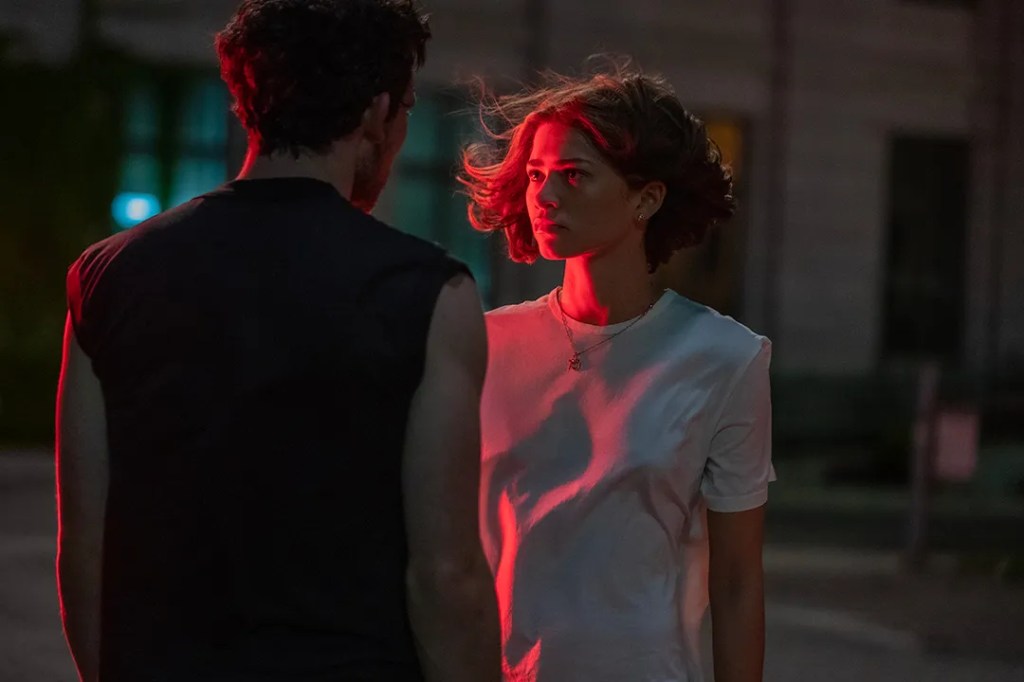
Obviously, that emotional connection with the narrative is only really possible because the characters that the narrative is built around are so strong, as individual units and as combinations. In fact, usually with these sorts of reviews I start by talking about the main character, an attribution that Challengers proudly rejects. These are three characters given equal weight and so I guess I’ll just run through the cast in the order they’re credited. Zendaya plays Tashi Donaldson, former tennis pro and current tennis manager/expert/wife. She is the catalyst for this passionate friendship implosion and gets two separate and magical introductions. In the modern day section of the film she’s a cold and steely figure who stands out as much in a crowded stand as she would if the crowd were disappeared, but then in the past she is a force of nature, bursting onto the court and into men’s hearts with a casual fury that bewitches. Having not seen Euphoria, I’m not that familiar with Zendaya as an actress, basically knowing her exclusively from sandy movies with large worms and spice lords. Clearly though, she has gotten good at picking the right directors to work with, because her star power and weapons grade “it girl” charisma are neatly fitted into the world of a rising tennis starlet who no one can look away from.

Speaking of our lookers, let me introduce you to Mike Faist as Art Donaldson. He caught my eye in West Side Story and was my favourite part of it, this tortured dream-boat of a boy who seemed destined for something magical. And now, here he is, making magic on screen yet again. Because we first meet Art as a professional tennis player, he has an easy power and swagger that you see with pro-sports people, but whenever we flash back, he’s still believable as a lanky loser with the possibility of doing something greater. He’s paired with Josh O’Connor as Patrick Zweig, also getting to play both against type and into fun. In real life and most of his other roles, O’Connor is a stone cold sweetie. He’s shy in interviews, talks about how much he loves Ratatouille and for all intents and purposes seems to have escaped from Pixar’s film. Here however, Patrick gets to be a real dog. There’s a grin O’Connor gives him that is a dirty, cocky, real arrogant kind of confidence that is also absolutely magnetic. Part of you wants to hate him, the rest of you is disappearing from your body in that long strand of drool hanging out your mouth. We really once again find ourselves up against the kinds of performances whose magnetism, charisma and sheer watchability are beyond analysis. Considering these are three actors I was familiar with before the film, I was astounded by how much they all disappeared into character.

If we’re talking about any of the technical elements of this film, we have to immediately talk about the musical score of Challengers, provided by Trent Reznor and Atticus Ross. Reznor comes from the band Nine Inch Nails and Ross is a producer who has been rolled into the NiN fold, but the two have become most famous for their film composition. Their most beloved work by film nerds at large (including yours truly) was for The Social Network, for which the pair won an Oscar, though they certainly haven’t been slacking since then. Four more collaborations with David Fincher, one more with Guadagnino and working on my ultimate soft spot Empire of Light come to mind as highlights, all before we even mention their second Oscar win for Soul. The two have range and Challengers proves it again. They take us to Gone Girl by way of Troye Sivan, Charli XCX and Sufjan Stevens all before getting lost in the mosh pit of the gay club. In lieu of breathlessly explaining the film to my partner after sprinting home from the cinema, I just played her the first track on the soundtrack and she instantly knew what this movie is. What is especially impressive about that fact is that while the score tells you what movie you’re in, it also delicately wrong foots you emotionally. Music theory was never my strong suit so indulge me here, but these delicate piano notes that sound initially mournful ascend in ways you weren’t expecting, leading to this bizarre euphoria rising from the dust. Those tracks then pair up with a central motif which returns across the film, layering in noise and meaning like butter in a lovely flaky pastry. At this point, I wouldn’t be too shocked if it’s my album of the year, such bangers does it contain.

And that would all be enough. I promise, I would really be happy with a film if that was everything I got from it. But there’s so much more, which I promise I won’t linger on too long because I know brevity isn’t my speciality. The cinematography is beautiful, getting right up into the faces of characters in very sensual ways and then doing bonkers stuff. Challengers is one of those movies where every shot is the best possible way of visually telling the story and oh lord was I hooting and hollering. There is a POV shot near the end of the film which sounds like the kind of thing that should cause motion sickness, yet is actually a case of absolutely sick visual brilliance. These are weaved together with an editing that allows the pace to never let up. As I said earlier, the structure could threaten to slow the film but the way everything slots together in the final piece is magic. We slowly get to know everyone and as the film moves along, the pace keeps quickening. There’s a brief moment where we slow down for a stormer of a storm and then bam, a frenetic final act that will make you want to scream with joy. For a film that isn’t particularly short, I could have immediately gone into a second screening and left that too with as much energy as the first round.

You’re probably not shocked after all that to hear that I think Challengers is one of the best films of the year. With the way UK distribution works, we’ve had an excellent start to the year and with a potential drought of films coming up, this is the kind of heart pumping, chest bashing, serotonin overload of a film to keep us sustained. Try and catch it while it’s still in cinemas but otherwise, just pre-order that blu-ray now, you are gonna want to come back to this forever and savour an ace movie.

Rating: 4.5 out of 5.
Standard
Reviews

Review – Typist Artist Pirate King

So, this is a tricky review to write. I was very excited for Typist Artist Pirate King. I like Carol Morley’s most recent films, she’s got a solid little cast full of talented British actors assembled here and hey, a film about outsider artists who went underappreciated in their time is exactly my kind of bullshit. Even having heard negative reviews from people, it couldn’t deter me from seeing Typist. In hindsight, I should have let myself be deterred.

For those, presumably many of you, who don’t know what this film even is, let me do that thing we’re meant to do at the start of reviews and spell out the facts of what the film is. Our lead character is Audrey Amiss, a real life artist who suffered with what I believe the film states is paranoid schizophrenia. The exact details are unfortunately unimportant, as they only amount to the background detail of Audrey having been in and out of institutions for her whole life, and to the ongoing detail of her having schizophrenic episodes in which she mistakes people in front of her for people in her past. The story surrounding her is completely fictional however, a story in which she and her ex-carer take a road trip to Sunderland to enter Audrey’s work in a gallery.

Theoretically, good idea! The road movie is this mythical genre that doesn’t get many entries and it gets even fewer British ones (Radio On and The Trip feeling like the only major examples unless you want to be generous and chuck in Chitty Chitty Bang Bang), so yeah, let’s throw another film into the mix! The problem with a bad road movie though is exactly the same as a bad road trip; it can start well but soon you start to realise you don’t know where the destination is. I’ve seen quite a few “aimless” movies recently which create a delightful aura to luxuriate in but Typist is a film that unfortunately deserves the title of aimless with all the negative connotations it encompasses. Though you know early on that the goal is Sunderland (and Lord, what a miserable goal to have), the hijinks that ensue become tiresome and you start to wonder what the point is.

I think part of this is deliberate? Throughout, there are numerous Don Quixote references (Kelly Macdonald’s character is literally credited as “Sandra Panza”), but they’re numerous to the point that even I, someone who hasn’t read or even seen an adaptation of Quixote, felt like I was being hit over the head. And again, even as a layman (with an English degree, to be fair) I understand why it’s a parallel you’d draw. Both are stories about individuals with rocky mental health, in which said individual is the head strong one leading a largely unwilling companion across the country, but I don’t think Morley has created the British Don Quixote here. That’s a stupidly large bar to set yourself, especially when your previous films have been “good, but…” It’s not an ambition I resent but it’s one that I think kneecaps a film that would have been well served with less references that seem placed largely to justify extended flights of fantasy.


If we want to chuck another positive in, I really like this cast! I don’t love what they’re doing but they’re all actors I am happy to see more of! Playing Audrey is Monica Dolan, one of our country’s most underrated actresses. She had a haunting turn in the Black Mirror episode Loch Henry earlier this year, got to play in one of the most interesting Inside No. 9 episodes and was great in Pride. She’s one of those “it’s them! From that!” actors, a crop that keep getting work because they are chameleonic in their approach and damn good at what they do. I think Audrey is a very difficult character to inhabit though. She has to be irrational and somewhat unlikable by design, while still being empathetic enough to root the emotional core of the film. To be blunt, I don’t know if it’s possible with this script but Dolan gives it her all. It’s not a performance that’s likely to be talked about long into the future, but you can’t deny that one of the best and hardest working actresses in Britain is once again giving it her all, even when she could get away with a fraction of her best.

Supporting Dolan on screen is Kelly Macdonald, another actress who has kept working and working hard over the last thirty years. Many (myself included) will have never forgotten her turn in Trainspotting but Macdonald has never rested on that laurel and starred in plenty of other iconic films, delivering in her roles the exact tone that the film requires of her. This will not be one of those. She is warm and certainly not doing bad work here, but it’s absolutely nothing remarkable. Sandra only has the levels of frustrated, pleased and the uninteresting zone between the two, which Macdonald hits easily, almost seeming annoyed that the film isn’t asking more of her. At least she spends the entire film in sweat pants and was therefore probably really comfortable while filming. The rest of the cast flit in and out, including a weirdly underutilised Gina McKee, and then the film ends. That’s it. People turned up, did something for a day or two and then got paid. Cool.

My big issue with the film boils down to its tone. Broadly speaking, the film is a comedy, I think. Obviously I didn’t make the film so I don’t know what the intent was but I did watch the film and in my humble opinion, that counts for something. Early on in the film, this light plinky plonk music and bemused looks from characters encourage the audience to laugh at Audrey, which extends into encouraging the audience to laugh at her during her psychotic episodes. They start relatively light but get much darker, except because the audience has already been conditioned to laugh they kept laughing as these moments got darker. To me, that feels wildly insensitive and makes light of a character who the film also seemingly wants us to be sympathetic for. I’m finding it genuinely hard to put into words the bizarre feeling I had in the cinema, where I was becoming really concerned for Audrey as everyone around me was laughing at her. Whatever balance Morley was trying to aim for here, I think she missed wildly and it completely tanks the film.

I can tell that there is a well meaning spirit behind Typist Artist Pirate King, which is why I find it difficult to tear it down. I’ve seen plenty of worse films this year but they were all soulless and hollow. It’s not as easy tearing down a film that was made with heart but completely missed the mark, especially when its budget is much lower and they clearly didn’t have as much to work with. This isn’t a film that makes me completely write Morley off as a filmmaker but as someone who had liked her other films, it starts to make me question those feelings. I hope she does something better next time and that this blip is something we can all just look over and forget exists.

Rating: 2 out of 5.

Thanks for popping back, I know I’ve been gone for longer than I have before. It has been, in a word, busy. I’ve left the job that has drained my time and energy and enthusiasm and moved across the country to be with someone who restores all of those. I’m going to keep trying to write bits and pieces like this because it keeps me writing and even if the bigger pieces take a back seat for a while, it’s only so I remember how to make these words appear from my brain through my keyboard and onto your screen. Regardless, I appreciate y’all, especially if you read reviews like this, for films no one has heard of. It’s very nice and I think you’re cool. Anyway, that’s it, this is the end, bye!

Standard
Reviews

Review – Don’t Worry Darling

I want to take you back to a simpler time; 2019. It was an amazing year for films and sent two stars into the stratosphere of success. One of them was actor turned first time director Olivia Wilde, who directed Booksmart, one of my favourite coming of age comedies. The other was Florence Pugh. Having previously impressed in Outlaw King, The Little Drummer Girl and Lady Macbeth, she spent 2019 releasing three films in which she delivered yet more incredible performances. After the streak of Fighting With My Family, Midsommar and Little Women (for which she became Academy Award nominee Florence Pugh), how could you not be ecstatic about what she was going to do next?

As it turns out, what came next was a collaboration between the two, a collaboration I was obviously immediately excited for. The form it was going to take was a thriller called Don’t Worry Darling, based on an existing screenplay that Wilde’s Booksmart co-writer Katie Silberman was to tinker with to better fit their sensibilities. So sure, we’re leaving the zone of comedy that Wilde proved so profficient in, but I was cautiously optimistic. I just had to sit put and wait for my trust in these two creative forces to be rewarded. So I did. I waited. And waited. And tried to ignore the stuff that started to come out. Rumours of rifts on set. Of affairs with pop star co-leads. The rumours grew faster and more furious, from (alleged) shouting matches to (alleged) spitting contests, putting more and more cracks in my faith. It was as if I was being taunted by Hollywood, the title itself staring back at me and daring me to still believe. Don’t worry, darling. Everything will turn out all right.

And so now Don’t Worry Darling is here. It actually exists, you can actually go see it in the cinema. But I haven’t told you what it is yet, or if it’s any good. So let’s do that. Our story is one that feels very familiar. Alice is a housewife living in a picture perfect fifties suburbia, being a docile housewife to Jack. In the morning, Jack goes off to work at “the Victory Project”, while Alice stays at home cooking, cleaning and chatting with the other housewives. Everyone is pretty happy with their lot, but told not to question what the men do at work. We, as the audience, have alarm bells ringing at this immediately. Alice takes a little longer to twig that actually, maybe, everything in Victory isn’t virtually perfect.

But that brings me to my first big issue with Darling, which is the structure. The first five minutes paint a very content picture of domesticity, until Alice realises that something here isn’t right. We spend THE REST OF THE MOVIE in this state of not-rightness, which gets exhausting at the length the film insists on. As the audience, we’re expecting this world to not be as it seems. Once Alice is also onboard, we’re ready to discover what is going down, but we are given almost no hints towards the true purpose of Victory until the very moment where the rug is rudely pulled out from under us. I have plenty to say about what is hidden under that rug, but we’ll save that for a little bit later. The point is, there needs to be a sense of escalation and its absence makes the majority of the film feel aimless. We’re just sitting here, waiting, hoping that soon Alice will find the thing that reboots the momentum of this film into something tastily watchable.

Speaking of tasty and watchable, it’s a very hot cast that Wilde has gathered here! But can they act? Hmm. Well. Tricky question that. I’m going to start by saying that for the most part, the cast are all doing solid work here. Throughout the film there are moments or casting choices that feel a little like missteps, but those are generally justified retroactively by things that are being hidden from us. For example, Nick Kroll feels like a bit of a rogue choice to play a charming fifties househusband, and his performance confirms that feeling. There are some moments where he shouts that are the wrong side of funny (God, we’re really skating around spoilers here) and then there are some moments where the charm he’s meant to ooze is just… Not quite there? It’s not a bad performance per se, just one that needs the justification that the end is going to deliver. Similarly hard done by the twist are basically all the female performers. Whether it’s Gemma Chan or Kate Berlant, the wives of Victory feel slightly too hollow. And again, from the outset, it’s clear that something isn’t right. We can tell that they are not as they should be, but it doesn’t justify these women occupying the role of hollow Fabergé eggs. Unlike the men of this world though, the twist doesn’t quite redeem their performances. You can feel these talented actors pushing at the seams to let their talent flow freely, but not quite reaching it. Ironically, the men are all justified by the awful end, the women are left in the lurch.

Still, there are three main performances I want to focus on. First, and probably most notable, is Harry Styles. You are probably familiar with Harry Styles, probably not as an actor though. There is a reason for this, which is that he isn’t a great actor. Is he as bad as I expected? No. That viral clip of him shouting really is as bad as his performance gets, the rest of the time IT IS FINE! And yet, he is the draw for the film. To be honest, I have very little to add to the discourse on him. Plenty of better actors could have done great with this role, but he is fine and is bringing people in. I think Styles especially struggles though when compared to the good performers around him, because they are so particularly talented. Chris Pine (a very underrated Chris) is great in the role of the leader of Victory. The role itself is not that interesting, but he does what he can with it, being charismatic and just a little dangerous. He has a tasty little dinner scene, you’ll know it when you see it, it’s a treat of OTT slimebag acting. You all know who I think the best actor in this film is though, it’s obviously Florence Pugh. She is my wife, I love her and those close to me are willing to forgive me if I someday drop everything to follow her around the globe. She is a damn great actor and while she’s so much better when the material is good (see Little Women), she can still elevate pretty crappy material. That’s what this situation is. As Alice, Pugh is always completely believable and empathetic, even when the narrative is not, and she is the thing about Darling that I can most enthusiastically praise. Pugh never does no wrong, we love her! All of us! No exceptions, total adoration!

I’m gonna dip into spoilers soon but before we do, some loose technical praise! My big problems with this film are structural and narrative based, so there’s actually a lot else that I do like. The look of the film has to be convincing to sell the later subversion and it is! Matthew Libatique does the cinematography and you get that sense of beautiful chaos that he lends to Darren Aronofsky’s films, but more composed than usual (apart from the moments where it isn’t composed, obviously). I’m also a big fan of the score from John Powell. There are a lot of tortured voices polluting and permeating the soundscape and that works for me. Music that sounds weird is my thing, sue me. Honestly, whenever I praise specific technical elements, I find myself a bit at a loss for who to praise. Do I praise production design, costume design or cinematography for this specific look? As someone who has never made a film, it’s tough to know, but I think I can just say across the board, good job! If you worked on this film, a film made during the heat of the COVID-19 pandemic, you did a great job just to successfully make the film. The fact that it looks or sounds good is a miracle. Well done, sincerely.

This is the spoiler paragraph. If you don’t want spoilers, just skip it! But this film has been out almost a month, and I just have to talk about the insane and frustrating ending. Essentially, it turns out that the thing that’s going on is that we’re not in the real world, but a virtual world in which all the women are subservient captives and the men get to keep living their outside lives. It’s an incel thing, they’re upset that they don’t get enough attention from the women in their lives, so they kidnap them and put them into a world where they have no choice but to love them. Again, I knew that there would be something up, but the moment where this got revealed caused me to audibly mutter “oh no”. It makes no sense, compared to a version of this story where it’s all in Alice’s head, or one where we are in a real cult-like setting out in the desert. All the unexplained bits in this scenario are I guess glitches in the computer? That answer isn’t satisfying, but something has to try and fill the logic hole. It’s never explained, because the twist comes too late in the film to get any accompanying explanation aside from a handful of throwaway lines, which include my favourite line from the whole film, “when a man dies in here, he also dies in the real world”. Mainly, I think I hate this as a twist because it feels unnecessary. Why add that digital aspect unless you want to cheaply update this kind of narrative for the 21st century? Oh! It’s exactly because it’s a cheap and easy way to make your story feel relevant, because the villain is a podcast host. I hate it, but I’m almost tired of hating it now. Almost.

So it isn’t very good! I find the Don’t Worry Darling experience frustrating because it’s not without merit, but it is so essentially hobbled. The core of what this film is is broken. That means that no matter how pretty it looks, no matter how delightfully dense the soundscape is, even no matter how great Florence Pugh is, the film sinks. Once that twist hits, I defy you to start defending this mess. And yet it’s not even the worst film I’ve seen this year! Not even close! Not even the worst film of the month! I just think that it’s broken in interesting ways, which I’ve enjoyed discussing with friends and coworkers. So if you’re still tempted, sure! Go see it! You will have loads of things to talk about, which you might not get from a better movie like Mrs Harris Goes to Paris. But also, you should watch Mrs Harris Goes to Paris while you’re at the cinema. A tasty double bill, as a treat. Something sweet to wash away the taste of disappointment that Don’t Worry Darling still leaves me with.

Rating: 1.5 out of 5.

Thank you all for bearing with me, as I crawl out of my accidental hiatus. I’ve just been very busy and not able to control my time quite as well as before, plus I’m doing more hours than ever at my work. I still enjoy writing but I struggle to both make the time and to get myself excited enough to write about anything. As such, some projects have fallen to the side. There was the second Twin Peaks: The Return post, a post about Kurt Vonnegut in film and something about Robert Eggers’ films, all of which may one day manifest themselves fully. But really, I will just continue to write the stuff that I’m passionate about. I’d like to do more pitching and paid writing, though again that’s about seizing the moment and writing the right thing at the right time. Thank you again for all still reading these. When someone sends me a message or says to me in person that they like my writing, it makes my day. It’s the motivation that keeps me writing and I’m genuinely fine about very few people reading my words, because what matters is when one of those people (one of you guys) enjoys my silly little ramblings.

Standard