Reviews

Review – Emilia Pérez

Despite losing out on the Palme D’or to Anora (more on that here), Emilia Pérez made a big splash at the 2024 Cannes Film Festival. Not only was it the new film from former Palme D’or winning director Jacques Audiard but it also split the Best Actress prize between its four leads, which made it the first time any trans actor has won an acting prize at Cannes. That’s history made, that’s cool, we like this. So with all the buzz building, Netflix buy the film, create a hype machine strong enough to go all the way through awards season and make people ask that crucial question: what is Emilia Pérez? Um, it’s… Well, it’s complicated.

Emilia Pérez is a crime drama that travels from Mexico City to Tel Aviv about a cartel leader who wishes to fake his own death and change his identity. That identity is a transition from male to female. The film is also a musical. So, that’s a lot to take in upfront. This crime boss, Juan, recruits hot shot lawyer Rita to find a surgeon to perform the transition, fake Juan’s death and protect Juan’s family until she returns as Emilia. That’s a pretty intense plot summary for a film. One would argue that it would be three times as intense a summary if it was only the plot summary for the first third of a film, which is exactly the situation in which Emilia Pérez finds itself. The transition is only part of the battle, as Emilia is now living true to herself but not to her family. It all swirls around in an exaggerated version of the mistaken communication trope that goes back as far as Romeo and Juliet, in which Emilia hides her identity from her family and could resolve literally everything by telling any single one of them the truth. As I said, a trope as old as time, but one that nearly drove me to frustration here, especially as relationships become fractured. There’s a lot going on is what I’m trying to say. Often, I like that in a film, give me something to chew on. Here though, I feel less like I’ve been given a lot to chew on and more like I’ve been presented with a big bottle of slop to chug.

I’m not sure why the Cannes jury felt the need to split the [Best Actress] prize as they did.

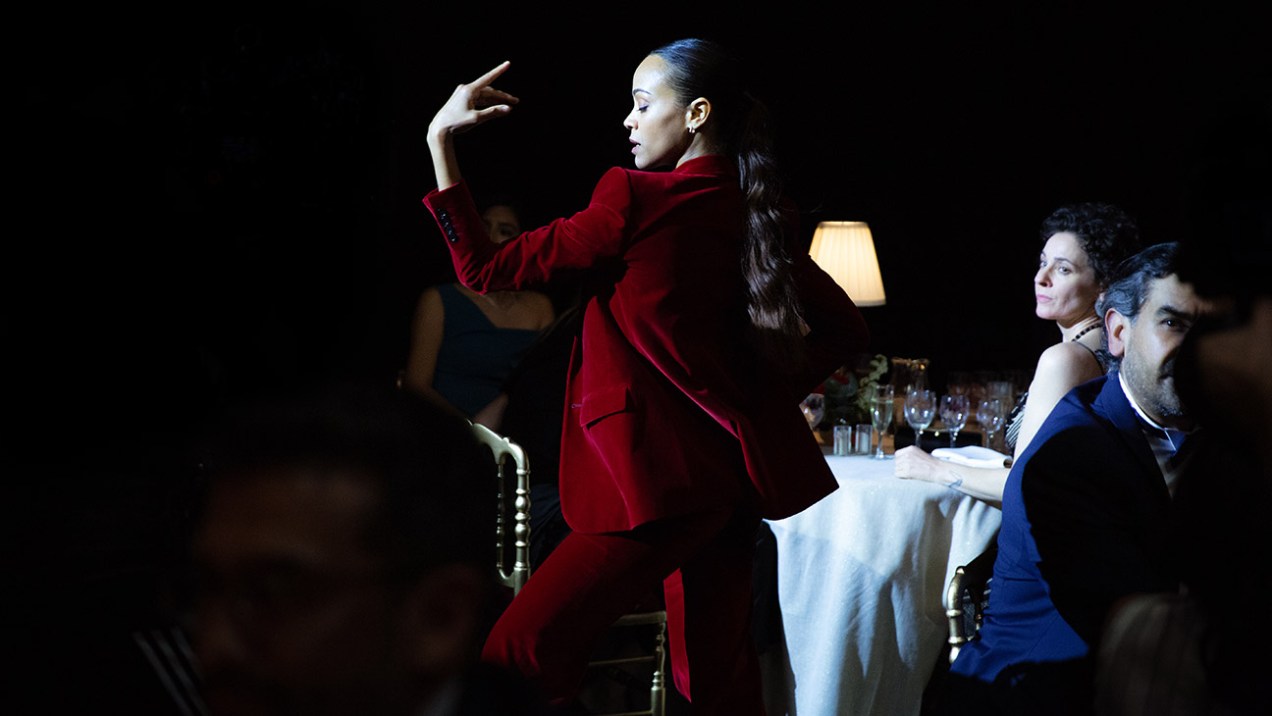
Where the slop dissipates is the performances, which are universally solid. All the actors are being asked to act, dance and sing at a moments notice and no one seemed like “the one who can’t dance” or “the one whose acting is a little funny.” Arguably, it is Zoe Saldana who leads the film (the fact that she’s being campaigned as a supporting actor is only an indication of awards season politics and not her quality) playing Rita, a talented but underappreciated lawyer who is kidnapped and asked by a local drug lord for help, on the condition that accepting means being stinking rich and declining means death. It’s a tricky line to ride but Saldana manages to make it believable, while also singing and dancing with vigour. Selena Gomez plays Jessi, wife of the drug lord about to fake their own death. I think she’s okay? Considering that she has been singing and acting her whole life, you’d expect her to be a bit more of an event than she is, but at no point do you question this character. I suppose I should also mention Adriana Paz, one of the four who shared that Best Actress win at Cannes. She’s solid, an actress I’ve not seen before who turns in compelling work in a small handful of scenes. To be honest, my only qualm is that it’s a pretty small role, so I’m not sure why the Cannes jury felt the need to split the prize as they did.

To be completely honest, I don’t know why they split the prize seeing as Karla Sofia Gascon is very clearly the best performance in the film. She plays the titular character and it is her journey we follow, as she gets to finally exist in her own body but is forced to reckon with the bad decisions that litter her past. When we first meet Gascon’s character, she is pre-transition and gets to play a sort of drag king version of cartel kingpin Manitas, in a move that works far more than it has any right to. Crucially, most of the film from here on is with Gascon’s character when she identifies as Emilia, which works because, as a trans-woman herself, Gascon is able to imbue pathos into the role beyond what is on the page. As we reckon with a character whose past decisions, whether regarding crime or family, are questionable, she grounds us. I’m going to be pretty critical in a moment of how the film treats Emilia, but without Gascon that criticism could become evisceration. This is a big calling card moment for her and I hope she gets plenty of exciting and more joyful roles in the future from this.

If I can dole out one last bit of praise on the film, I think it has an energy that is admirable and easily propels it through its two hour runtime. Though many of the musical numbers are grounded in reality, they have a physicality, embodied by the actors, that I found myself unable to look away from. These, paired with a few decently catchy songs, will help keep you on your toes through the film. That’s good news because time to be negative, the tone on this is a mess. Musicals can be dark or complicated (All That Jazz is a favourite of mine and revolves entirely around the looming death of its lead) but it is a tough balance. So when the opening number begins and we’re watching someone sing a solo as people are getting kidnapped and knifed, I was immediately on the wrong foot. What are we doing here? A later number about the joys of plastic surgery launches to entirely the other end of the spectrum and is hugely silly in portraying the possibilities of gender affirming care, though maybe I was simply overwhelmed at the amount of times I heard the word “vaginoplasty” sung at me. For a lot of people, this unpredictability will be a virtue, for me it was a nuisance.

There is also the unavoidable question of how the film handles its portrayal of a trans character and explores the setting of Mexico. As ever, it’s worth repeating that I am a cisgender, heterosexual white man who lives in England and so while I can read and listen to people as much as I can, I am always talking about these things from an outsider perspective. I’m not an authority, you should read opinions from people other than me too, who can speak from their experiences as opposed to me speaking from a theoretical perspective (I would recommend as starting points this article about the trans representation and this article about the representation of Mexican culture.) All of this is to say, I think the representation is sloppy. Mexico is portrayed almost exclusively as a land full of murder and drugs in which evil often prevails, which runs counter to the country a lot of people know, plus Europe is presented as a safe land of enlightenment in comparison.

What irked me more was the trans representation. Again, this is all with caveats, as what we have here is far better than some of the representations we’ve seen of the trans community in cinema over the past few decades. Emilia is shown to be at peace in herself once she transitions and once this does occur, despite some doubt from the odd character, she never shows any regret surrounding this decision. Unfortunately, despite this and the casting of an actual trans-woman to play the role, Audiard finds himself succumbing to clichés that reduce the whole thing to pastiche. Scene where Emilia wakes up post surgery and uses a delicate hand mirror to examine the surgery? Check. Scene where Emilia, having now transitioned, uses her scary man voice to frighten a petite woman? Check. The audience are left with the ultimate feeling that to be trans is to suffer? Regrettably, check check and check. Emilia Perez was made outside of America and so it’s important to understand the context of its creation, but in its distribution by Netflix and absorption into awards season noise, it will find itself fitting into familiar narratives. In these stories about minority groups that poise themselves for awards success, the crucial element that leads to their success is suffering. To accept Jack and Ennis in Brokeback Mountain, they have to suffer. To understand John Coffey’s heart in The Green Mile, he has to suffer. In Sound of Metal, the journey Ruben goes on through his disability is framed through his suffering. The films I’ve mentioned aren’t bad films, but they do fit into the trope of using tragedy to elicit sympathy, which is directed towards people who may be different sexuality, gender or race than the viewer.

[Audiard] is the wrong pair of hands to create emotional authenticity with this story.

Culturally, we are told we have to work our way through these films of suffering before we can have films of joy. And I’m sick of seeing these people suffer. I want to see black joy, queer joy, disabled joy, plus all the little middle bits in this Venn diagram. Of course, you can find these films off the beaten track. My partner showed me The Watermelon Woman for the first time recently and though this is a film that wants to probe film’s racist history, it is also a joyful film. Characters fall in and out of love with ease, goals are achieved without someone having to be called a slur, we get to see a black lesbian smiling for maybe 80% of the film. I’m realising this is starting to look more like a review of The Watermelon Woman than a review of Emilia Perez but what I’m trying to get at is I want to hear different stories. To go off book again, I Saw The TV Glow is a film that upsets the audience with how it frames a character rejecting their transness, but told through a metaphorical layer that allows uninterested audiences the opportunity to engage with a different part of the story. This is still a story in which a trans person suffers, but it’s a different kind of suffering and crucially, a kind expressed by a writer and director who is trans. Stories like Emilia Perez aren’t stories that have no worth, but they are stories who should be told by other people. Jacques Audiard is a cisgender white man in his seventies and though he isn’t incapable of telling this story, he is the wrong pair of hands to create emotional authenticity with this story.

Ultimately, your patience with Emilia Perez will depend on how much you cared about those last two paragraphs. If you don’t really know what I was on about, then you will be dazzled and probably gripped by this. If you feel as I do about the complicated politics of trans representation, this may be one that will puzzle you. Regardless, those who adore and detest the film alike can agree that this is a film unlike almost any other. You may never see something like this again and for many, that will be good news. For me, I found myself underwhelmed and overstimulated, newly trapped in a world full of discourse yet to come. With it launching on Netflix today though, the choice to dive in will be yours the next time you hit your sofa.

Rating: 4 out of 5.
Standard
Reviews

Review – Anora

Here’s a fun fact for all my fact fans out there! Three years ago when I “rebooted” my blog and started on the site we find ourselves on today, my first post was a review of Sean Baker’s Red Rocket. It was one of those films where you thought, here is someone reaching the apex of their potential, a director/writer/editor truly blossoming and creating their defining work. In itself, that was a silly thought as Baker’s previous two films, Tangerine and The Florida Project are already recognised as innovative and masterful in their own ways, but the point remains that for me, Red Rocket was this gleeful victory lap of pure cinematic excellence. Reader, I don’t enjoy when I’m quite so spectacularly proven wrong, but in this case my lack of foresight has brought us to the Palme D’or winning film Anora.

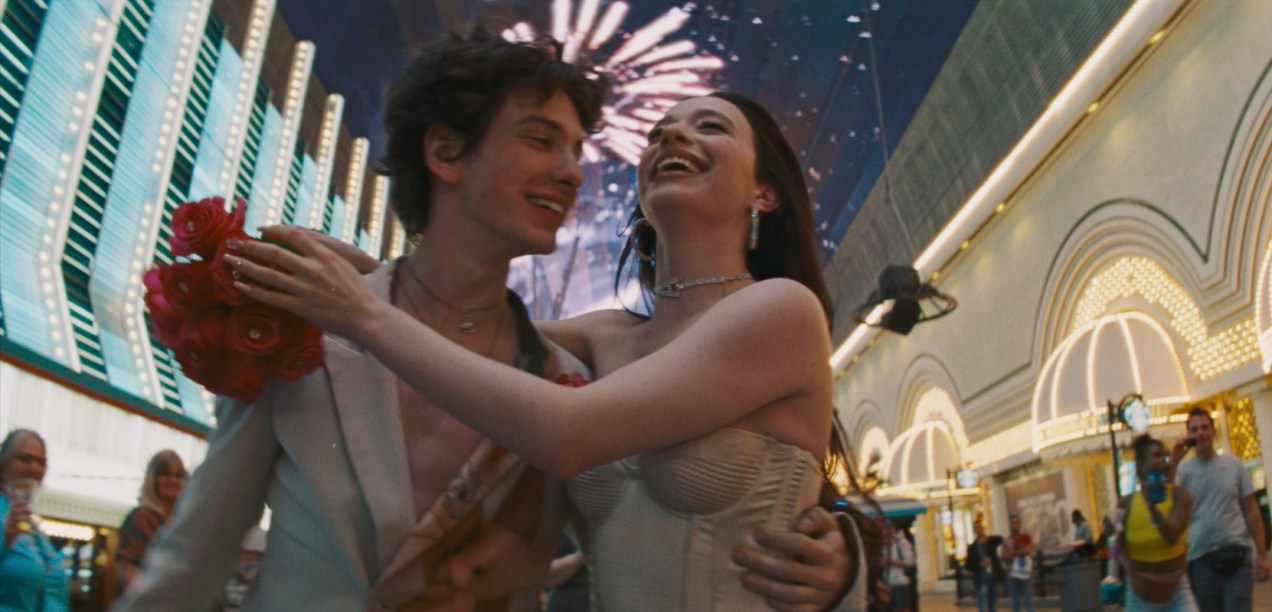
As Baker always does with his films, Anora follows a character whose world is rarely the focus of mainstream films. Anora (who goes by Ani) is a sex worker in New York, working in a club every night to make ends meet with her friends and a few enemies . One day, she is requested to entertain a customer as she is the only girl in the club who speaks his language and is introduced to Ivan, a wealthy Russian who puts the boy into playboy. The two hit it off and quite quickly it becomes clear that this isn’t a case of a horny patron and the worker playing up the charm. Instead, after a week of what’s often dubbed “the girlfriend experience” (in which sex workers are paid not just for sex but also for their presence around the clock and at social events) Ani and Ivan elope in Vegas, smiles immovable from their faces. However, Ivan’s wealthy parents aren’t exactly pleased with their new daughter in law and seek to do all they can to get the marriage annulled. It cleanly splits the film into two parts, with one a breezy and romantic comedy, the other a more hectic and still comedic dive through New York. As a structure, I loved that. The first half gets to set up our characters very cleanly and introduces their world in a way that is almost too intense, before completely changing pace in the second half and bringing in both broader laughs and harder hits. Here, as he did in Red Rocket, Baker uses structure as an offensive tool to put the audience on the backfoot and it’s a tool more writers should learn to love.

If you’re going to name your film after your title character, you need to be sure that you’ve picked the right character to back. To little surprise, Baker knows exactly what he’s doing and in Mikey Madison he finds perfection. She may be familiar to you from Scream 5 or Once Upon a Time in Hollywood, the latter of which I found her performance somewhat unsettling in because of her young age. It was so chilling to see a psychopathic character that young, not least because of the violent end she meets, and by young I mean that Madison is my age. We share a birth year but fear not, we don’t share talent, because she is on fire here in ways that few young performers are, and certainly ways that no young writers are. I was reminded of seeing Timothée Chalamet in Call Me by Your Name, watching a performer come from seemingly nowhere, achieve acting bliss and demand almost every scene of a feature film. That’s exactly what Madison is doing, though carving her own trail with great vigour. To throw in another reference point, her portrayal of Ani reminded me of Julia Fox in Uncut Gems, both creating loud and volatile women who care far more deeply than they are given credit for. Not only does Madison get the gift of a deeper role than Fox had, but she also gets to bring a complexity to her character. Ani is fun and brash and loud, absolutely, but she is her anxieties too, she has faults that are never explicitly mentioned but that filter through to the audience via the decisions she makes. To be honest, with this screenplay I think Anora would have been a great character in anyone’s hands. With Madison though, we find ourselves watching a legendary figure emerge fully formed.

That’s not to underplay how great everyone else is too, Baker once again casting smaller actors or even non-professional actors to terrific effect. A few unknown faces who stood out to me were Lindsey Normington as a villainous colleague to Ani, Mark Eidelshtein as the sweet but stunted Ivan and a hilariously pathetic turn from Vache Tovmasyan as one of the goons sent after Ani. There were familiar faces too to delight in, like scene stealer Brittney Rodriguez from Red Rocket popping up to once again lay down the law. Karren Karagulian is credited in all of Sean Baker’s past films and I confess, I didn’t recognise him from any of them, but I love his work here as the overworked and under skilled Toros, a figure whose opening scene has some of the best laughs of the entire film. All the actors I’ve mentioned here do great work, but the one who comes closest to Madison’s sublime art is Yura Borisov. Funnily enough, I last saw him in the film Compartment No. 6, a film which I saw directly before Red Rocket at the 2021 London Film Festival (and on which I’ve also written a piece I’m deeply proud of.) Baker saw Compartment too and understood the range Borisov had, putting it to brilliant work in his first English language role. I don’t want to say too much about the character as he mainly factors into the last half of the film, but once again Borisov presents us with a character who is so blatantly presenting as one type of person that you don’t even question that this may be a façade for another type of person. No spoilers, you go and discover for yourself.

While I’m writing about the technical elements of a film, especially one I’m seeing at a film festival, I worry it can become easy for the whole thing to seem quite clinical, for me to make every film sound like a bit of an exam for how good a film watcher you are. If so, allow me to clarify that Anora is a hell of a lot of fun. Baker’s films have always been funny but with Ani being a much more (though not entirely) likeable protagonist than disgraced former pornstar Mikey in Red Rocket, the laughs come with more certainty and ease. Her situation is ridiculous and the ridiculousness comes from outside her, so it’s comfortable to laugh along with her at the heightened stupidity of so much that happens. The laughs being more comfortable doesn’t mean that the film is a breeze though, it does get, for want of a better word, sticky. Ani’s profession means that there is an underlying tension to the whole film because of how cruel we know the world can be to sex workers, and with the emotional high point of a wedding coming in the middle of the film, you find yourself wondering how long things will stay this good. That feeling extends right through to the final scene, which I won’t spoil other than to say this; as it was happening I found the ending an anti-climax, yet as I was watching every other film I saw that day I kept thinking about how powerful the ending of Anora is. It reveals a fact about Ani that she has hidden well and it colours the rest of the film in shades you may not have considered. Baker knows how to end a film and with Anora he eschews comedy for absolute pathos.

Baker transforms a Take That song […] into a euphoric anthem that legitimately brought me to tears.

This should be the bit where I talk about the technical elements, but I don’t know if I can? I was so swept away by the pace of Anora that I forgot to remember I was watching a film. Broadly speaking, that’s only ever a sign that the technical elements of the film are pitch perfect. The cinematography from Drew Daniels proves that filming on celluloid will always make films pop out the screen at you, Baker’s editing allows the pace to ebb and flow in ways that allow the audience just enough time to relax and the music choices are absolutely inspired. There’s a lot of hip-hop in the film, exactly the kind of stuff that makes for good music during whatever it is they do in those clubs, but the rogue music choices are even better than the expected. A Tatu needle drop delighted but somehow, using alchemical magic, Baker transforms a Take That song (very specifically, a remix of the song from their cinematic jukebox musical that no one saw) into a euphoric anthem that legitimately brought me to tears. I do not know how he does it. This is a director working not even at the height of his powers but at the height of cinematic power, somehow finding time to do that and nod towards a character from Red Rocket with a billboard that will draw audience minds towards Showgirls in a knowing tip of the hat. Sean Baker has been a talent to watch for about a decade and if you hadn’t been paying attention, now is the perfect time to catch up.

Make no mistake, Anora is a crowdpleaser of a film, a comedy that makes you laugh hard enough that its deeper tendrils are burrowed deep and quickly. You should make your parents watch it, though I wouldn’t watch it with your parents unless they’re very cool about a lot of things that most parents are not. Through such an appealing comedy, Baker sneaks in a fully realised depiction of a sex worker with an interior life as rich as her exterior life is flashy, creating a nuanced portrayal of a group of people who are so often victimised and criminalised, especially in the UK. That’s punk rock as hell. If for no other reason, that should get you out the house and into the cinema for Anora when it releases in the UK on 1st November.

Rating: 4.5 out of 5.
Standard
Reviews

Review – Harvest

For those of you who don’t base their entire lives around film and are based near (enough) to London, you may not know that this week is the start of the 2024 London Film Festival! After a quieter edition for me last year while I moved house, I am back on it this year, using a press pass to its fullest in ways that my sleep schedule does not appreciate. You join me on day two and after five films, I’ve already got one to share with you that is very special. That film is Harvest.

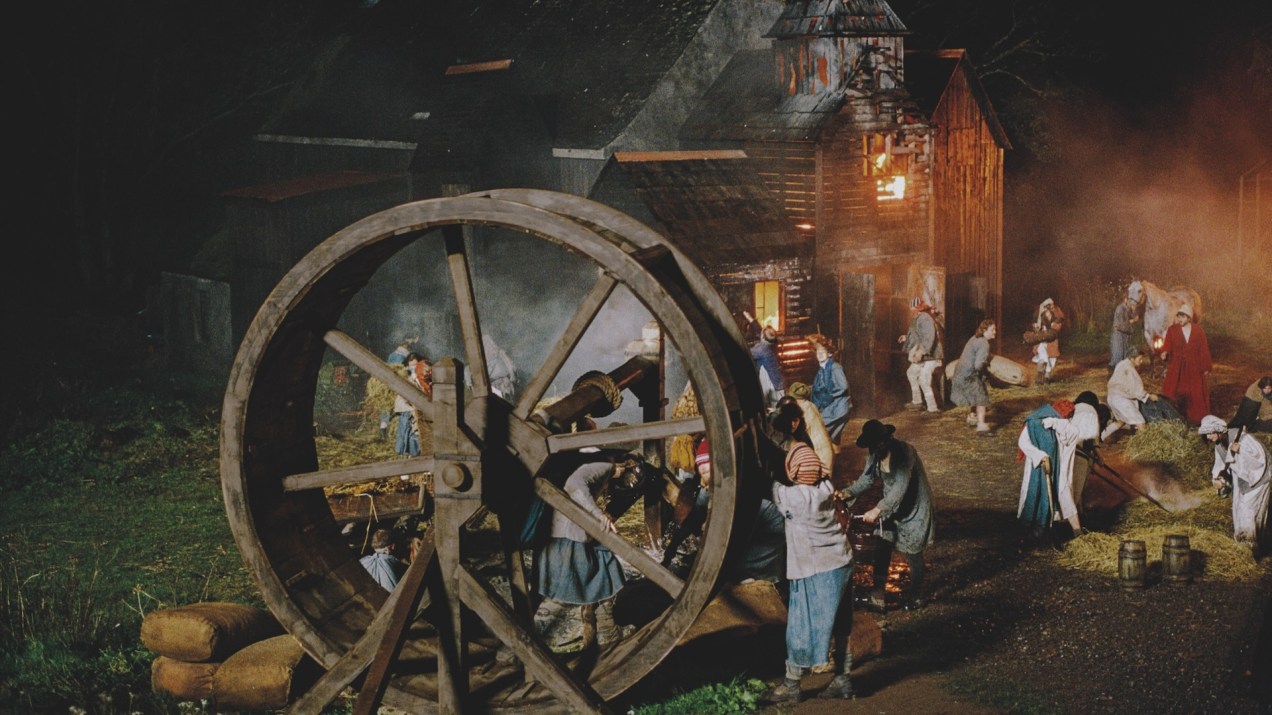
Harvest is the third film from Greek director Athina Rachel Tsangari and her first in the English language. In the film, villagers from a place of ambiguous location (but probably in Scotland) during an ambiguous time period find their lives falling apart at the same time that they are visited by outsiders. First a barn burns down and three strangers face the blame for it, finding themselves humiliated by the villagers. Then fingers start to be pointed at the cartographer who has recently appeared to capture the landscape. Soon though, things take an even greater downward turn as we meet the cousin of the Lord of this village, a man who has his own view on what the future of this village is. That is the broad strokes of the plot and in between those strokes, it doesn’t get much more detailed. That’s the charm of Harvest though, it’s properly mercurial. Eventually, you’ll find out who burned down the barn, but you’ll never know why they did it. At a point, you’ll find out why the strangers arrived, but it’s a real loose reason. You won’t ever understand what main character Walter’s deal is, but that’s a-ok with me. This is all fable, loose events that come together to explain how a village disappeared in the space of a week.

I’ve mentioned Walter, so let’s get into the cast, which was mainly actors I didn’t know. As Walter is Caleb Landry Jones, an actor I’ve known and liked for a while. He’s been in everything from Get Out to The Florida Project and Twin Peaks: The Return, even appearing in things I love that aren’t from 2017. Here, he gets one of his rare leading roles, properly embodying this creature married to his world. We learn a little about his history but never enough to truly understand him. Everything else you have to attempt to glean from Jones’ performance and good luck finding purchase on his slippery work. The cast around him are superb too. Harry Melling continues to distance himself from the Harry Potter franchise with another brilliant performance, effortlessly embodying a man with power who doesn’t really believe his power. He’s pathetic and that’s fantastic. Also fab are Rosy McEwan (who really makes me feel guilty for having still not seen Blue Jean), the perpetually underrated Arinzé Kene and a deliciously villainous turn from Frank Dillane. It’s such a great ensemble, with no one seeming out of place unless that’s exactly what they’re meant to do.

What [Williams] is doing, it turns out, is magic

While you get a sense of the performances and narrative over time, Harvest does its best to immediately strike you as strange. Tsangari comes from the Greek Weird Wave and despite tackling a Scottish period drama, she keeps the weird flowing here. What struck me first was the score, this bizarre prog rock inspired thing that immediately tells you all is not as it seems. Throughout, it veers in and out of the expected, hitting the usual strings of period dramas before heading straight back to prog rock nonsense. Pair that with the cinematography by Sean Price Williams and something special happens. You see, Williams is a cinematographer associated with the mumblecore of Alex Ross Perry and who also shot the brilliant Good Time. What is he doing on a period drama? What he is doing, it turns out, is magic. The camera is this little handheld 16mm thing, being chucked around the village and getting right up into the chaos that ensues, at one point even taking to the sky for a drone shot. Unbelievably, Williams even recreates a version of my favourite shot from Good Time, which sounds impressive before I tell you that the original shot involves a neon sign. Together, both sound and vision create an “out of place”-ness that pervades and absolutely refuses to let you be comfortable at any point during the film.

Another thing that prevents you feeling comfortable is the amount of reference points your brain will be bouncing between. The aforementioned cinematography goes away from Williams’ mumblecore roots to more closely resemble modern day Terence Malick. Where Malick uses his swooping camera to make profound statements on the world, Tsangari uses it to disorient and make you feel gross. It’s a simple swap but one that never failed to throw me off. I also kept thinking of a video game called Pentiment, a handy touchstone for any who are familiar. In the game, you are an artist in 16th century Bavaria who arrives in a small town and becomes embroiled in a murder mystery. One of the joys of that game is the sense of failure, in that you will accuse people of committing crimes and have no idea if you were right until after they are punished for these crimes. Another joy is this feeling of the modern hurtling towards the town, threatening to crush it underfoot. Both those and the anarchic humour played on my mind in Harvest and while I don’t take Tsangari as a gamer, I think it’s a useful reference point for an audience member approaching the film as far as tone and plot. The future is inevitable, but how will the unwashed masses face it?

My favourite thing about Harvest came packaged inside the building sense of tension that the film bestows unto you, which is this veiled critique on capitalism and the modern. If I may dust off my degree for a moment, there was a fantastic course I did on Transatlantic Literary Relations, in which we got pretty into the weeds about the roots of capitalism and what would become late capitalism. One of the things that I learned on the course was how maps can be a tool of the coloniser, placing a country in the centre of a map and artificially shrinking those who are to be colonised. It was a really striking revelation that stuck with me and still shapes how I see the world today, which again meant that Harvest set my brain racing. Quill, the cartographer, is a skilled artist of his craft and makes beautiful maps. However, these are a people without maps and the question starts to arise of what the purpose of these maps could be. I’ll not spell it out for you but it was this absolutely sick moment of “oh, that’s what this film is going to talk about” that made me start grinning ear to ear in the screening room. What a great surprise, what a treat of a turn in the tale. Sure, it’s an angle that is quite specifically up my street, but it’s only one puzzle piece of many in a film that is outstandingly rich.

I feel like I’ve barely scratched the surface of Harvest. I’ve not touched on the ritualistic nature of the villagers, talked about one of the most chilling character introductions where nothing actually happens, nor mentioned the strangest waterboarding scene I’ve ever witnessed. Instead, I leave these as gifts for you. As someone who didn’t particularly enjoy Tsangari’s previous film Chevalier and is yet to see her debut Attenberg, my expectations here were blown out of the water. Harvest is special, a rich film that is immediately rewarding and yet promises more if you let it inside. It currently doesn’t have a UK release date but it will be distributed by MUBI and I can only beg that you go and seek the film out as soon as it appears. I thought it was a real treat and the idea of there being films I might like more than this at LFF makes me practically giddy. Harvest left me intoxicated and deluded and I am grateful beyond words for that blissful experience.

Rating: 4.5 out of 5.
Standard
Reviews

Review – The French Dispatch

I’m finishing my London Film Festival coverage with a film that everyone can finally see this very weekend, which is really exciting news. It’s fun seeing films early and feeling special, but films this great deserved to be shared and The French Dispatch is one such great film. As everything about its aesthetic should tell you, The French Dispatch is the newest film from Wes Anderson, the beloved mind behind Fantastic Mr Fox and The Grand Budapest Hotel, among other wonderful and charming films. His newest outing is an anthology tale, consisting of tales from the final edition of The French Dispatch, a France-based journal that is part of the Liberty, Kansas Evening Sun.

We’re gifted with three tales, although there’s five or six parts if you really want to be picky about it. There’s an introduction to the city in which The French Dispatch is based (deliciously called Ennui-sur-Blasé), a city which has slowly found itself gentrified and liberated from its grimy history. The three stories find plenty of grime to roll in though. First is the story of an incarcerated painter, whose work inspires a fellow inmate. Second is the tale of student protests and the romantic connections that spring up in the heat of revolution. Finally, we find the tale of a chef who aids the police chief he works for in searching for a missing child. All of these tales, themselves presented in the wider fabric of the film, are told by their (fictional) authors, though for Anderson fans this shouldn’t feel unfamiliar. Similar to how the core of The Grand Budapest Hotel was hidden under a few layers of matryoshka dolls. French Dispatch is a series of dolls, with a handful of layers each. Though it sometimes means you may struggle to fully invest in more than a few characters, it creates what I can only describe as a picnic feel. You get to sample a whole host of different ideas from Anderson, all interesting in their own ways, and all of course beautifully presented.

It’s a bloody good cast doing bloody good work.

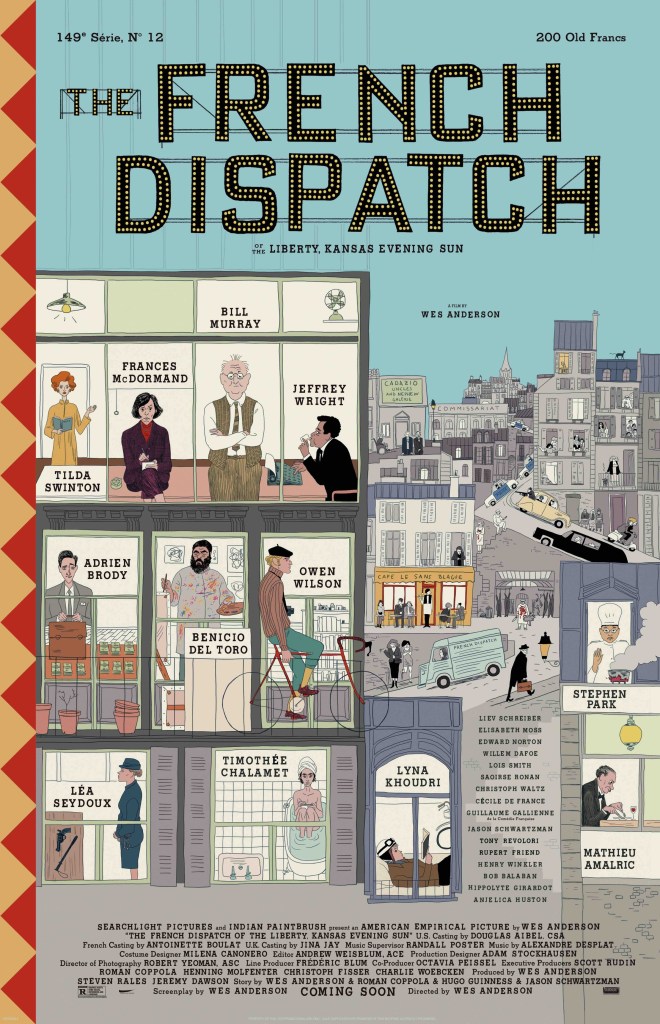
Being an anthology, there’s a lot of actors needed to bring the stories to life and holy hell, what a cast. It says a lot about how stacked your cast list is when actors like Saoirse Ronan, Christoph Waltz and Edward Norton don’t even get main billing (find them and many others hidden in that little list near the bottom of the poster). This all means I’m going to have to do that thing I do quite a lot and say that all the cast are brilliant. You know that they’re brilliant though, so many of these actors are ones you already love from other films and they’re great here too. I’d struggle to say that many are giving career best performances, but that’s far more an indication of their quality of roles than their weakness here. It’s a bloody good cast doing bloody good work.

Poster for The French Dispatch (2021)

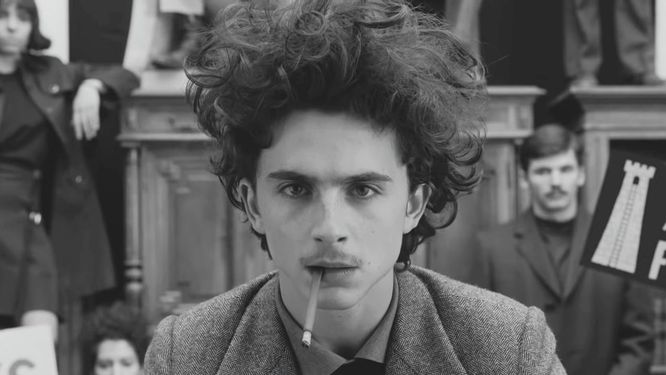
But I should spotlight a few of them, and spotlight I will. Going loosely in order of appearance, my first fave is Tilda Swinton. I adore Swinton in everything she does and she’s a brilliant comedic presence when given Anderson’s dialogue. Here, as the journalist J. K. L. Berensen, she gets to exercise her best comedic muscles, by putting on a silly accent and acting pompous. It’s not ground breaking, but seeing her on screen again always made me smile. I also really enjoy Timothée Chalamet as Zeffirelli, a student activist who is amusingly pretentious. He captures all the over-arrogance of young people involved in politics, playing a straight man to a silly world. I hope it encourages him to do more comedies, he works well in these worlds. Finally, I’m also a big fan of Jeffrey Wright as Roebuck Wright, the author of the third story. There’s a way that he manners his voice, which navigates between the deadpan and the comic, and which I remain totally entranced by. The way he speaks has been one of the things that has most stuck with me after viewing the film and I can’t explain why it works, only that it very much does.

Wes Anderson being Wes Anderson though, there’s a style that you’re here to watch and once again, it seems the man has bested himself. Any one single frame would let you know immediately who the man is steering this ship and likewise, any one of those frames would warrant hanging on a wall. His stunningly symmetrical shots are back, so is the twee score courtesy of returning collaborator Alexandre Desplat and many of your other favourite trademarks. But there’s also a sense of exploration. By now, even those of us who didn’t spend four years studying film know what a Wes Anderson film looks like, so it’s time to play with the formula a bit. We’ve got shots that move or spin in new ways, random animated sequences and some really stunning freeze frames that I fell in love with the first second they showed up and continued to love as they reoccurred. It is, quite simply, another Wes Anderson film. If you’re already on board with his aesthetic and acoustic tastes, you’re going to be very happy indeed.

These are the stories of a world that has already passed. I found myself genuinely quite sad at the end of every story, each signalling a goodbye of its own to someone or something.

When we discuss Wes Anderson though, it often comes down to these discussions of his style to such an extent that a lot of reviewers (and I’ve been guilty of this too) forget to talk about the emotional response. Anderson’s films connect and are beloved because we fall in love with their characters, be it M Gustave in The Grand Budapest Hotel or our titular fox and his family in Fantastic Mr Fox. It’s probably this area though where The French Dispatch is at its weakest. As I said earlier, the anthology nature of the film means we don’t spend much time with any character, and therefore can only ever make minimal connections with them. Fortunately, it’s not a totally cold film, as you end up (and bear with me on this) feeling this melancholy love for the French Dispatch itself. It’s a magazine that is ending, and a type of magazine that hasn’t much time left in our world. Inherently then, these are the stories of a world that has already passed. I found myself genuinely quite sad at the end of every story, each signalling a goodbye of its own to someone or something. Again, it’s very hard to put into words, because it just works. That lingering emotional impact allows itself to be tainted with hope (with the final line being “what next?”) but it’s melancholy nonetheless. A damn fine melancholy it is though that Anderson has crafted.

Like I said then, it’s another Wes Anderson film. If you like his other stuff, it would be very strange if you didn’t like this. It’s beautiful, it’s held up by a cast all giving 100% and its emotional aftertaste has lingered on me like a cigarette kiss. I thought it was wonderful and on Friday, it’s yours to enjoy too. Treasure it and all its whimsy. (But probably also go see Dune, which I haven’t seen yet but will also presumably highly recommend.)

Timothée Chalamet as Zeffirelli in The French Dispatch (2021)

Rating: 4.5 out of 5.
Standard
Reviews

Review – Last Night in Soho

I love Edgar Wright. Like most other film fans my age, watching his films while growing up really changed the way I thought about the medium as well as simply inspiring me. In particular, Hot Fuzz remains one of my favourite films, a film that aside from being hilarious and action-packed and fast paced, was also a film that showed me what films can do. I was ten at the time, so I mainly mean it showed me how violent films can be, but it was still a formative moment. All of this preamble is important because it’s me saying upfront that I love Edgar Wright’s filmmaking style and explains why, despite being willing to follow him anywhere, the news that his next fiction film would be a straight horror film worried me somewhat. That new film is Last Night in Soho and as you may expect, my worrying was misplaced.

The setup of Last Night is fab. A young woman named Eloise moves to London from the countryside in order to attend a fashion design university. She, like countless students before her, finds that the sheen of London rubs off quite quickly and she soon becomes disenfranchised with a city that is nothing like she expected. Searching for escapism, she finds just that in visions of London from the sixties. In these visions Eloise is an aspiring dancer named Sandie, navigating the exciting world of London during its seedy heyday. While attempting to work out if these visions are glimpses into the past or dreamlike hallucinations though, things suddenly get worse and that’s all I’m going to tell you. Edgar Wright left a note to be read at the press screening (of all the films, the only time a director did that, thank you for the effort Edgar) in which he asked reviewers not to divulge many of the plot details and out of respect for Wright, I’m doing exactly that. The second half gets twisty and scary and very fun, but that’s for you to discover, not for me to spoil.

I’m a real fan of the cast here, it’s one of those cast lists in which not a single performer gives a weak performance. In the lead role of Eloise is Thomasin McKenzie, who has been great since Leave No Trace and continues filling out a filmography that is already very impressive. Having seen her in a few things, she wouldn’t be an obvious choice as the lead in a horror film, but she works really well and that’s why I’m not a casting director. The much showier role of the two leads is Sandie, played by Anya Taylor-Joy. Again, she’s a young actress who seems to have barely put a foot wrong (and even whatever weird dance The New Mutants was barely feels like her fault) and she absolutely tears into her role. She has to embody the spirit of glamour, a glamour so complete that it feels almost artificial, which as a beautiful woman is the feeling Taylor-Joy casts on much of the internet regularly. Fortunately, she’s not just a pretty face and really gets to have some fun with the places that Sandie goes to. Even in the quieter moments, just the way she moves and stares towards people and places feels inherently cinematic. She seems born to be a movie star and this is yet another perfect fit for her.

Poster for Last Night in Soho (2021)

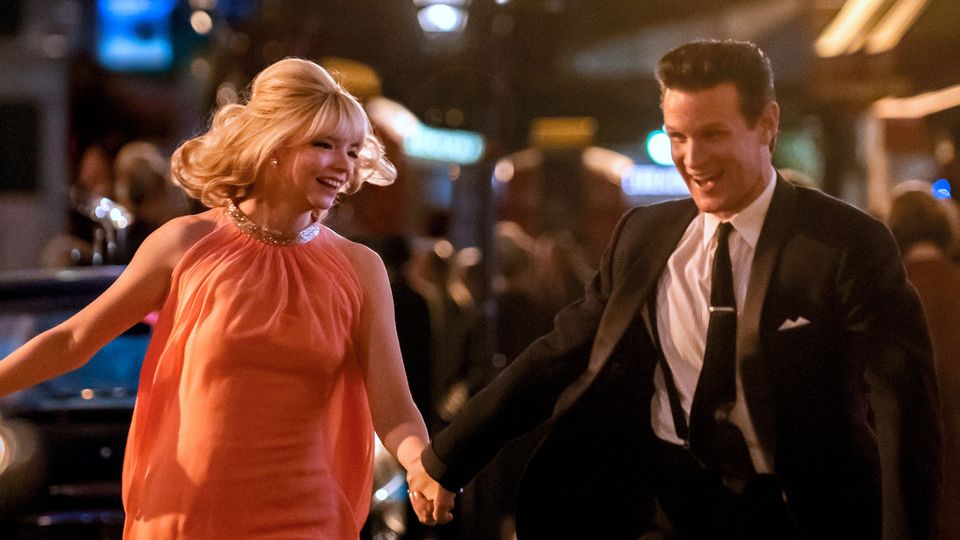
Surrounding these two women are plenty of well-established and well loved British actors, chewing scenery or adding intrigue where appropriate. I’m going to sound incredibly vague when talking about the roles these actors play, because I don’t want to spoil the ways they all feed into the wider plot, so apologies if the descriptions don’t sound particularly in depth. Matt Smith is a handsome man in a suit, who Sandie encounters in the sixties. I’ve loved him since Doctor Who and it feels like he hasn’t had a worthwhile role since. Until now, that is, so thank you Edgar. Veteran British actor Terrence Stamp meanwhile is over in the present day, playing a mysterious white haired man who seems to have been quite the charmer back in his day. Most of his time is spent looming suspiciously, so when he does get dialogue Stamp makes it count. Finally, in her final performance, is Diana Rigg as Eloise’s landlord. There initially doesn’t seem to be a great deal to her role, but keep watching and she may just surprise you. She is hiding something and it’s a secret well worth discovering.

Wright is still working very clearly in genre filmmaking, specifically horror. It’s not the kind of horror that’s going to ruin your night with a lack of sleep, rather the special kind of cheesy horror.

I mentioned it already earlier, but this is tonally quite different to Wright’s previous fiction films (I’m being specific and pedantic because obviously The Sparks Brothers is different). Characters still make jokes and I found myself laughing a lot, but the filmmaking itself isn’t used for comedy. In earlier Wright films, editing would be used to cut to things at the perfect moment or to contrast two different things, making comedy happen even when no one was being funny. While that is gone, Wright is still working very clearly in genre filmmaking, specifically horror. It’s not the kind of horror that’s going to ruin your night with a lack of sleep, rather the same special kind of cheesy horror that Malignant was (side note, if you haven’t seen Malignant, very much get on that). The word I kept coming back to was fun, in that even when I was getting spooked or when I was nervous or any other stage of scared, I would find myself grinning. It is a great film to spend time inside, especially with a packed audience. I am going to make sure I see it plenty while it’s in cinemas, because it’s a film that deserves to be soundtracked by screams and giggles.

Wright is taking the opportunity while trying something new to also play around with the visual side.

Last Night is also a film soundtracked by actual songs though, which is classic Wright. Like his good buddy Quentin Tarantino, Wright has an immaculate ear for picking either little known songs to put into his films or finding the perfect moment for a more well known song. That streak continues untouched here, be it the titular song, Sandie’s rendition of “Downtown” or any number of songs I didn’t recognise but loved the use of. It’s also Wright’s best looking film yet, evoking the period setting with what looks like ease. In particular, Eloise’s room has a neon light outside which allows for multiple references to a very particular shot in Vertigo that I have gone on record about as being one of my favourite shots from any film ever. These beautiful visuals do feel hard worked for, like Wright is taking the opportunity while trying something new to also play around with the visual side and it’s an incredibly promising experiment. I’m not sure what he plans to make next, but if it continues this trajectory it will be jaw-droppingly stunning.

So surprise surprise, 22 year old film student loves Edgar Wright film. In fairness, Last Night is proving more divisive than most of Wright’s films, but it’s so completely up my street that it’s embarrassing. It’s a tale of fractured identity, messing around with time, all while being a very fun exercise in generic play. Quite simply, it’s a really grand time at the cinema and when it releases at the end of the month, it’ll be perfect for a late night Halloween watch. I’ll be right back there in the cinema with you, to enjoy the ride once again and soak in the fumes of yet another night in Soho.

Anya Taylor-Joy as Sandie and Matt Smith as Jack in Last Night in Soho (2021)

Rating: 4.5 out of 5.

Standard
Reviews

Review – The Souvenir Part II

It’s not often that independent movies get sequels. Honestly, it’s not often that independent movies need sequels. But then again, it’s not often that movies of any scale are The Souvenir. In 2019, The Souvenir was a film that really bowled me off my feet, telling the story of a young film student named Julie and her relationship with an enigmatic yet charming man named Anthony, whose sudden disappearance at the end of the film leaves a profound mark on her life. The film can certainly stand alone but with this dramatic moment occurring in the final few scenes of The Souvenir, it is clear that there’s much still to process. In order to process that then, here is The Souvenir Part II, distinctly named so as to make it clear that this is the second half of The Souvenir and not an unnecessary expansion.

Now that most of the people who didn’t see The Souvenir are gone, it’s time to stop playing coy and talk about the end of the first film a little. Julie is still shaken by Anthony’s death and spends much of the first half of Part II talking to people Anthony knew and asking them for answers. However, Julie is also still trying to get on with her life, including graduating film school. The second half of the film then is still concerned with Anthony in some aspects, as Julie creates a final piece that borrows liberally from her relationship with her now deceased partner. This is where the brilliantly meta elements of the film really start to get folded in, as The Souvenir was originally based on a relationship that writer/director Joanna Hogg had when she was a young woman, that she (Joanna) made into a film called The Souvenir, a film which features Julie making a film out of her relationship, called The Souvenir. Confused? Don’t worry about it, there’s not too much to grasp, it all makes sense on screen even if I can’t lay it down coherently.

I believe in [Julie] completely, in every scene.

Once again, Honor Swinton Byrne plays Julie and plays her delightfully. Julie is the kind of character I should hate. She is intensely privileged, is quite unaware of the world around her and is generally a character whose gentle nature allows herself to be moved around by the machinations of the world. And yet, in Byrne’s hands that gentleness is Julie’s strength. She never feels annoying because of her wealthy lifestyle or naivety because she feels real. I believe in her completely, in every scene. The supporting cast are also terrific. Some are returning actors, like Tilda Swinton and Ariane Labed, the former in a smaller role but the latter soaring in an expanded role. My favourite returning actor though is Richard Ayoade. He essentially had a cameo in the last film, but he gets a good handful of scenes this time around and wrings all of them for both comedy and genuine pathos. It’s his best role since Paddington 2, I don’t mean that to sound like a joke. New cast members are also good, but I just remain so transfixed by Julie that it’s hard to talk about other characters in a fair way.

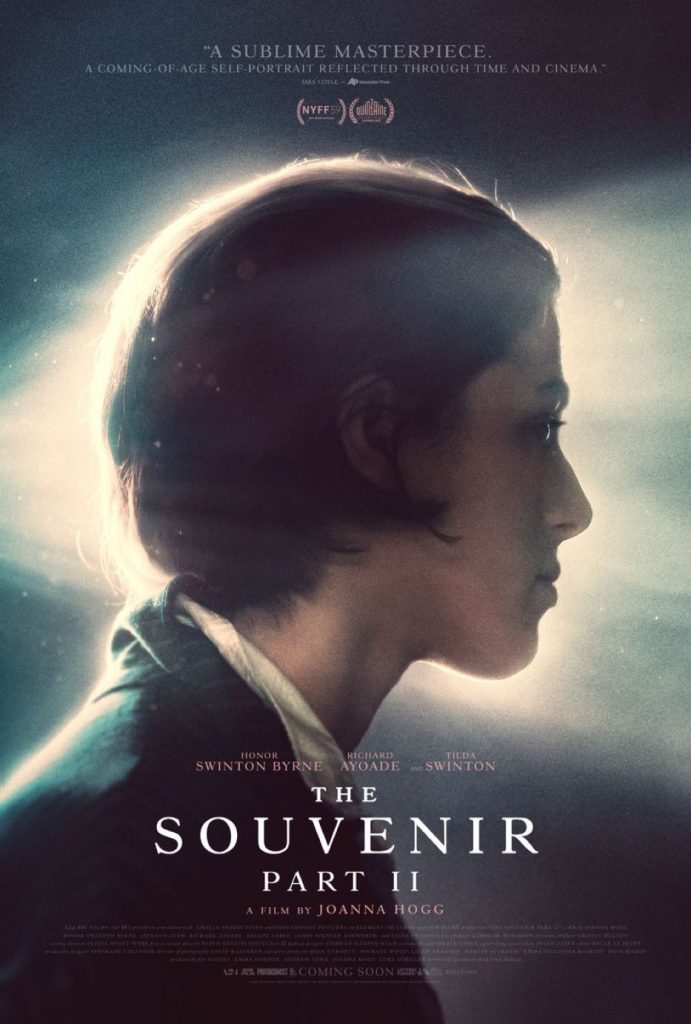
Poster for The Souvenir Part II (2021)

As with the first part, Part II remains a film about memory, something extra tangible due to its place as a sequel. If you have seen the first film already, I seriously recommend not re-watching it before seeing the sequel, because that maleability to your memory of the previous events is exactly what Part II works so well because of. Sets feel familiar yet uncomfortably empty, gazes are held into vacant spaces, conversations are had seeking answers to questions we may never have raised. Complicating the films relationship with memory is the new lens Hogg has also added; the camera lens. As the beautiful poster above puts it visually, Julie is the filter through which we view the film and through which she creates her own film. We’re getting into pretentious, twisty turny territory now, I appreciate, but it’s exactly this kind of thematic weaving that I love. It also means that just like the first installment, it’s an incredible feeling when scenes or shots resurface in my mind. Much as the experience of watching the film is brilliant, it lends itself very well to musing over and you know me, I love a good muse.

Hogg is totally capable of play within an emotional field, slowness is just her field of choice.

These aspects are all delivered to us through a film whose tone is once again totally dreamy. It’s quite a slow film, occasionally interspersed with some lovely little musical moments, but otherwise it is a long series of scenes where characters talk or sit quietly. I can’t emphasise this enough though, if you’re on board with the characters then you want to spend time with them, to luxuriate in their world. This softness also means that any breaks in the pattern feel genuinely shocking. There’s a scene where an item of crockery is broken and the gasp heard in the screening room was almost hilariously loud. Again, it is testament to how well the film works that it can make you legitimately jump because of the emotional connection you built with a pot. In the final act though, there is a scene which ditches this and goes for a feeling that is comparable to the finale of Twin Peaks season two. To say more would ruin it but suffice to say, Hogg is totally capable of play within an emotional field, slowness is just her field of choice.

In a way, these reviews from London Film Festival are all going to end up being really boring. Guess what, I loved The Souvenir Part II! Filtering the memories of the memories through the camera and into my soul, Joanna Hogg delivers a knockout film that even in a time when I’m inundated with brilliant films is proving to stick. Don’t watch it if you haven’t seen the first, but if you haven’t seen the first then there’s still plenty of time to watch it and let linger. I think Part II is getting a UK release in January and until I can see it again, I’m very excited to let Joanna’s film about Julie’s film percolate a while and create a delicious crema in my brain.

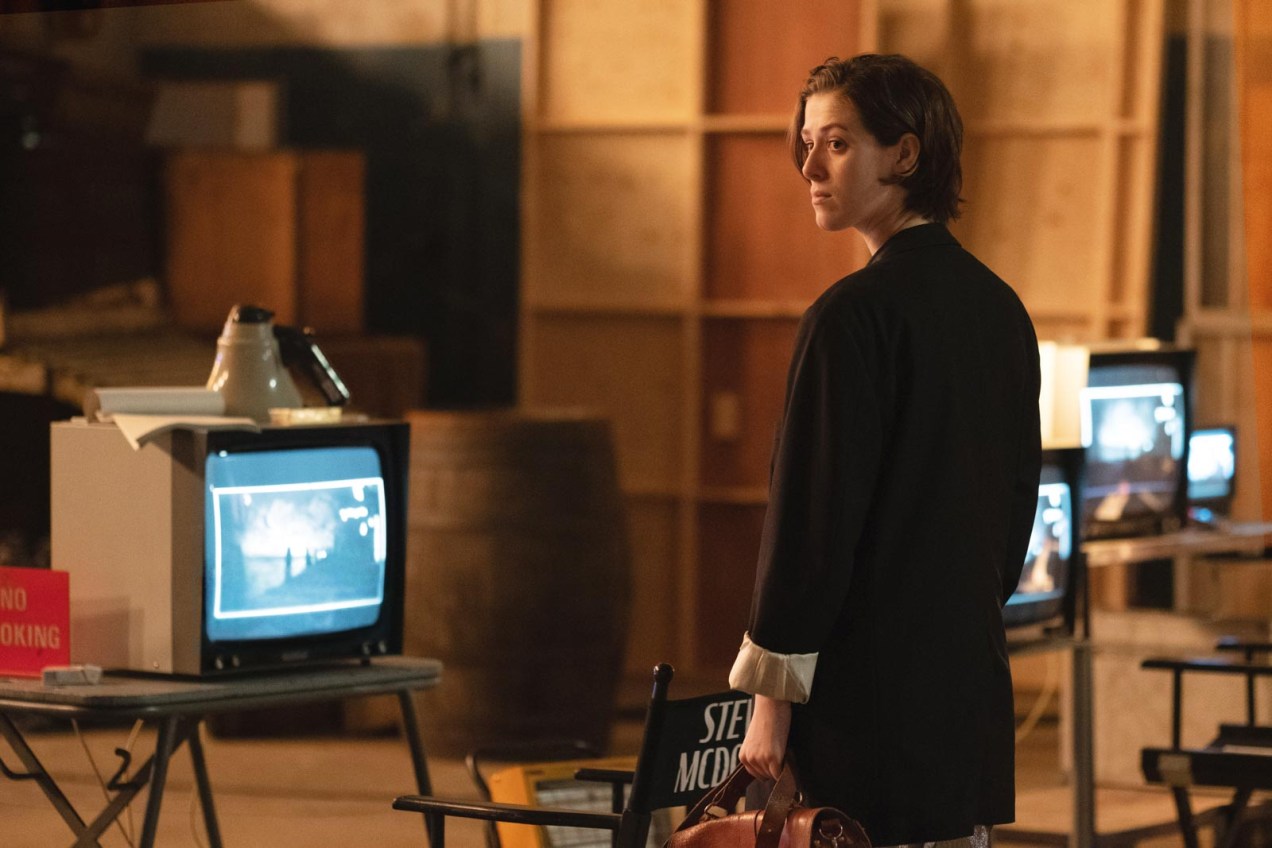
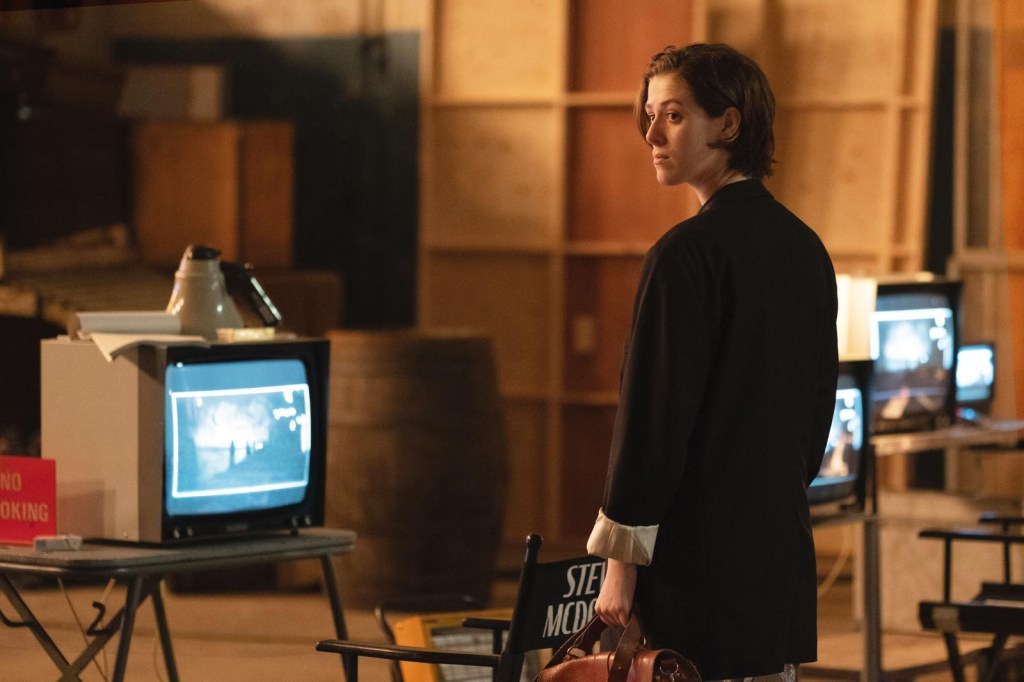
Honor Swinton Byrne as Julie in The Souvenir Part II (2021)

Rating: 4.5 out of 5.
Standard
Reviews

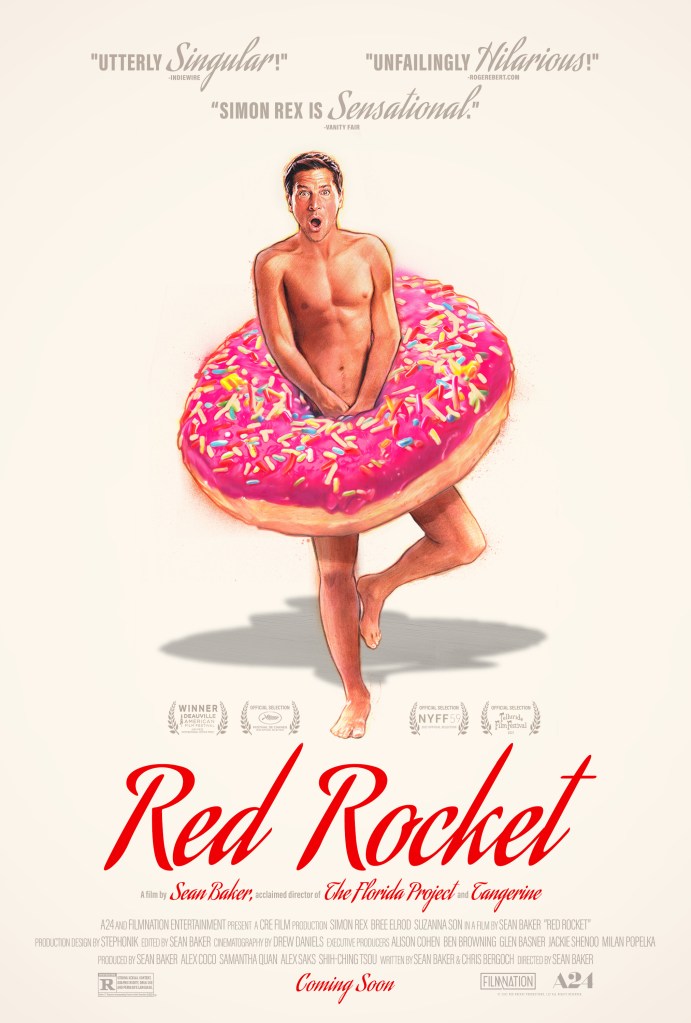
Review – Red Rocket

Red Rocket is the newest film from director, writer and editor (among other things) Sean Baker, after his delightful The Florida Project back in 2017. While both films are set in the trash underbelly of America though, Red Rocket is very different in tone due to ditching a loveable main character in favour of one of the worst people I have ever seen depicted in a film. This character is Mikey, a former porn star who returns to Texas to live with his ex-wife (herself also a former porn star) due to his career in Los Angeles imploding. This return is both unannounced and unwelcome, but he returns regardless into the town he once called home.

Once settled onto his mother-in-law’s sofa, it is fair to say that Mikey isn’t exactly being a model citizen. After a brilliant montage in which he spends his numerous job interviews explaining the seventeen year hole on his CV (“Google me”, he encourages his potential employers, with a twinkle in his eye), Mikey falls back into his old job dealing weed and sets about befriending any of the locals who are vulnerable enough to believe his lies. These all lead Mikey to the Donut Hole, a donut shop where Mikey meets a girl named Strawberry, who turns 18 in three weeks. In her, he sees potential. He sees a dream. He sees his possible re-entry into the very industry that sent him sprawling back to Texas. And so, he is willing to do whatever terrible thing it takes to make his return happen, careening through Baker’s brilliant script without a single compassionate gesture or thought for others. The only question is, when will the crash happen?

Red Rocket is a hangout movie starring the worst person you’ve ever met.

The script is one that largely isn’t plot motivated, which the lack of details in my description hopefully clued you in to. For a large amount of the runtime, Red Rocket feels like a hangout movie starring the worst person you’ve ever met. Fortunately, thanks to Baker’s script, it’s an incredibly funny hangout. Whether in the awkwardness of Mikey attempting to weave another lie or an extended monologue about Mikey’s resemblance to Paul Walker in The Fast and The Furious (which I obviously cackled at very loudly), Red Rocket is predominantly a comedy and a really funny one at that. The comedic elements become essential as the film moves forward, as Mikey commits worse and worse acts. I spent most of the third act in an agonisingly anxious state, which was thankfully remedied somewhat by the humour. Never remedied enough to make the audience forget what Mikey was doing, but enough to keep us on-board long enough to get to a terrific needle drop moment in the finale.

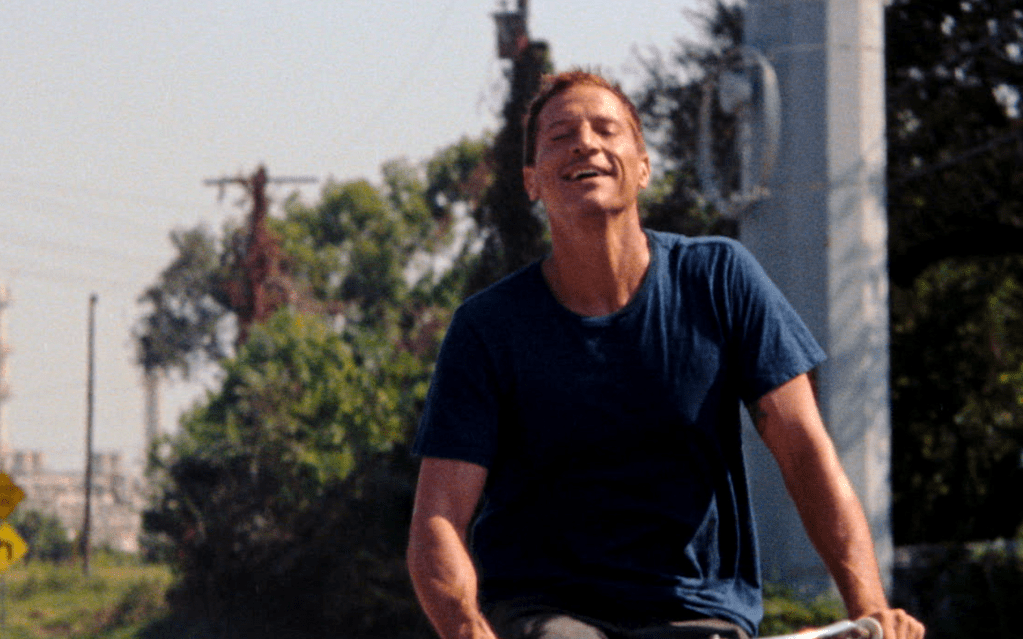
As with Sean Baker’s other films, the cast in here is largely filled with non-professional actors, although lead actor Simon Rex is a notable exception. You see, what you may not know is that in the real world, Rex is (or was) an actual porn star, an actor “gifted” in ways that your typical Hollywood star is not expected to be. Whether Rex used his experience of this industry to help fuel the dirtbag character of Mikey is unclear, but what is clear is that he is a totally magnetic presence on screen. I always find it difficult to work out with actors I’m not familiar with if they’re great at embodying their character or they simply aren’t working with any expectations on my part, but I know Rex is great because even as his character was doing worse and worse things to the people around him, I couldn’t stop watching. He brilliantly embodies the kind of person you would never want to meet but can’t help gawking at on screen. I hope he has cause to make space in his awards cabinet this awards season, adding some prestigious awards next to his no doubt beloved AVN trophies.

Red Rocket (2021) Poster

While a large amount of the watchability of Red Rocket can certainly be attributed to Rex’s swinging performance, I’m also a huge fan of the cinematography of the film. Baker has turned to new collaborator Drew Daniels for this aspect of the film, whose previous work on the sumptuous Waves has clearly helped pave the way here. While the beautiful (and I do mean genuinely beautiful) look at the trashy side of America is carried over from The Florida Project, in which characters are cast in long shots against boldly coloured and brilliantly unremarkable buildings, it’s a new sense of kineticism here I love, which was something Daniels did so well with Waves. In this case specifically, I’m talking about zooms. I know that sounds like such a specific thing to bring up, but it adds so much personality to Red Rocket. Zooms are used as punchline, as crunching realisation, as visual metaphor for the perpetual motion machine that is Mikey. They are like raisins in the cookie of the film, scattered throughout and a soft treat among the crunch.

Baker also has more treats up his sleeve for the audience, those sleeves being in the outfit of the job of editor. It’s always great to see a director who can genuinely consider themselves as auteur from spinning so many plates on a project and it’s even greater when said plate spinning works brilliantly. Editing style is typically broken down between inter- and intra-scene editing, both of which Baker excels at. The intra-scene editing is slow, the film consisting of longer than average takes, but Baker knows when to hold on a moment and when to make it fleeting enough that the next shot feels like an exciting leap forward. Likewise, the inter-scene editing is brilliant, reminding me of a slightly flashier version of the editing style in Greta Gerwig’s films. Baker will often use editing to blend the same action across two different temporal planes, showing inhalation on a cigarette in one location before cutting to show exhalation on a different cigarette on a different place. This creates a disorienting effect that works perfectly for the film, scrambling your sense of time and place. We don’t know where or when we are, only that we are riding wildly on Mikey’s coattails. Of all the brilliant things to single out in this film, I think the editing may be the most brilliant.

[Mikey] is a scumbag, through and through, but a compelling scumbag for sure. I loved following him.

I think a lot of people will hate Red Rocket. Not much happens for a large part of the film and a lot of the things that do happen are Mikey committing criminal offences of various levels of seriousness. I, however, do not care if a protagonist is likable or not, I care for the ride and what a ride Sean Baker has given us. Setting the film in 2016 gives us more than enough clues of the kind of world we’re entering into, through a shockingly effective evocation of the period (2016 period piece is a concept that makes me feel prematurely 50 though) and by the end we need no more clues as to who it is we’re spending time with. Mikey is a scumbag, through and through, but a compelling scumbag for sure. I loved following him, though I didn’t feel sorry to say bye bye bye when, after a long time coming, Mikey’s time finally came.

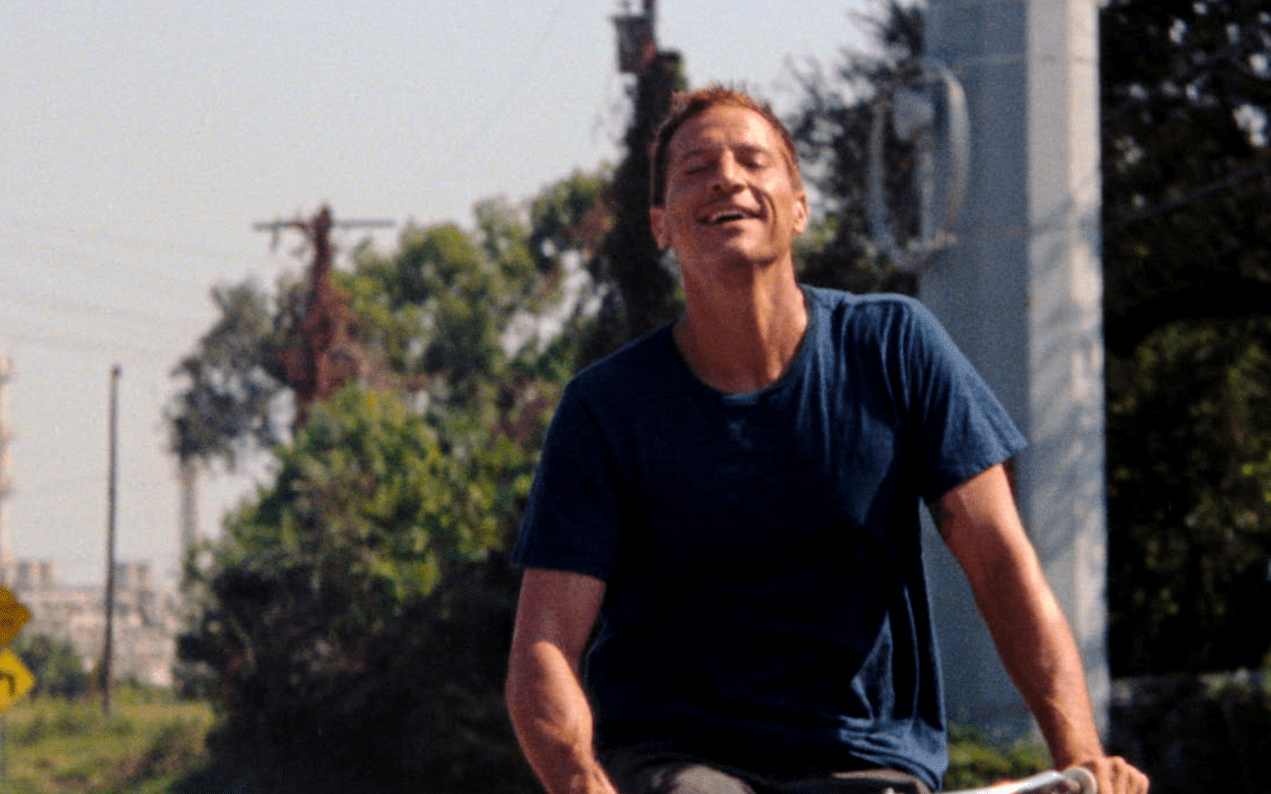
Simon Rex as Mikey in Red Rocket (2021)

Rating: 4.5 out of 5.
Standard